Mankoff David A
Seattle Cancer Care Alliance and University of Washington, Radiology, Seattle, WA 98109, USA.
Breast Cancer Res. 2008;10 Suppl 1(Suppl 1):S3. doi: 10.1186/bcr2126. Epub 2008 Dec 9.
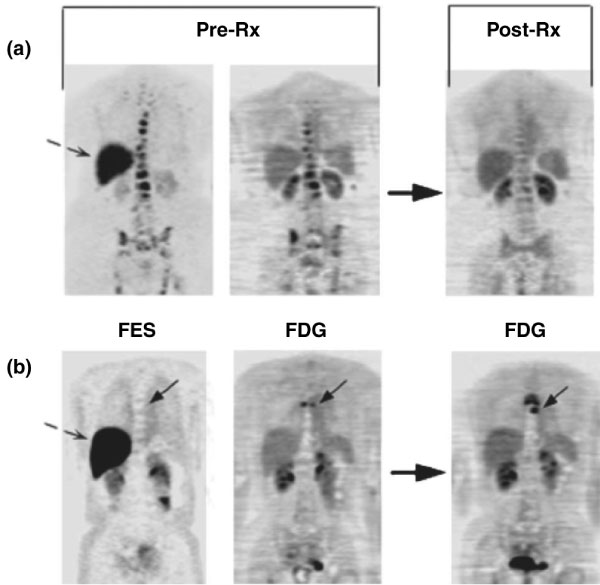
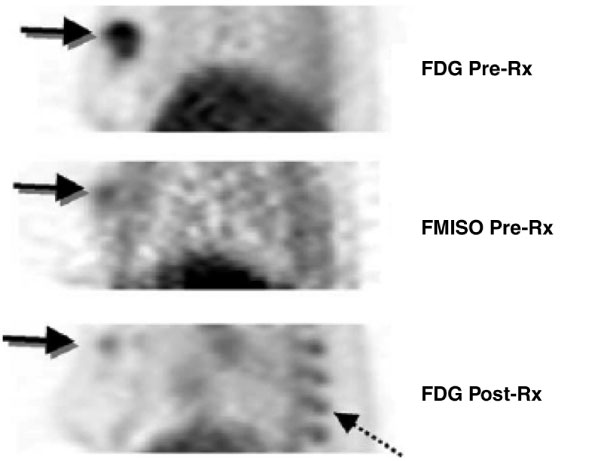
The ability to measure biochemical and molecular processes underlies progress in breast cancer biology and treatment. These assays have traditionally been performed by analysis of cell culture or tissue samples. More recently, functional and molecular imaging has allowed the in vivo assay of biochemistry and molecular biology, which is highly complementary to tissue-based assays. This review briefly describes different imaging modalities used in molecular imaging and then reviews applications of molecular imaging to breast cancer, with a focus on translational work. It includes sections describing work in functional and physiological tumor imaging, imaging gene product expression, imaging the tumor microenvironment, reporter gene imaging, and cell labeling. Work in both animal models and human is discussed with an eye towards studies that have relevance to breast cancer treatment in patients.
测量生物化学和分子过程的能力是乳腺癌生物学和治疗取得进展的基础。传统上,这些分析是通过细胞培养或组织样本分析来进行的。最近,功能和分子成像技术使得在体内进行生物化学和分子生物学分析成为可能,这与基于组织的分析具有高度互补性。本文简要介绍了分子成像中使用的不同成像方式,然后回顾了分子成像在乳腺癌中的应用,重点是转化研究。它包括描述功能和生理肿瘤成像、成像基因产物表达、成像肿瘤微环境、报告基因成像和细胞标记的章节。本文讨论了动物模型和人体研究,着眼于与患者乳腺癌治疗相关的研究。