Czoty P W, Gould R W, Nader M A
Department of Physiology, Wake Forest University School of Medicine, Winston-Salem, NC 27157-1083, USA.
J Neuroendocrinol. 2009 Jan;21(1):68-76. doi: 10.1111/j.1365-2826.2008.01800.x.
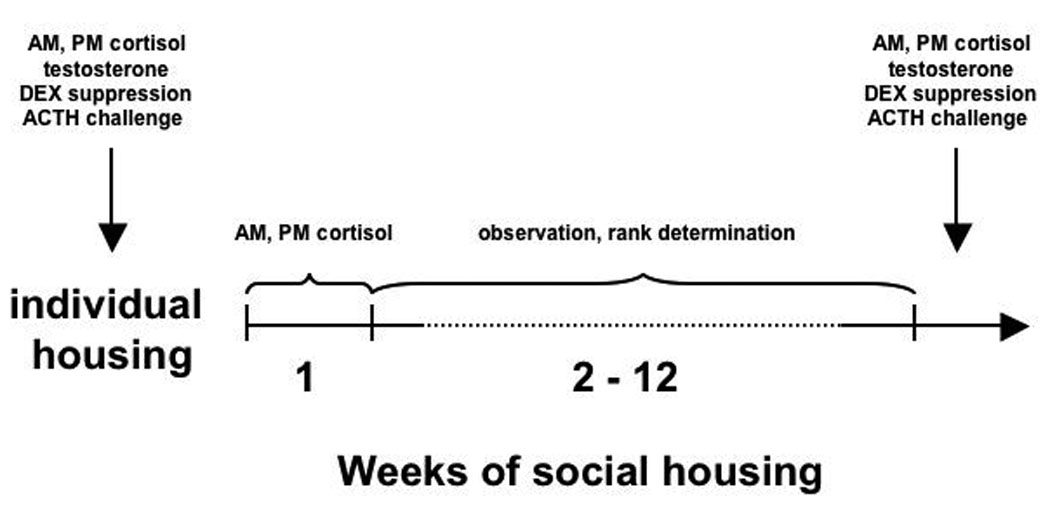
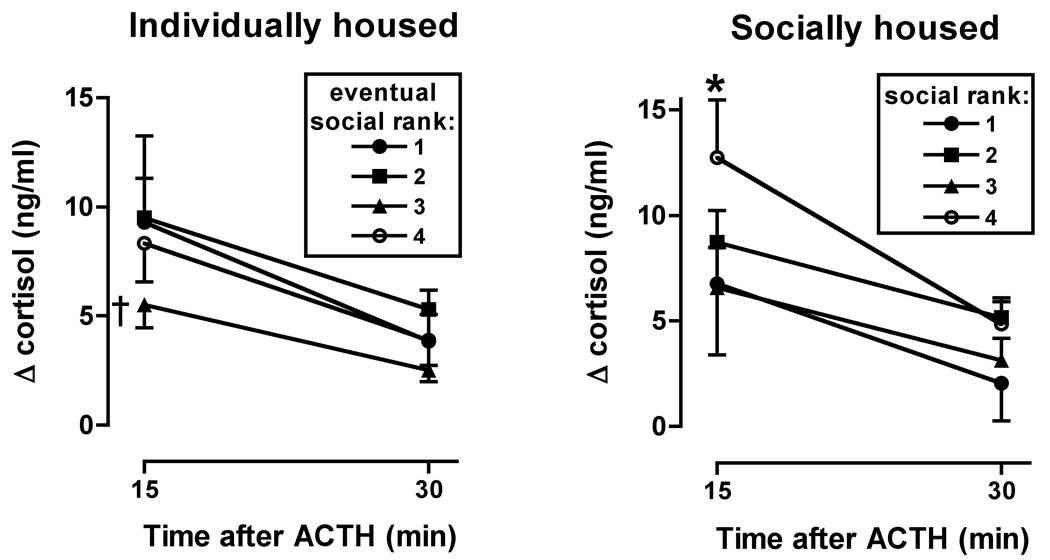
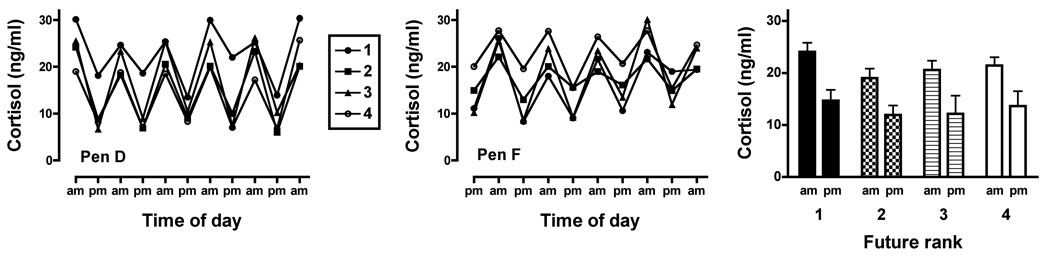
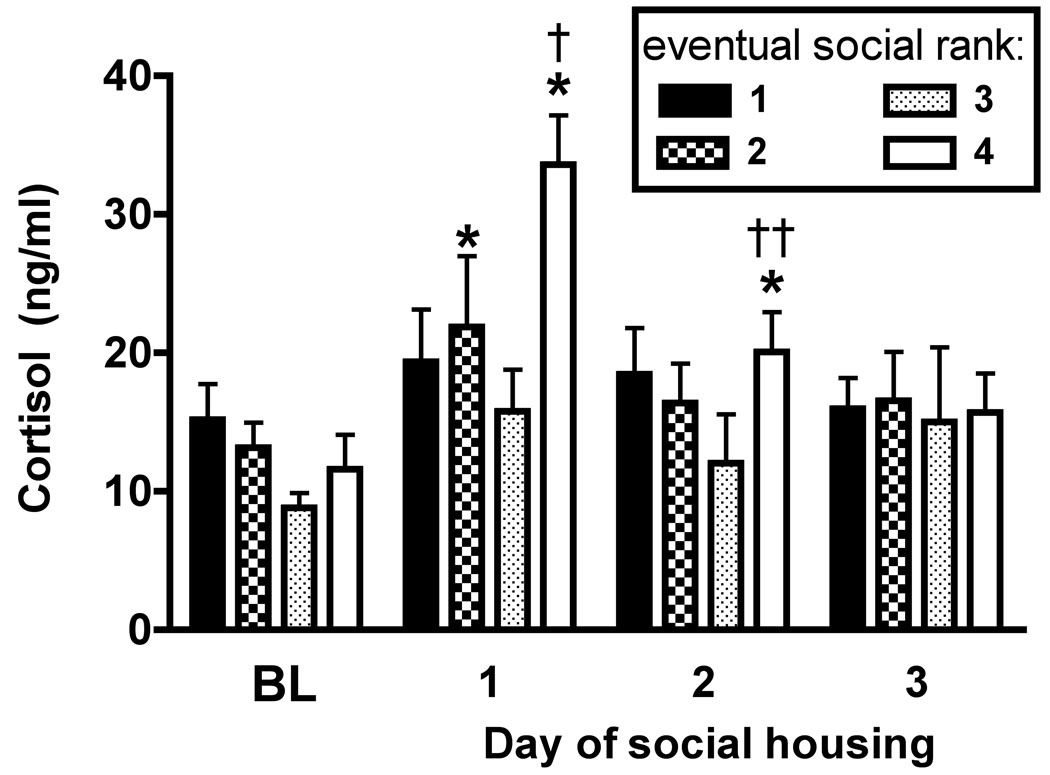
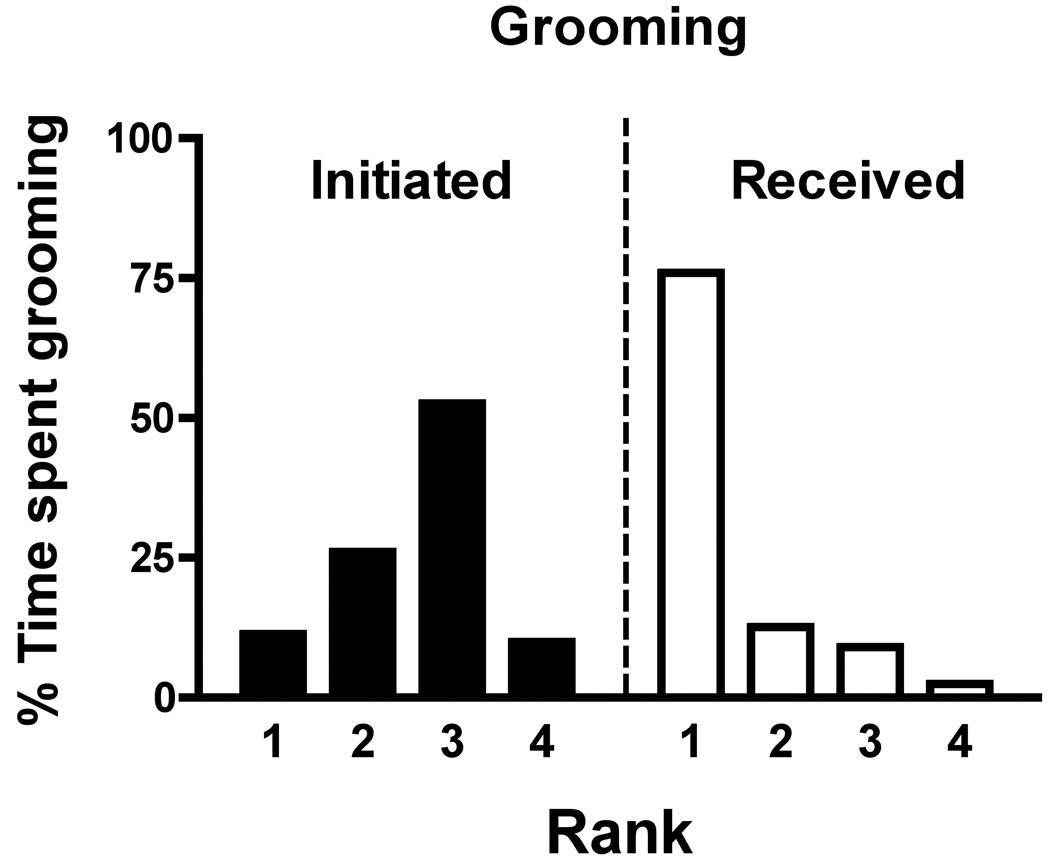
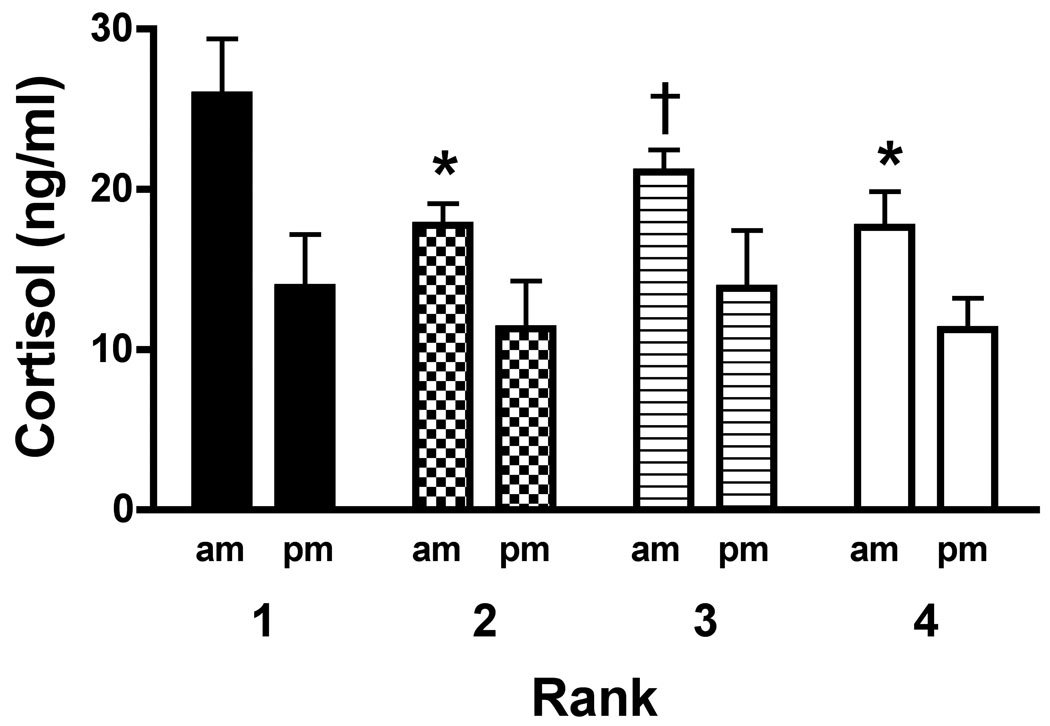
In nonhuman primate social groups, biological differences related to social status have proven useful for investigating the mechanisms of sensitivity to various disease states. Physiological and neurobiological differences between dominant and subordinate monkeys have been interpreted in the context of chronic social stress. The present experiments were designed to investigate the relationships between basal cortisol and testosterone concentrations and the establishment and maintenance of the social hierarchy in male cynomolgus monkeys. Cortisol concentrations were measured at baseline and following suppression with dexamethasone (DEX) and subsequent administration of adrenocorticotrophic hormone (ACTH) while monkeys were individually housed (n = 20) and after 3 months of social housing (n = 4/group), by which time dominance hierarchies had stabilised. Cortisol was also measured during the initial 3 days of social housing. Neither pre-social housing hormone concentrations, nor hypothalamic-pituitary-adrenal (HPA) axis sensitivity predicted eventual social rank. During initial social housing, cortisol concentrations were significantly higher in monkeys that eventually became subordinate; this effect dissipated within 3 days. During the 12 weeks of social housing, aggressive and submissive behaviours were observed consistently, forming the basis for assignment of social ranks. At this time, basal testosterone and cortisol concentrations were significantly higher in dominant monkeys and, after DEX suppression, cortisol release in response to a challenge injection of ACTH was significantly greater in subordinates. These results indicate that basal cortisol and testosterone concentrations and HPA axis function are state variables that differentially reflect position in the dominance hierarchy, rather than trait variables that predict future social status.
在非人类灵长类动物社会群体中,与社会地位相关的生物学差异已被证明有助于研究对各种疾病状态的敏感性机制。优势猴和从属猴之间的生理和神经生物学差异已在慢性社会压力的背景下得到解释。本实验旨在研究基础皮质醇和睾酮浓度与雄性食蟹猴社会等级制度的建立和维持之间的关系。在猴子单独饲养时(n = 20)以及群居3个月后(每组n = 4),在基线、用地塞米松(DEX)抑制后以及随后注射促肾上腺皮质激素(ACTH)后测量皮质醇浓度,此时优势等级已经稳定。在群居的最初3天也测量了皮质醇。社会饲养前的激素浓度和下丘脑 - 垂体 - 肾上腺(HPA)轴敏感性均不能预测最终的社会等级。在最初的社会饲养期间,最终成为从属地位的猴子的皮质醇浓度显著更高;这种效应在3天内消失。在12周的社会饲养期间,持续观察到攻击性行为和顺从性行为,这构成了确定社会等级的基础。此时,优势猴的基础睾酮和皮质醇浓度显著更高,并且在DEX抑制后,从属猴对ACTH激发注射的皮质醇释放显著更大。这些结果表明,基础皮质醇和睾酮浓度以及HPA轴功能是状态变量,它们不同地反映了优势等级中的位置,而不是预测未来社会地位的特质变量。