Zhang Ran, Rao Man, Li Chuan, Cao Jingyuan, Meng Qinglin, Zheng Min, Wang Meili, Dai Yunping, Liang Mifang, Li Ning
State Key Laboratory of Agrobiotechnology, China Agricultural University, Beijing, China.
Transgenic Res. 2009 Jun;18(3):445-53. doi: 10.1007/s11248-008-9241-0. Epub 2009 Jan 8.
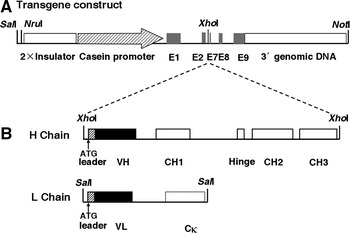
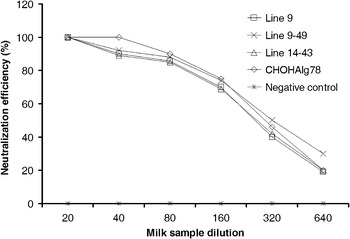
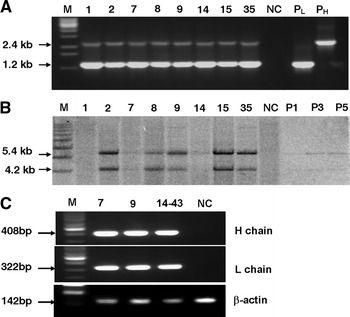
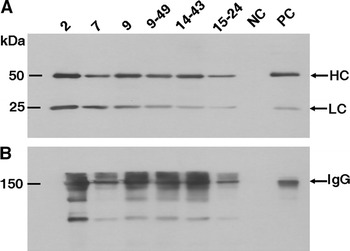
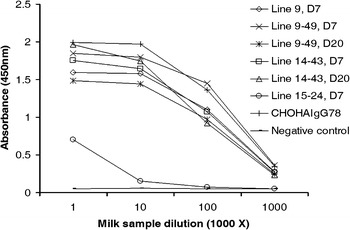
Hepatitis A virus (HAV) is a wide spread pathogenic agent and is the common cause of acute Hepatitis A worldwide. Passive immunization of HAV plays an extremely important role in post-exposure prophylaxis with clinical applications often requiring large amounts of antibody. As an alternative to the in vitro production of recombinant proteins, expression of monoclonal antibodies (mAbs) in the milk of transgenic animals is currently used being associated with low production costs and high activity. In this paper, eight founder lines of transgenic mice were generated by co-microinjection of the two cassettes encoding the heavy- and light-chains of a neutralizing anti-HAV antibody, respectively. The expressed heavy- and light-chains of the mAb were correctly assembled and modified in the mammary gland as detected by western blotting. High expression levels of the antibody were achieved during the lactation period and found to be independent of the copy numbers of integrated transgenes. The highest level was up to 32.2 mg/ml. The binding specificity and neutralizing activity of the expressed mAb were assayed by ELISA and neutralizing test, showing that it is capable to neutralize the JN strain of Hepatitis A virus efficiently. Therefore, our results suggest that a large-scale and efficient production of the anti-HAV mAb in the milk of transgenic farm animals would be feasible in the future.
甲型肝炎病毒(HAV)是一种广泛传播的病原体,是全球范围内急性甲型肝炎的常见病因。甲型肝炎病毒的被动免疫在暴露后预防中起着极其重要的作用,临床应用中通常需要大量抗体。作为体外生产重组蛋白的替代方法,目前利用转基因动物乳汁表达单克隆抗体(mAb),其具有生产成本低和活性高的特点。本文通过共显微注射分别编码一种中和抗甲型肝炎病毒抗体重链和轻链的两个盒式结构,产生了8个转基因小鼠创始系。通过蛋白质印迹法检测发现,单克隆抗体表达的重链和轻链在乳腺中正确组装和修饰。在泌乳期实现了抗体的高表达水平,且发现其与整合转基因的拷贝数无关。最高水平达到32.2 mg/ml。通过酶联免疫吸附测定法(ELISA)和中和试验检测了所表达单克隆抗体的结合特异性和中和活性,结果表明其能够有效中和甲型肝炎病毒JN株。因此,我们的结果表明,未来在转基因农场动物的乳汁中大规模高效生产抗甲型肝炎病毒单克隆抗体是可行的。