Albini Adriana, Brigati Claudio, Ventura Agostina, Lorusso Girieca, Pinter Marta, Morini Monica, Mancino Alessandra, Sica Antonio, Noonan Douglas M
Polo Scientifico e Tecnologico, IRCCS Multimedica, Milan, Italy.
J Transl Med. 2009 Jan 14;7:5. doi: 10.1186/1479-5876-7-5.
Angiostatin, an endogenous angiogenesis inhibitor, is a fragment of plasminogen. Its anti-angiogenic activity was discovered with functional assays in vivo, however, its direct action on endothelial cells is moderate and identification of definitive mechanisms of action has been elusive to date. We had previously demonstrated that innate immune cells are key targets of angiostatin, however the pathway involved in this immune-related angiogenesis inhibition was not known. Here we present evidence that IL-12, a principal TH1 cytokine with potent anti-angiogenic activity, is the mediator of angiostatin's activity.
Function blocking antibodies and gene-targeted animals were employed or in vivo studies using the subcutaneous matrigel model of angiogenesis. Quantitative real-time PCR were used to assess modulation of cytokine production in vitro.
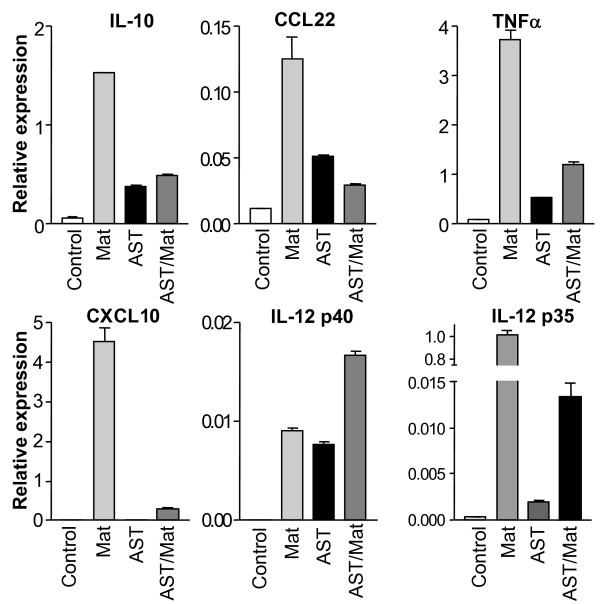
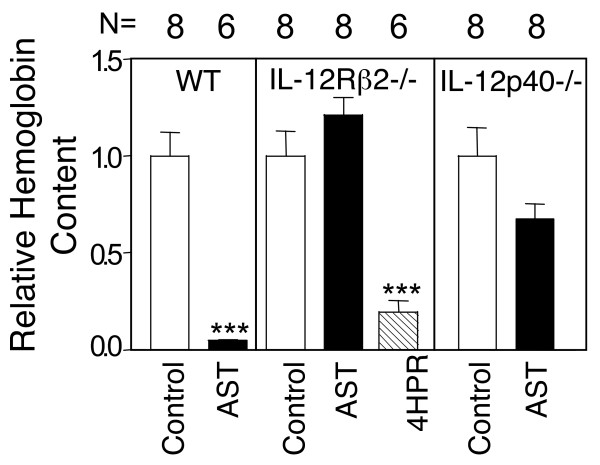
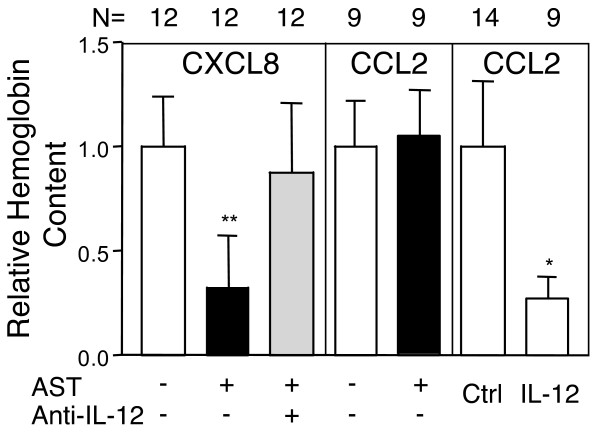
Angiostatin inhibts angiogenesis induced by VEGF-TNFalpha or supernatants of Kaposi's Sarcoma cells (a highly angiogenic and inflammation-associated tumor). We found that function-blocking antibodies to IL-12 reverted angiostatin induced angiogenesis inhibition. The use of KO animal models revealed that angiostatin is unable to exert angiogenesis inhibition in mice with gene-targeted deletions of either the IL-12 specific receptor subunit IL-12Rbeta2 or the IL-12 p40 subunit. Angiostatin induces IL-12 mRNA synthesis by human macrophages in vitro, suggesting that these innate immunity cells produce IL-12 upon angiostatin stimulation and could be a major cellular mediator.
Our data demonstrate that an endogenous angiogenesis inhibitor such as angiostatin act on innate immune cells as key targets in inflammatory angiogenesis. Angiostatin proves to be anti-angiogenic as an immune modulator rather than a direct anti-vascular agent. This article is dedicated to the memory of Prof Judah Folkman for his leadership and for encouragement of these studies.
血管抑素是一种内源性血管生成抑制剂,是纤溶酶原的一个片段。其抗血管生成活性是通过体内功能试验发现的,然而,它对内皮细胞的直接作用较弱,迄今为止,其确切的作用机制仍不清楚。我们之前已经证明先天免疫细胞是血管抑素的关键靶点,但是参与这种免疫相关血管生成抑制的途径尚不清楚。在此,我们提供证据表明,白细胞介素-12(IL-12),一种具有强大抗血管生成活性的主要辅助性T1细胞因子,是血管抑素活性的介质。
使用功能阻断抗体和基因敲除动物,或采用血管生成的皮下基质胶模型进行体内研究。采用定量实时聚合酶链反应评估体外细胞因子产生的调节情况。
血管抑素可抑制由血管内皮生长因子-肿瘤坏死因子α(VEGF-TNFα)或卡波西肉瘤细胞(一种高度血管生成且与炎症相关的肿瘤)的上清液诱导的血管生成。我们发现,针对IL-12的功能阻断抗体可逆转血管抑素诱导的血管生成抑制作用。使用基因敲除动物模型显示,血管抑素在白细胞介素-12特异性受体亚基IL-12Rβ2或IL-12 p40亚基基因敲除的小鼠中无法发挥血管生成抑制作用。血管抑素在体外可诱导人巨噬细胞合成IL-12 mRNA,这表明这些先天免疫细胞在血管抑素刺激下产生IL-12,可能是主要的细胞介质。
我们的数据表明,内源性血管生成抑制剂如血管抑素作用于先天免疫细胞,作为炎症性血管生成的关键靶点。血管抑素被证明是一种作为免疫调节剂而非直接抗血管生成剂的抗血管生成物质。本文谨献给Judah Folkman教授,以纪念他的领导以及对这些研究的鼓励。