Sharma Rajesh K, Rogojina Anna T, Chalam K V
Department of Ophthalmology, University of Florida, College of Medicine, Jacksonville, FL 32209, USA.
Mol Vis. 2009;15:60-9. Epub 2009 Jan 14.
Aqueous humor is intimately related to the cells of the anterior and posterior chambers, which affect its composition. Aqueous analysis provides useful information regarding physiological and pathophysiological processes in the eye. Human aqueous samples are typically less than 100 microl, limiting the usefulness of the analysis with traditional Enzyme-Linked immunoSorbant Assay (ELISA) techniques. The specific aim of this study was to investigate if whether large numbers of analytes can be identified in clinically available samples of aqueous humor and to document the detectability of certain biomarkers in the aqueous.
We used a technology developed by Luminex xMAP to analyze hundreds of analytes in a small sample. Aqueous from eight normal and two diabetic patients was analyzed.
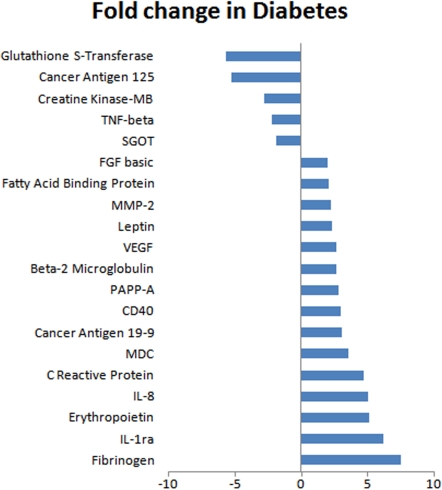
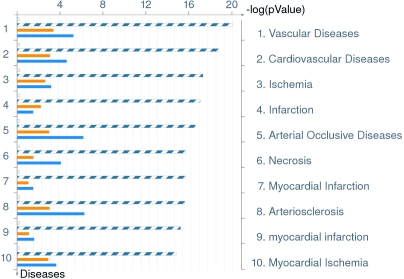
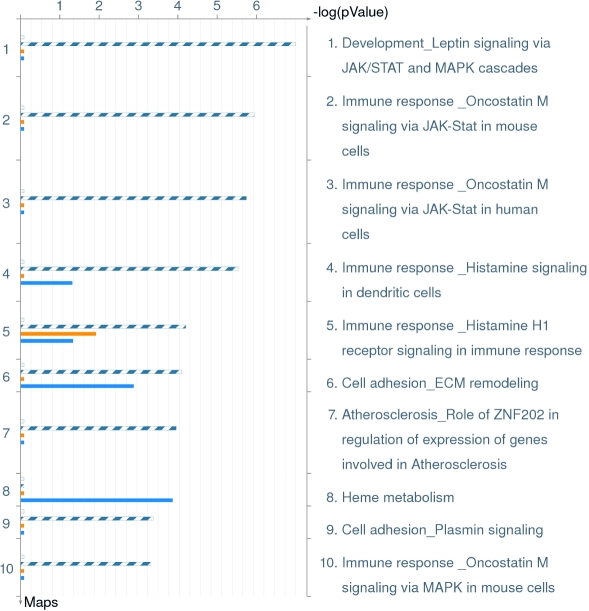
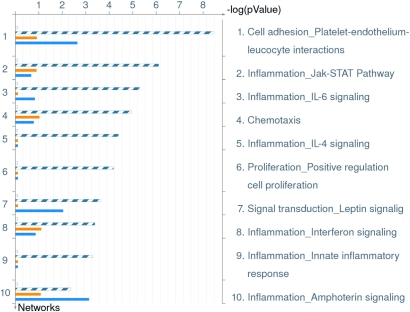
Of the 90 analytes evaluated, 52 (57%) were detectable in the normal aqueous. To place these results in biological context, we analyzed the list of expressed analytes using the MetaCore database. The functional pathways, networks, biological processes, and disease processes that these analytes represented were identified. Several ocular pathology-related processes were represented in the aqueous. The detected analytes represented biomarkers of several relevant disease processes including vascular diseases, arteriosclerosis, ischemia, necrosis, and inflammation. To provide the proof of principle that the aqueous profile could offer useful information about the pathophysiological processes, we analyzed two aqueous samples from diabetic patients. These limited samples showed the differences between normal and diabetic samples, including those relevant to diabetic retinopathy such as vascular endothelial growth factor (VEGF), C reactive protein, glutathione, and cytokines. Several biomarker groups for disease processes relevant to diabetes were perturbed.
These results demonstrate that multiplex analysis of the aqueous can be a useful tool in screening for any pathophysiological changes of the ocular environment. Moreover, ocular pathology/pathophysiology-specific Multi-analyte profiles MAPs can be developed and used to analyze the aqueous.
房水与前房和后房的细胞密切相关,这些细胞会影响房水的成分。房水分析可为眼部的生理和病理生理过程提供有用信息。人类房水样本通常少于100微升,这限制了传统酶联免疫吸附测定(ELISA)技术在分析中的实用性。本研究的具体目的是调查在临床上可获得的房水样本中是否能鉴定出大量分析物,并记录某些生物标志物在房水中的可检测性。
我们使用Luminex xMAP开发的一项技术来分析少量样本中的数百种分析物。对8名正常人和2名糖尿病患者的房水进行了分析。
在评估的90种分析物中,52种(57%)在正常房水中可检测到。为了将这些结果置于生物学背景中,我们使用MetaCore数据库分析了已检测到的分析物列表。确定了这些分析物所代表的功能途径、网络、生物过程和疾病过程。房水中呈现了几种与眼部病理学相关的过程。检测到的分析物代表了包括血管疾病、动脉硬化、缺血、坏死和炎症在内的几种相关疾病过程的生物标志物。为了证明房水分析结果可为病理生理过程提供有用信息这一原理,我们分析了两名糖尿病患者的两份房水样本。这些有限的样本显示了正常样本和糖尿病样本之间的差异,包括与糖尿病视网膜病变相关的差异,如血管内皮生长因子(VEGF)、C反应蛋白、谷胱甘肽和细胞因子。与糖尿病相关的疾病过程的几个生物标志物组受到了干扰。
这些结果表明,房水的多重分析可成为筛查眼部环境任何病理生理变化的有用工具。此外,可以开发眼部病理学/病理生理学特异性的多分析物谱(MAPs)并用于分析房水。