Amaral-Zettler Linda A, Rocca Jennifer D, Lamontagne Michael G, Dennett Mark R, Gast Rebecca J
The Josephine Bay Paul Center for Comparative Molecular Biology and Evolution, Marine Biological Laboratory, 7 MBL Street, Woods Hole, Massachusetts 02543, USA.
Environ Sci Technol. 2008 Dec 15;42(24):9072-8. doi: 10.1021/es801904z.
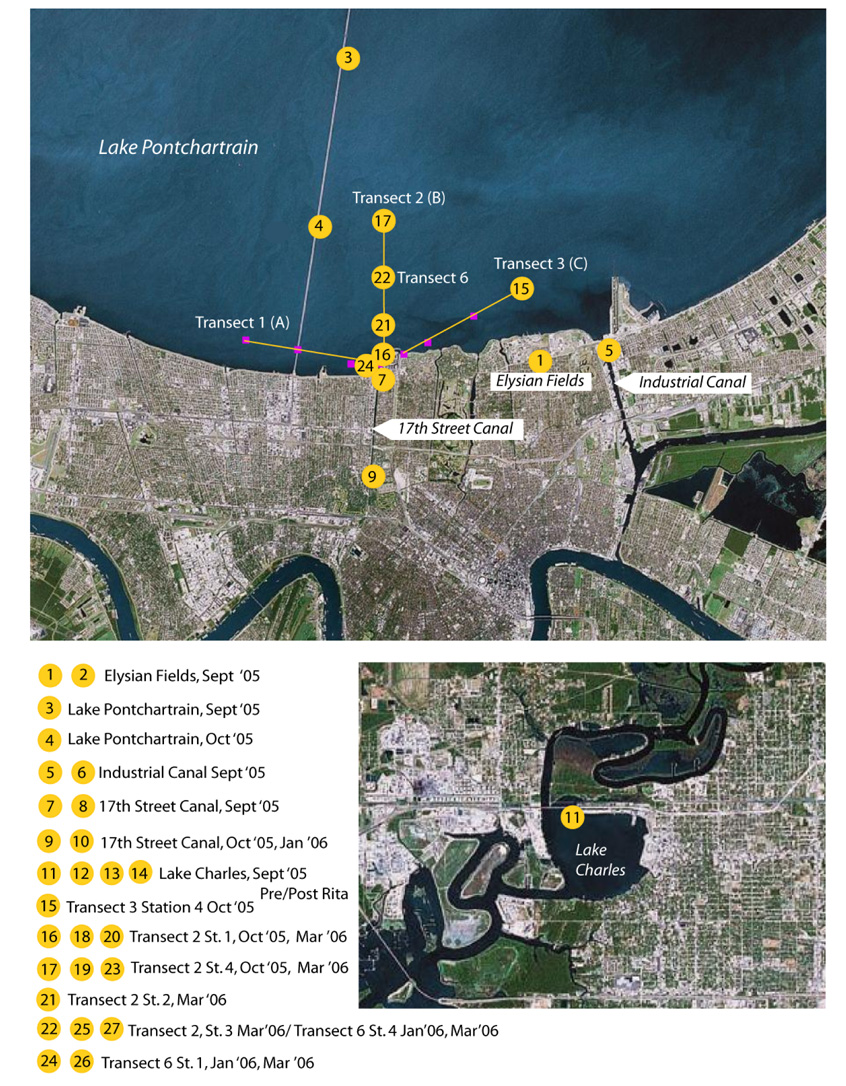
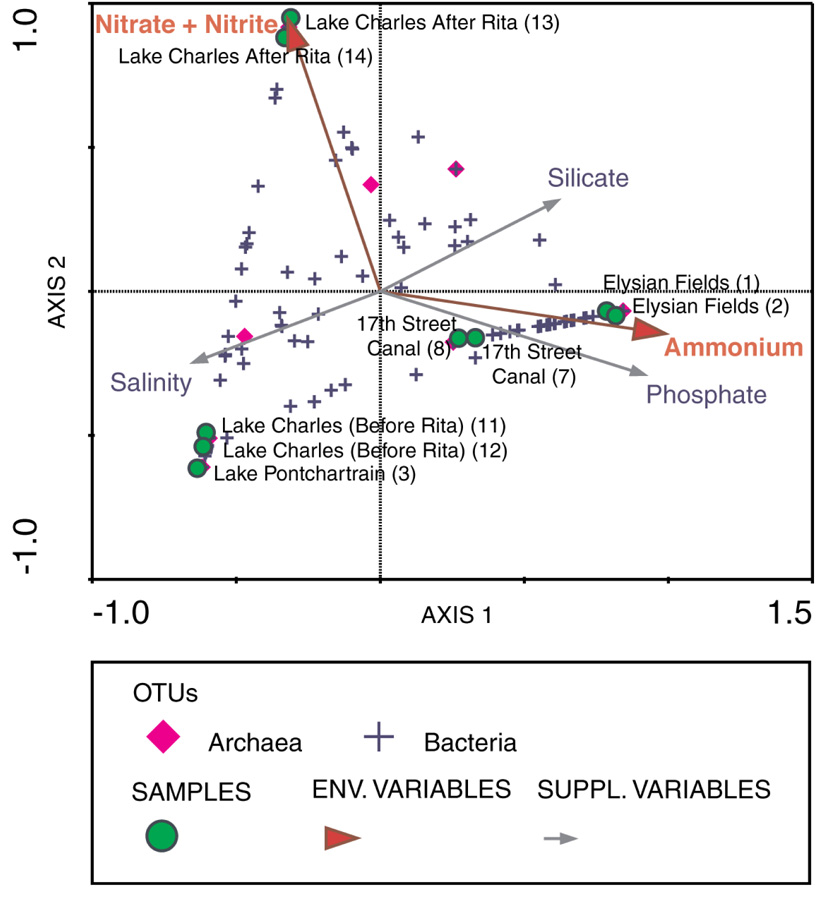
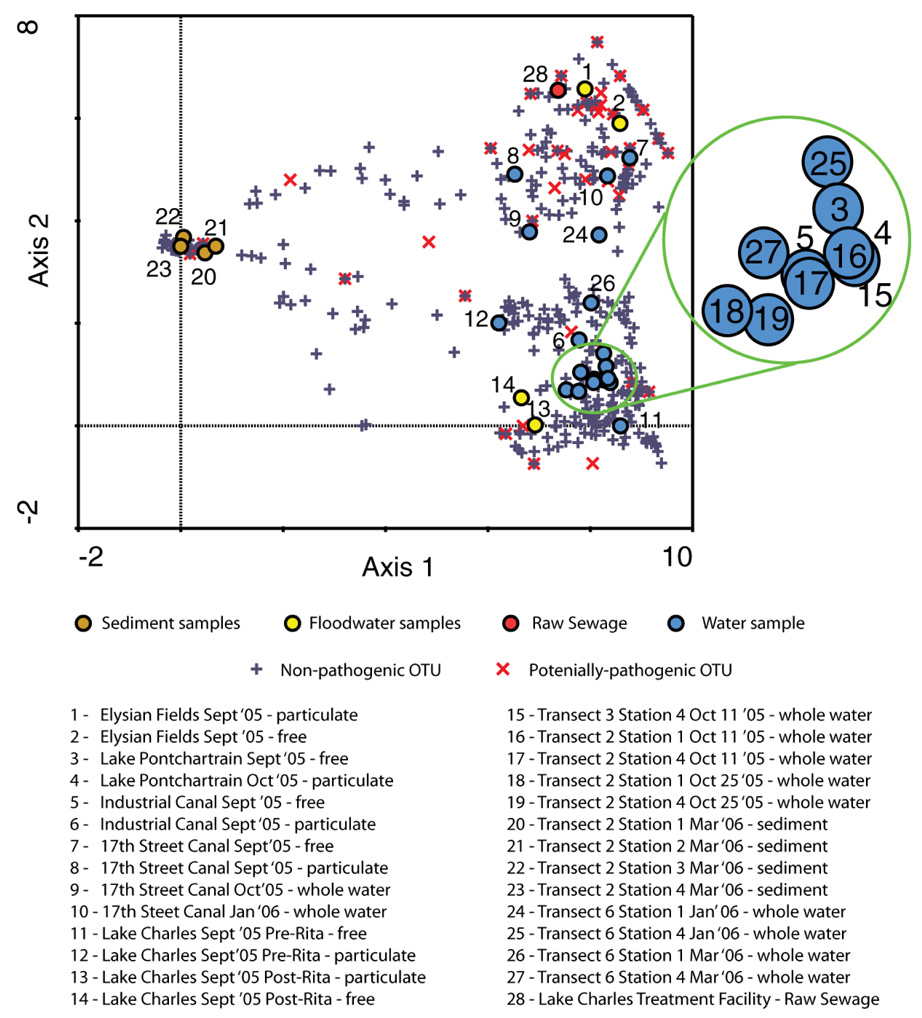
Hurricanes have the potential to alter the structures of coastal ecosystems and generate pathogen-laden floodwaters thatthreaten public health. To examine the impact of hurricanes on urban systems, we compared microbial community structures in samples collected after Hurricane Katrina and before and after Hurricane Rita. We extracted environmental DNA and sequenced small-subunit rRNA (SSU rRNA) gene clone libraries to survey microbial communities in floodwater, water, and sediment samples collected from Lake Charles, Lake Pontchartrain, the 17th Street and Industrial Canals in New Orleans, and raw sewage. Correspondence analysis showed that microbial communities associated with sediments formed one cluster while communities associated with lake and Industrial Canal water formed a second. Communities associated with water from the 17th Street Canal and floodwaters collected in New Orleans showed similarity to communities in raw sewage and contained a number of sequences associated with possible pathogenic microbes. This suggests that a distinct microbial community developed in floodwaters following Hurricane Katrina and that microbial community structures as a whole might be sensitive indicators of ecosystem health and serve as "sentinels" of water quality in the environment.
飓风有可能改变沿海生态系统的结构,并产生携带病原体的洪水,威胁公众健康。为了研究飓风对城市系统的影响,我们比较了卡特里娜飓风过后以及丽塔飓风前后采集样本中的微生物群落结构。我们提取了环境DNA,并对小亚基rRNA(SSU rRNA)基因克隆文库进行测序,以调查从查尔斯湖、庞恰特雷恩湖、新奥尔良的第17街运河和工业运河以及原污水中采集的洪水、水和沉积物样本中的微生物群落。对应分析表明,与沉积物相关的微生物群落形成一个簇,而与湖泊和工业运河水相关的群落形成另一个簇。与第17街运河的水以及在新奥尔良收集的洪水相关的群落与原污水中的群落相似,并包含许多与可能的致病微生物相关的序列。这表明卡特里娜飓风过后洪水中形成了独特的微生物群落,并且微生物群落结构整体可能是生态系统健康的敏感指标,可作为环境水质的“哨兵”。