Zakrzewicz Dariusz, Eickelberg Oliver
Comprehensive Pneumology Center, Munich, Germany.
BMC Pulm Med. 2009 Jan 29;9:5. doi: 10.1186/1471-2466-9-5.
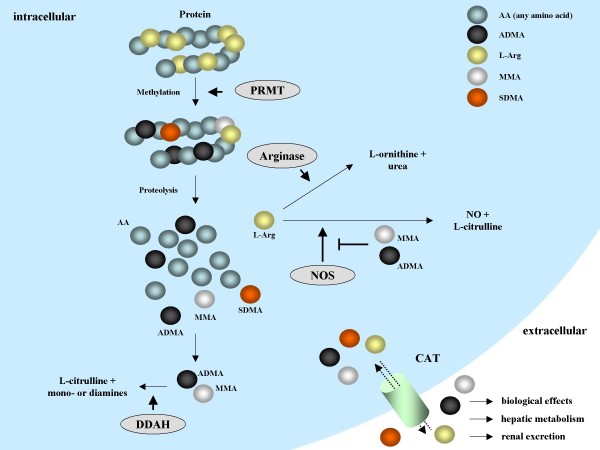
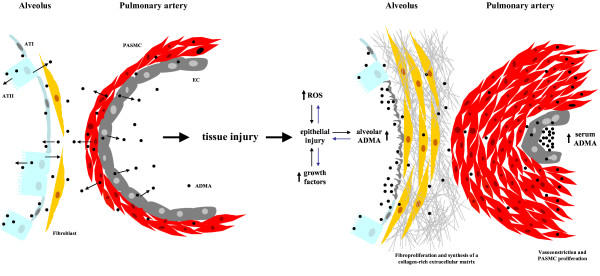
Protein arginine methylation is a novel posttranslational modification regulating a diversity of cellular processes, including protein-protein interaction, signal transduction, or histone function. It has recently been shown to be dysregulated in chronic renal, vascular, and pulmonary diseases, and metabolic products originating from protein arginine methylation have been suggested to serve as biomarkers in cardiovascular and pulmonary diseases. Protein arginine methylation is performed by a class of enzymes called protein arginine methyltransferases (PRMT), which specifically methylate protein-incorporated arginine residues to generate protein-incorporated monomethylarginine (MMA), symmetric dimethylarginine (SDMA), or asymmetric dimethylarginine (ADMA). Upon proteolytic cleavage of arginine-methylated proteins, free intracellular MMA, SDMA, or ADMA is generated, which, upon secretion into the extracellular space (including plasma), directly affects the methylarginine concentration in the plasma. Free methylarginines are cleared from the body by renal excretion or hepatic metabolism. In addition, MMA and ADMA, but not SDMA, can be degraded via a class of intracellular enzymes called dimethylarginine dimethylaminohydrolases (DDAH). ADMA and MMA are endogenous inhibitors of nitric oxide synthases (NOS) and ADMA has been suggested to serve as a biomarker of endothelial dysfunction in cardiovascular diseases. This view has now been extended to the idea that, in addition to serum ADMA, the amount of free, as well as protein-incorporated, intracellular ADMA influences pulmonary cell function and determines the development of chronic lung diseases, including pulmonary arterial hypertension (PAH) or pulmonary fibrosis. This review will present and discuss the recent findings of dysregulated arginine methylation in chronic lung disease. We will highlight novel directions for future investigations evaluating the functional contribution of arginine methylation in lung homeostasis and disease with the outlook that modifying PRMT or DDAH activity presents a novel therapeutic option for the treatment of chronic lung disease.
蛋白质精氨酸甲基化是一种新型的翻译后修饰,可调节多种细胞过程,包括蛋白质 - 蛋白质相互作用、信号转导或组蛋白功能。最近的研究表明,它在慢性肾脏、血管和肺部疾病中失调,并且源自蛋白质精氨酸甲基化的代谢产物被认为可作为心血管和肺部疾病的生物标志物。蛋白质精氨酸甲基化由一类称为蛋白质精氨酸甲基转移酶(PRMT)的酶进行,这些酶特异性地将蛋白质中掺入的精氨酸残基甲基化,以生成蛋白质中掺入的单甲基精氨酸(MMA)、对称二甲基精氨酸(SDMA)或不对称二甲基精氨酸(ADMA)。在精氨酸甲基化的蛋白质进行蛋白水解裂解后,会产生游离的细胞内MMA、SDMA或ADMA,它们分泌到细胞外空间(包括血浆)后,会直接影响血浆中的甲基精氨酸浓度。游离甲基精氨酸通过肾脏排泄或肝脏代谢从体内清除。此外,MMA和ADMA(但不是SDMA)可通过一类称为二甲基精氨酸二甲胺水解酶(DDAH)的细胞内酶降解。ADMA和MMA是一氧化氮合酶(NOS)的内源性抑制剂,并且ADMA被认为可作为心血管疾病中内皮功能障碍的生物标志物。现在这种观点已扩展到这样一种想法,即除了血清ADMA外,游离的以及蛋白质结合的细胞内ADMA的量会影响肺细胞功能,并决定慢性肺部疾病的发展,包括肺动脉高压(PAH)或肺纤维化。本综述将介绍和讨论慢性肺病中精氨酸甲基化失调的最新发现。我们将强调未来研究的新方向,评估精氨酸甲基化在肺稳态和疾病中的功能作用,并展望调节PRMT或DDAH活性为慢性肺病的治疗提供了一种新的治疗选择。