Mikhailov Victor A, Cooper Helen J
School of Biosciences, College of Life and Environmental Sciences, University of Birmingham, Edgbaston, Birmingham, United Kingdom.
J Am Soc Mass Spectrom. 2009 May;20(5):763-71. doi: 10.1016/j.jasms.2008.12.015. Epub 2008 Dec 31.
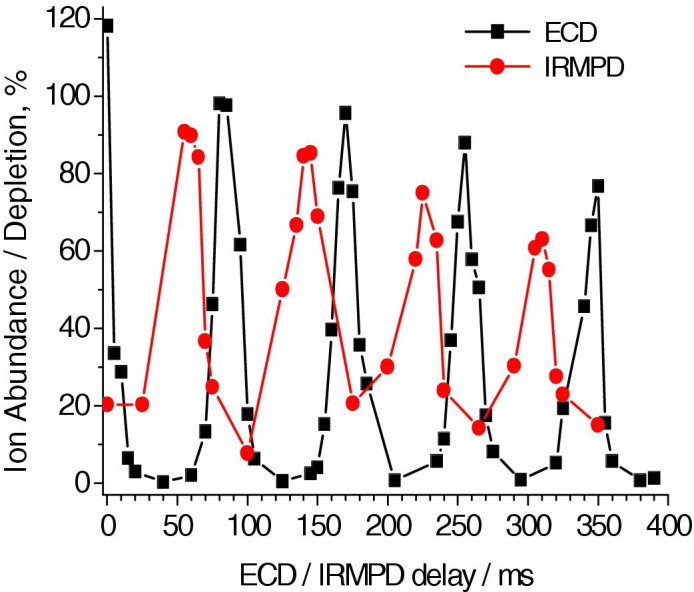
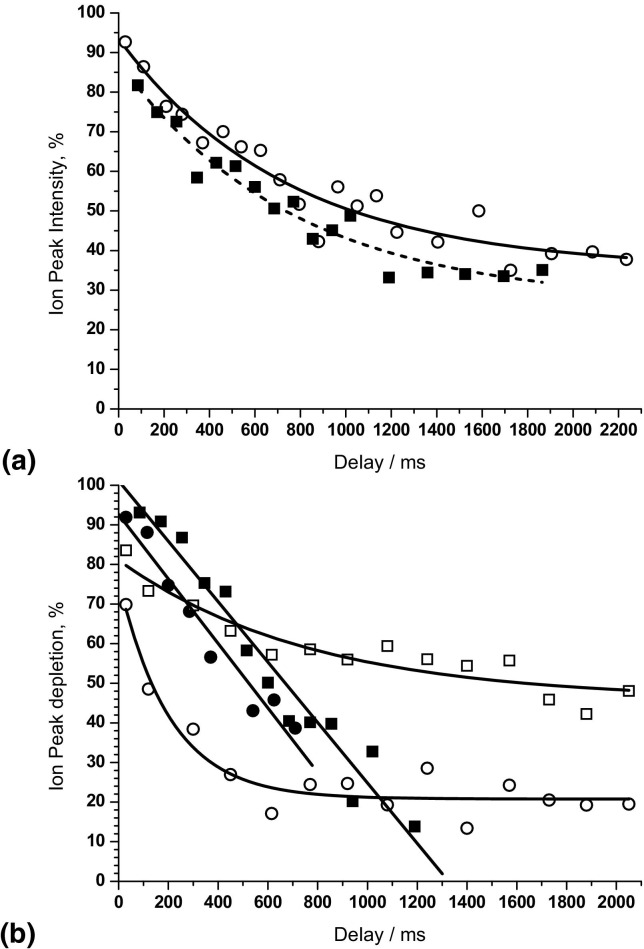
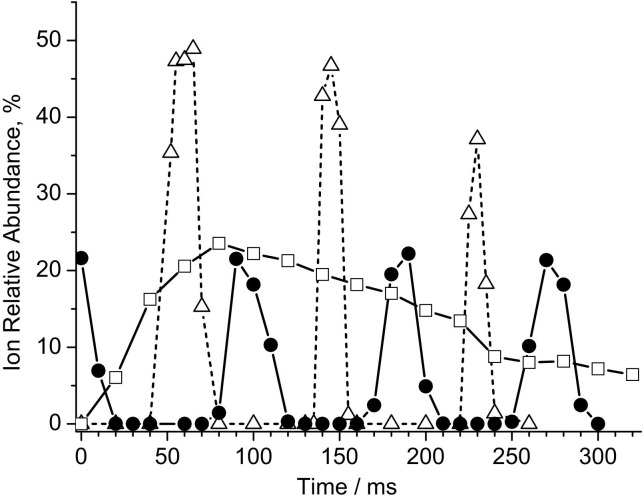
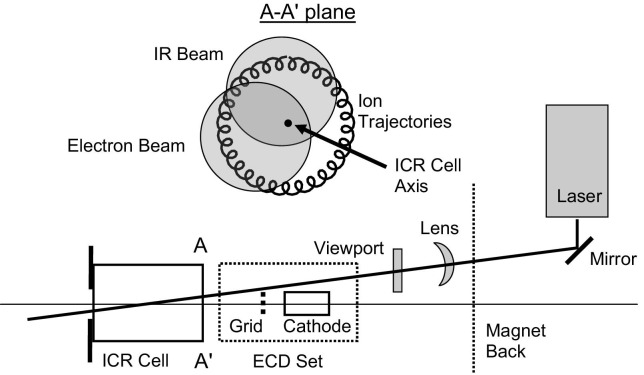
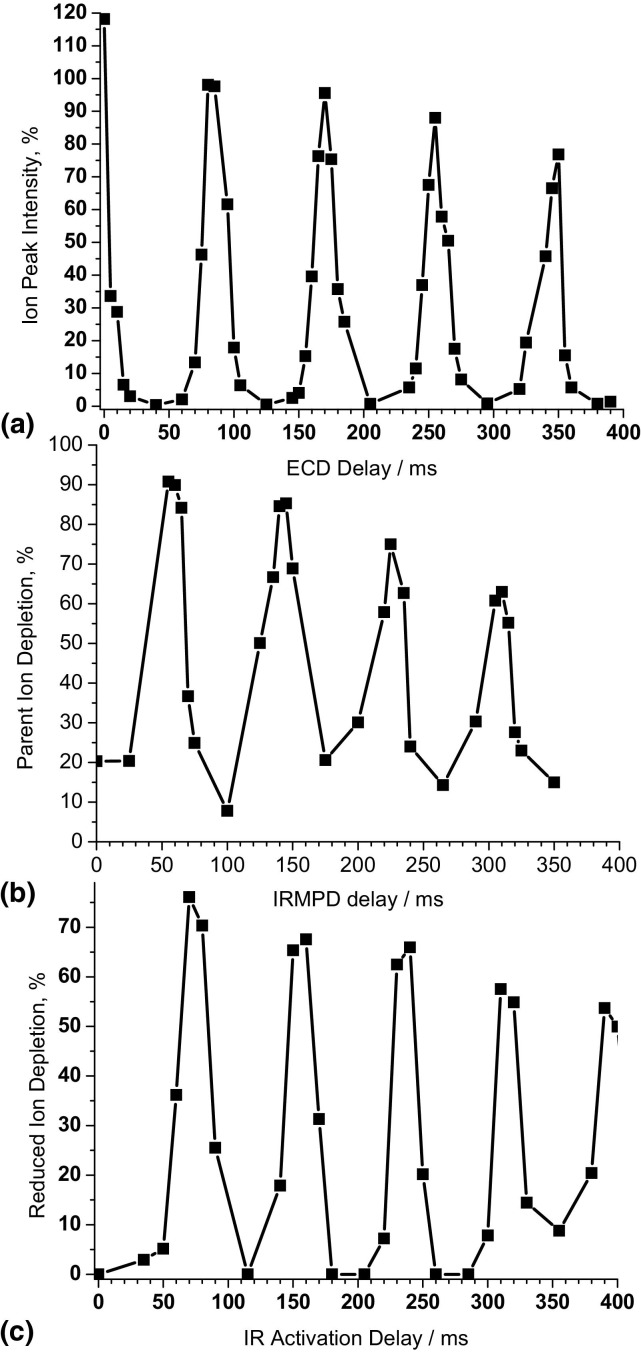
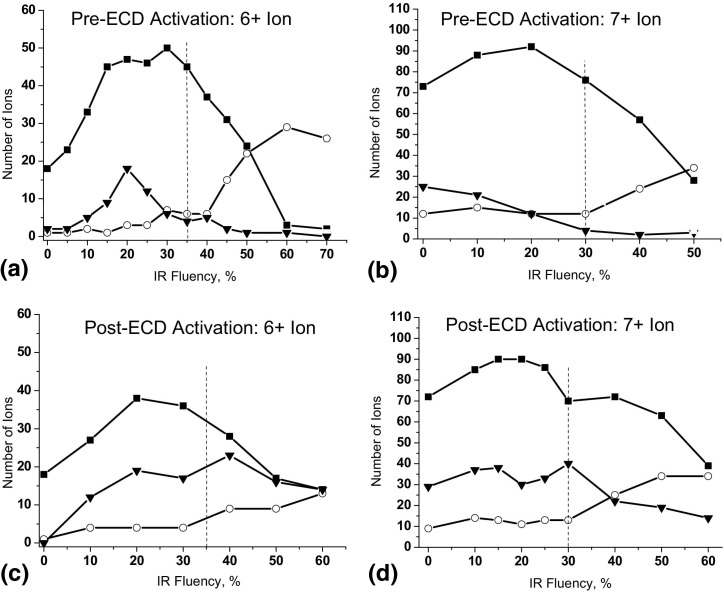
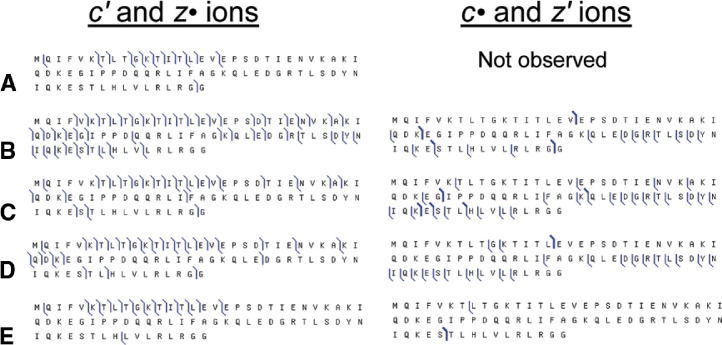
Here, we show that to perform activated ion electron capture dissociation (AI-ECD) in a Fourier transform ion cyclotron resonance (FT-ICR) mass spectrometer equipped with a CO(2) laser, it is necessary to synchronize both infrared irradiation and electron capture dissociation with ion magnetron motion. This requirement is essential for instruments in which the infrared laser is angled off-axis, such as the Thermo Finnigan LTQ FT. Generally, the electron irradiation time required for proteins is much shorter (ms) than that required for peptides (tens of ms), and the modulation of ECD, AI ECD, and infrared multiphoton dissociation (IRMPD) with ion magnetron motion is more pronounced. We have optimized AI ECD for ubiquitin, cytochrome c, and myoglobin; however the results can be extended to other proteins. We demonstrate that pre-ECD and post-ECD activation are physically different and display different kinetics. We also demonstrate how, by use of appropriate AI ECD time sequences and normalization, the kinetics of protein gas-phase refolding can be deconvoluted from the diffusion of the ion cloud and measured on the time scale longer than the period of ion magnetron motion.
在此,我们表明,要在配备二氧化碳激光器的傅里叶变换离子回旋共振(FT-ICR)质谱仪中进行活化离子电子捕获解离(AI-ECD),必须使红外辐照和电子捕获解离与离子磁控管运动同步。对于红外激光以离轴角度设置的仪器,如赛默飞世尔科技的LTQ FT,这一要求至关重要。一般来说,蛋白质所需的电子辐照时间(毫秒)比肽所需的时间(几十毫秒)短得多,并且ECD、AI ECD和红外多光子解离(IRMPD)随离子磁控管运动的调制更为明显。我们已针对泛素、细胞色素c和肌红蛋白优化了AI ECD;然而,结果可扩展到其他蛋白质。我们证明ECD前和ECD后的活化在物理上是不同的,且表现出不同的动力学。我们还展示了如何通过使用适当的AI ECD时间序列和归一化,从离子云的扩散中解卷积出蛋白质气相重折叠的动力学,并在比离子磁控管运动周期更长的时间尺度上进行测量。