Department of Epidemiology, University of Pittsburgh Graduate School of Public Health, Pittsburgh, PA, USA.
Infect Agent Cancer. 2009 Feb 10;4 Suppl 1(Suppl 1):S10. doi: 10.1186/1750-9378-4-S1-S10.
The United States (US) Food & Drug Administration (FDA) recently approved a human papillomavirus (HPV) vaccine with the purpose of reducing the risk of cervical cancers caused by HPV 16 and HPV 18. It is important that the general population be educated about HPV and the HPV vaccine in order to make the appropriate decision whether or not to vaccinate against this virus. Participants from the adult US general population of Pittsburgh, Pennsylvania, USA and Hampton, Virginia, USA (18+ years old) were surveyed to determine their knowledge about HPV and the HPV vaccine, and to evaluate their perception of the vaccine efficacy and safety.
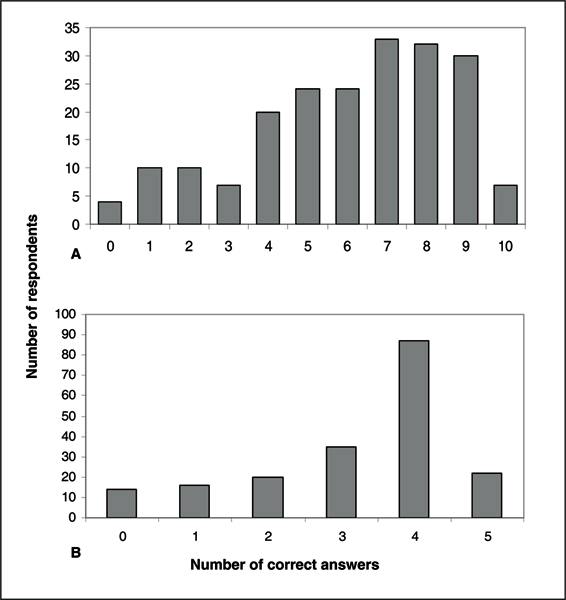
We report herein preliminary data for 202 participants. Fifty-five percent (55%) of the study population was White, 45% Black, and 1% was from other ethnic groups or did not disclose their ethnicity. A large proportion of participants had heard of the human papillomavirus (overall population: 93.6%; Pittsburgh: 95%; Hampton: 90%). Participants of African descent were slightly less aware of HPV than Whites (Black 89% vs. Whites 97%, p > 0.1). Although the majority of participants knew that HPV caused cervical cancer (84%), Whites were more informed than Black participants (91% vs. 73%, p = 0.044). Eighty-seven percent (87%) of participants had heard of the HPV vaccine (Pittsburgh: 92% and Hampton: 74%, p = 0.029); a higher proportion of Whites were aware of the vaccine when compared with Blacks (93% vs. 76%, p = 0.031). However, only 18% of the population knew that the current FDA-approved vaccine protected against genital warts and most cervical cancer (20% of Blacks and 16% of Whites, p > 0.1).
These data suggest that although the general population might be aware of HPV and the HPV vaccine, knowledge of the benefits of the HPV vaccination may not be apparent. Knowledge of HPV and the HPV vaccine could result in a likely choice of HPV vaccination and would subsequently reduce the incidence of cervical cancer.
美国食品药品监督管理局(FDA)最近批准了一种人乳头瘤病毒(HPV)疫苗,旨在降低 HPV 16 和 HPV 18 引起的宫颈癌风险。为了做出是否接种 HPV 疫苗的正确决定,向普通人群普及 HPV 和 HPV 疫苗知识非常重要。我们对来自美国宾夕法尼亚州匹兹堡和弗吉尼亚州汉普顿的成年普通人群(18 岁以上)进行了调查,以确定他们对 HPV 和 HPV 疫苗的了解程度,并评估他们对疫苗功效和安全性的看法。
我们在此报告 202 名参与者的初步数据。研究人群中 55%为白人,45%为黑人,1%来自其他种族或未透露其种族。很大一部分参与者听说过人乳头瘤病毒(总体人群:93.6%;匹兹堡:95%;汉普顿:90%)。非洲裔参与者对 HPV 的认识略低于白人(黑人 89%比白人 97%,p>0.1)。尽管大多数参与者知道 HPV 会导致宫颈癌(84%),但白人比黑人参与者更了解(91%比 73%,p=0.044)。87%(87%)的参与者听说过 HPV 疫苗(匹兹堡:92%,汉普顿:74%,p=0.029);与黑人相比,白人对疫苗的认识程度更高(93%比 76%,p=0.031)。然而,只有 18%的人知道目前 FDA 批准的疫苗可预防生殖器疣和大多数宫颈癌(黑人 20%,白人 16%,p>0.1)。
这些数据表明,尽管普通人群可能了解 HPV 和 HPV 疫苗,但 HPV 疫苗接种的益处可能并不明显。对 HPV 和 HPV 疫苗的了解可能会导致 HPV 疫苗接种的选择,从而降低宫颈癌的发病率。