State Key Laboratory of Cancer Biology and Xijing Hospital of Digestive Diseases, Fourth Military Medical University, Xi'an, China.
J Cell Mol Med. 2009 Nov-Dec;13(11-12):4453-64. doi: 10.1111/j.1582-4934.2009.00687.x. Epub 2009 Feb 4.
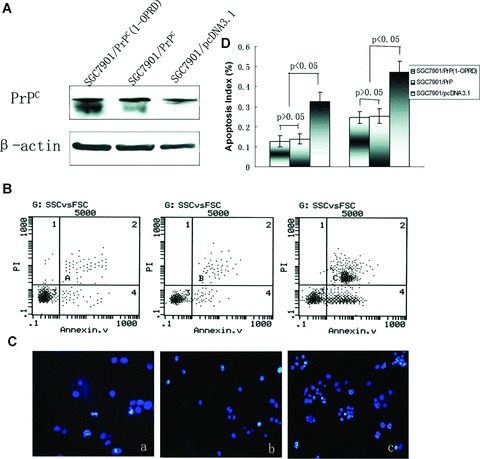
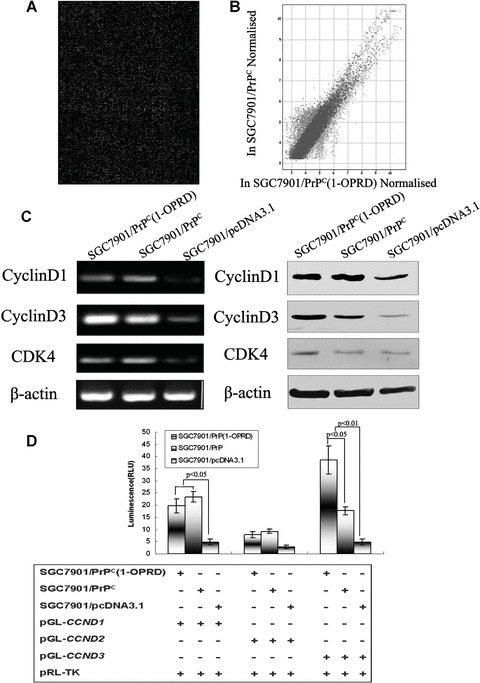
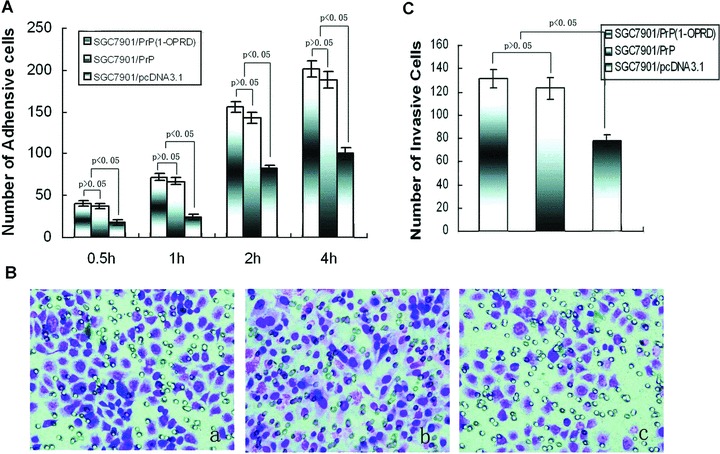
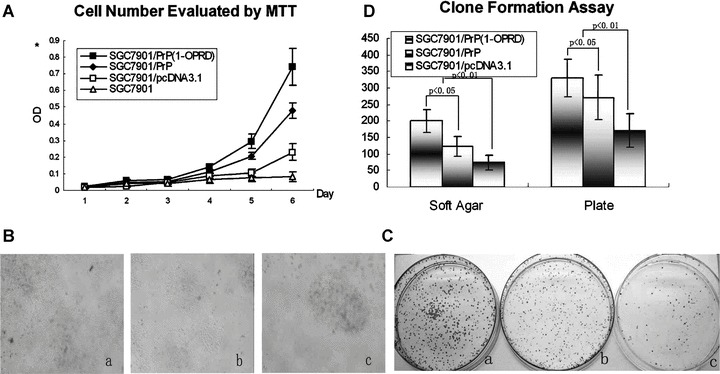
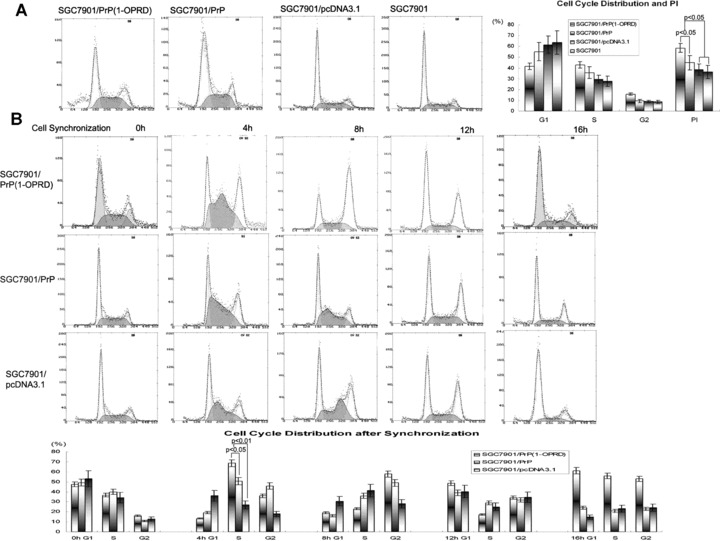
Approximately 10-15% of the human prion disease is inherited and one of the important genetic mutations occurs in the octapeptide repeat region of prion protein gene. One of the variants, one octapeptide repeat deletion (1-OPRD), existed in several gastric cancer cell lines and its mutation frequency was higher in gastric cancer cases. However, the biological functions of it remain unknown. Wild-type and mutation forms of PrP(C) were cloned and transfected into gastric cancer cells. Cell apoptosis, adhesion, invasion, multidrug resistance (MDR) and proliferation were, respectively, investigated. Different expressed genes were screened by gene array and proved by PT-PCR. Further, luciferase report assay was used to explore the transcriptional activation of target genes. Forced overexpression PrP(C) (1-OPRD) could promote the gastric cancer cells SGC7901 growth through facilitating G1- to S-phase transition in the cell cycle. PrP(C) (1-OPRD) could also inhibit apoptosis, and promote adhesion, invasion and MDR in SGC7901. However, it exhibited no significant difference between wild-type PrP(C) (1-OPRD) and PrP(C) on apoptosis, invasion or MDR effects. Further experiments indicated that PrP(C) (1-OPRD) could trigger the transactivation of cyclinD3 besides cyclinD1 to promote cell transition and proliferation. Overexpression of PrP(C) (1-OPRD) might promote the proliferation of gastric cancer cells at least partially through transcriptional activation of cyclinD3 to accelerate the G1-/S-phase transition. The promoting proliferation effect of PrP(C) (1-OPRD) was more than that of wild-type PrP(C). However, they showed no difference on apoptosis, adhesion, invasion or MDR effects of gastric cancer cells.
约 10-15%的人类朊病毒病是遗传性的,其中一个重要的基因突变发生在朊病毒蛋白基因的八肽重复区。一种变体,一个八肽重复缺失(1-OPRD),存在于几种胃癌细胞系中,其突变频率在胃癌病例中更高。然而,其生物学功能仍不清楚。野生型和突变形式的 PrP(C)被克隆并转染到胃癌细胞中。分别研究了细胞凋亡、黏附、侵袭、多药耐药(MDR)和增殖。通过基因芯片筛选差异表达基因,并通过 PT-PCR 验证。进一步,利用荧光素酶报告实验探讨靶基因的转录激活。强制过表达 PrP(C)(1-OPRD)可通过促进细胞周期中 G1 期向 S 期的转变,促进胃癌细胞 SGC7901 的生长。PrP(C)(1-OPRD)还可以抑制凋亡,并促进 SGC7901 的黏附、侵袭和 MDR。然而,在凋亡、侵袭或 MDR 作用方面,野生型 PrP(C)(1-OPRD)与 PrP(C)之间没有显著差异。进一步的实验表明,PrP(C)(1-OPRD)除了诱导 cyclinD1 外,还可以触发 cyclinD3 的转录激活,从而促进细胞的转化和增殖。PrP(C)(1-OPRD)的过表达可能至少部分通过 cyclinD3 的转录激活来促进胃癌细胞的增殖,从而加速 G1-/S 期的转变。PrP(C)(1-OPRD)的促增殖作用强于野生型 PrP(C)。然而,它们在胃癌细胞的凋亡、黏附、侵袭或 MDR 作用方面没有差异。