Guenther Drake A, Walker William F
Department of Biomedical Engineering, University of Virginia, Charlottesville, VA, USA.
IEEE Trans Ultrason Ferroelectr Freq Control. 2009 Jan;56(1):77-90. doi: 10.1109/TUFFC.2009.1007.
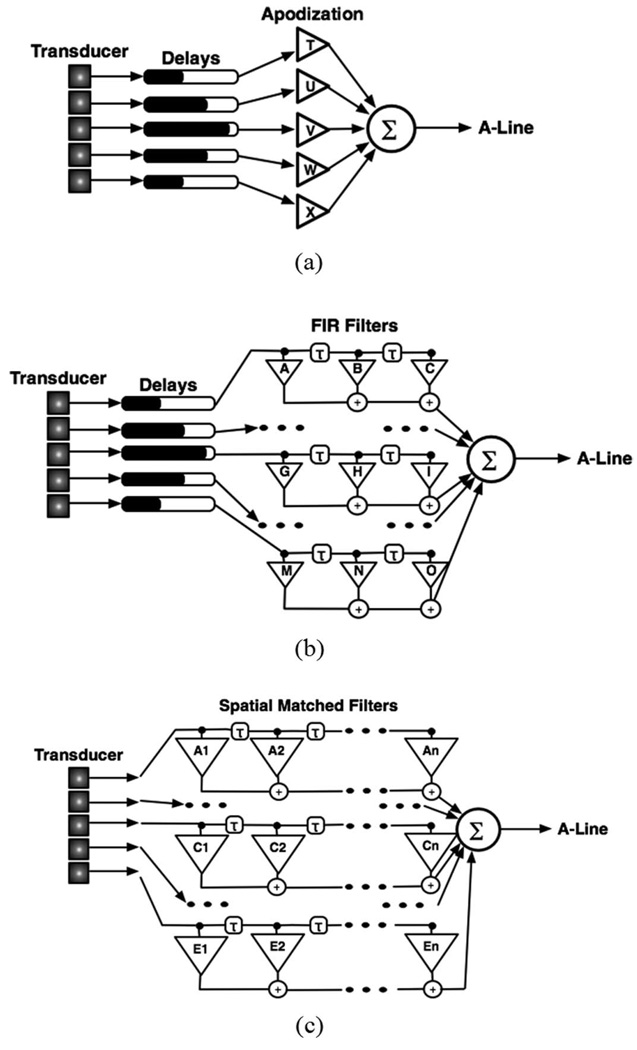
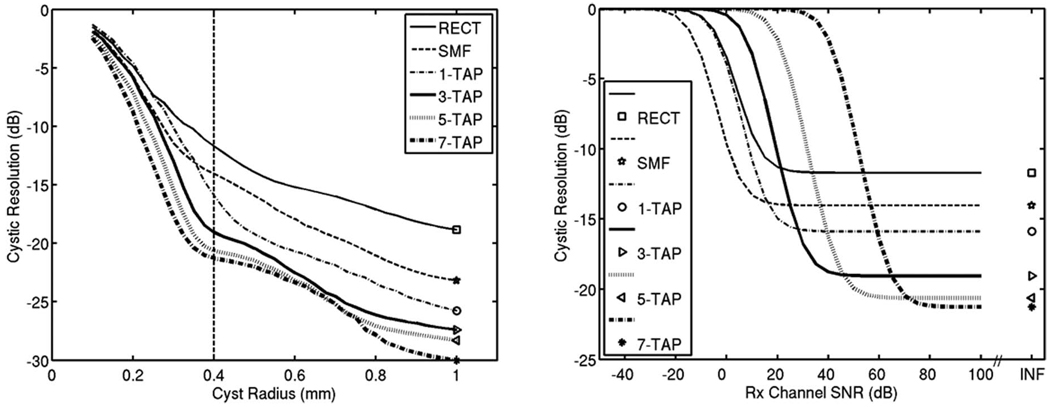
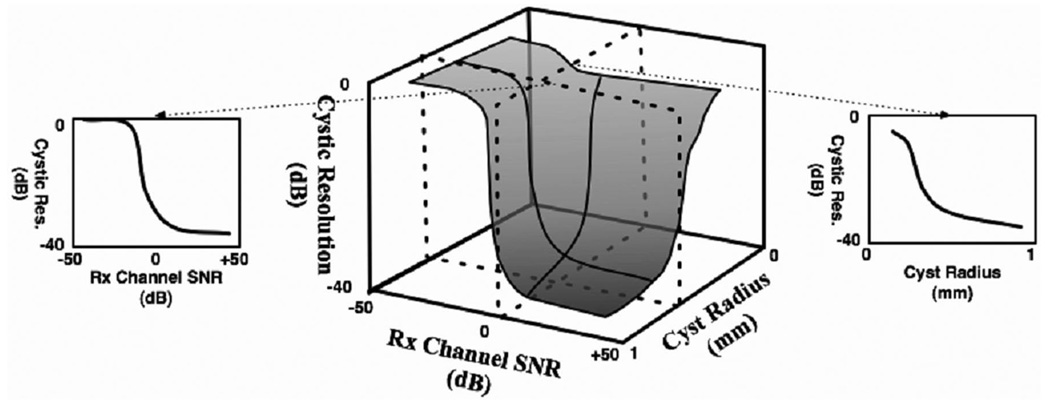
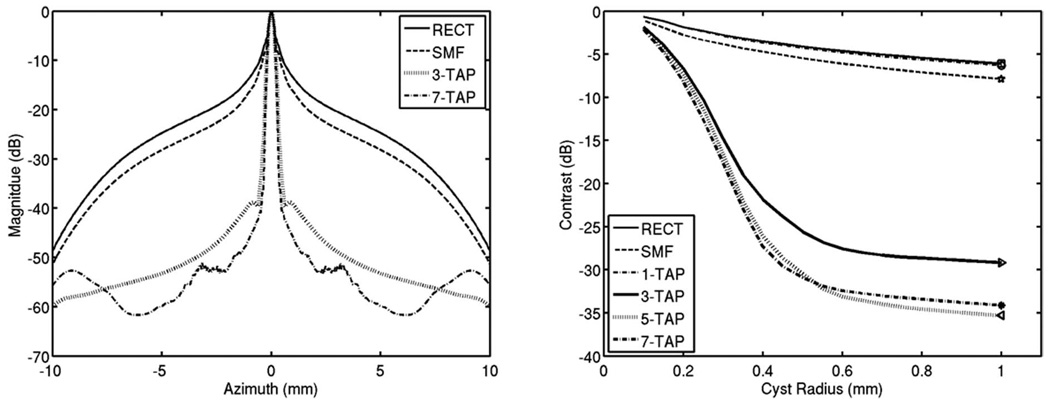
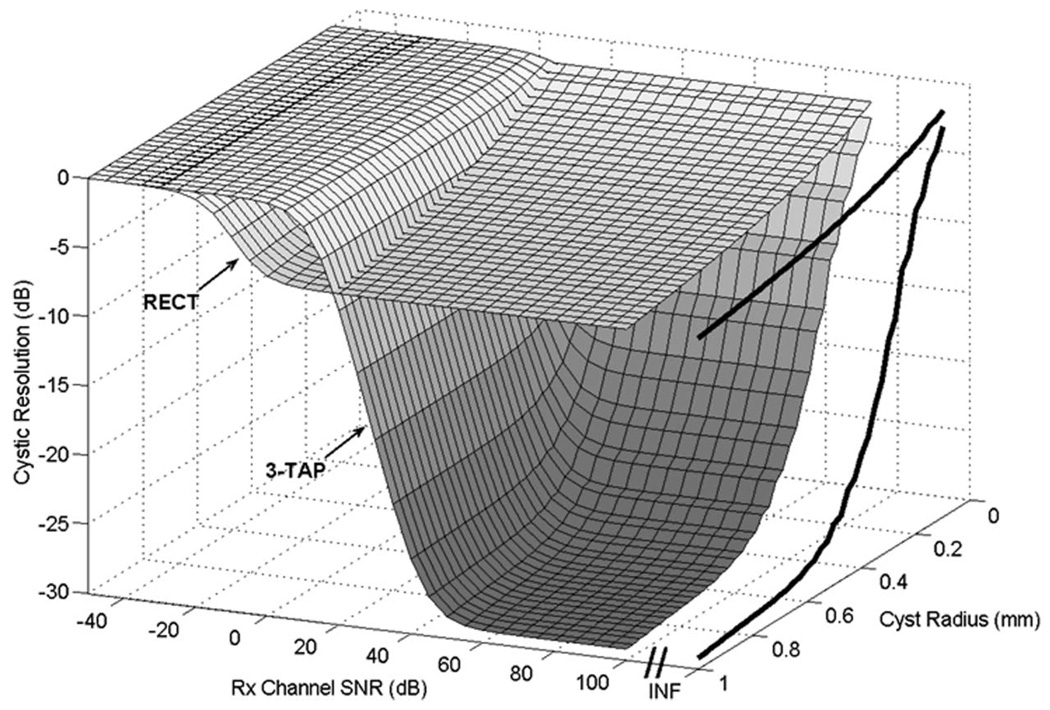
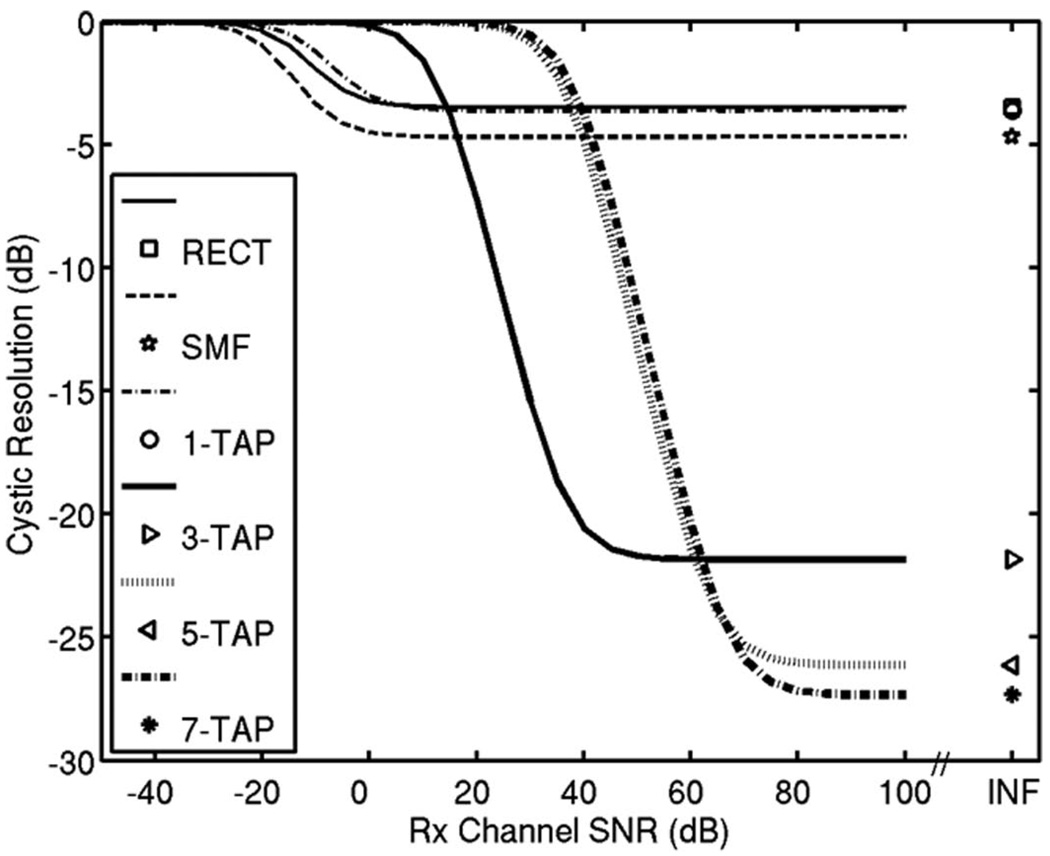
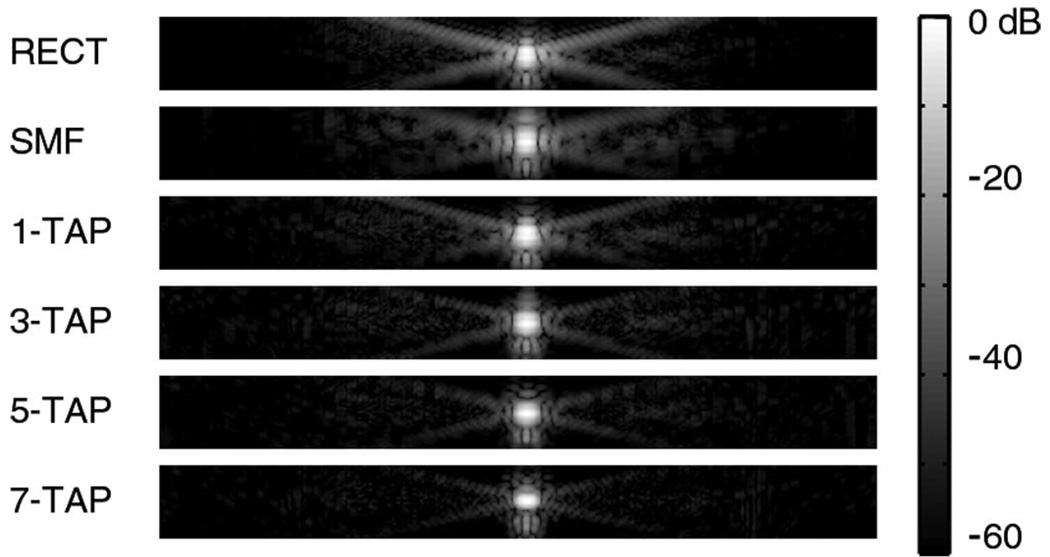
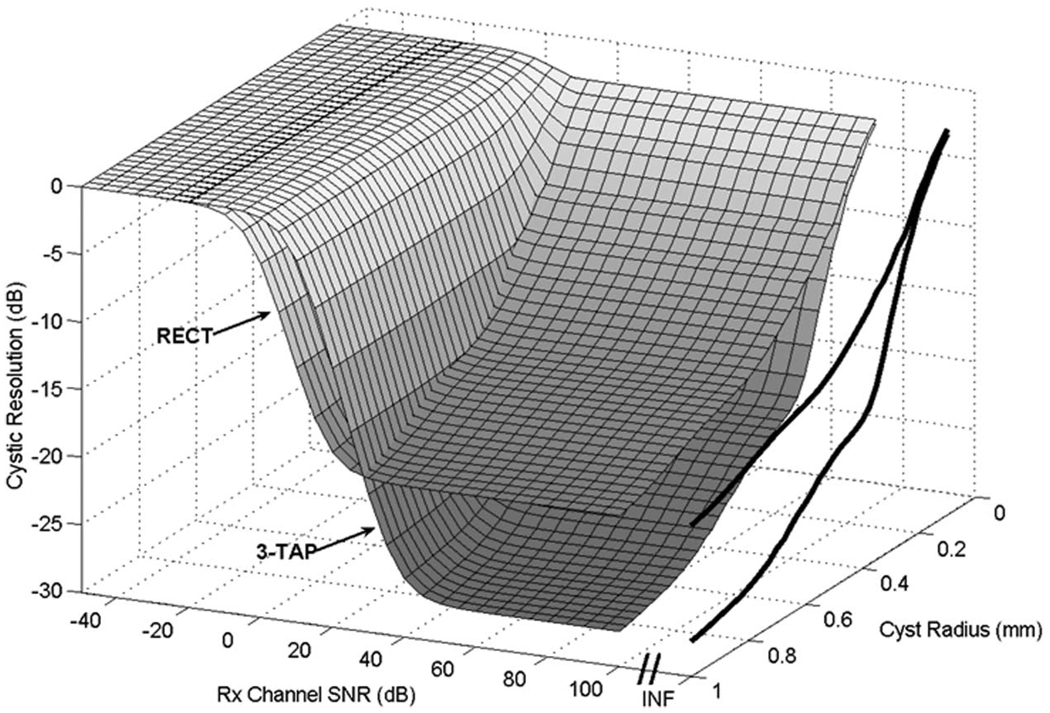
Existing methods for characterizing the imaging performance of ultrasound systems do not clearly quantify the impact of contrast, spatial resolution, and signal-to-noise ratio (SNR). Although the beamplot, contrast resolution metrics, SNR measurements, ideal observer methods, and contrast-detail analysis provide useful information, it remains difficult to discern how changes in system parameters affect these metrics and clinical imaging performance. In this paper, we present a rigorous methodology for characterizing the pulse-echo imaging performance of arbitrary ultrasound systems. Our metric incorporates the 4-D spatio-temporal system response, which is defined as a function of the individual beamformer channel weights. The metric also incorporates the individual beamformer channel electronic SNR. Whereas earlier performance measures dealt solely with contrast resolution or echo signal-to-noise ratio, our metric combines them so that tradeoffs between these parameters are easily distinguishable. The new metric quantifies an arbitrary system's contrast resolution and SNR performance as a function of cyst size, beamformer channel weights, and beamformer channel SNR. We present a theoretical derivation of the unified performance metric and provide simulation and experimental results highlighting the metric's utility. We compare the fundamental performance limits of 2 beamforming strategies: the dynamic focus finite impulse response (FIR) filter beamformer and the spatial matched filter (SMF) beamformer to the performance of the conventional delay-and-sum (DAS) beamformer. Results from this study show that the SMF beamformer and the FIR beamformer offer significant gains in beamformer SNR and contrast resolution compared with the DAS beamformer, respectively. The metric clearly distinguishes the performance of the SMF beamformer, which enhances system sensitivity, from the FIR beamformer, which optimizes system contrast resolution. Finally, the metric provides one quantitative goal for optimizing a broadband beamformer?s contrast resolution performance.
现有的用于表征超声系统成像性能的方法并不能清晰地量化对比度、空间分辨率和信噪比(SNR)的影响。尽管波束图、对比度分辨率指标、SNR测量、理想观察者方法以及对比度细节分析提供了有用信息,但仍然难以辨别系统参数的变化如何影响这些指标和临床成像性能。在本文中,我们提出了一种用于表征任意超声系统脉冲回波成像性能的严谨方法。我们的指标纳入了4维时空系统响应,其被定义为各个波束形成器通道权重的函数。该指标还纳入了各个波束形成器通道的电子SNR。早期的性能测量仅处理对比度分辨率或回波信噪比,而我们的指标将它们结合起来,以便这些参数之间的权衡易于区分。新指标将任意系统的对比度分辨率和SNR性能量化为囊肿大小、波束形成器通道权重和波束形成器通道SNR的函数。我们给出了统一性能指标的理论推导,并提供了模拟和实验结果以突出该指标的实用性。我们将两种波束形成策略的基本性能极限:动态聚焦有限脉冲响应(FIR)滤波器波束形成器和空间匹配滤波器(SMF)波束形成器与传统延迟求和(DAS)波束形成器的性能进行了比较。这项研究的结果表明,与DAS波束形成器相比,SMF波束形成器和FIR波束形成器分别在波束形成器SNR和对比度分辨率方面有显著提升。该指标清楚地区分了增强系统灵敏度的SMF波束形成器和优化系统对比度分辨率的FIR波束形成器的性能。最后,该指标为优化宽带波束形成器的对比度分辨率性能提供了一个定量目标。