Gordon Michael D, Scott Kristin
Department of Molecular and Cell Biology and Helen Wills Neuroscience Institute, 291 Life Sciences Addition, University of California, Berkeley, Berkeley, CA 94720, USA.
Neuron. 2009 Feb 12;61(3):373-84. doi: 10.1016/j.neuron.2008.12.033.
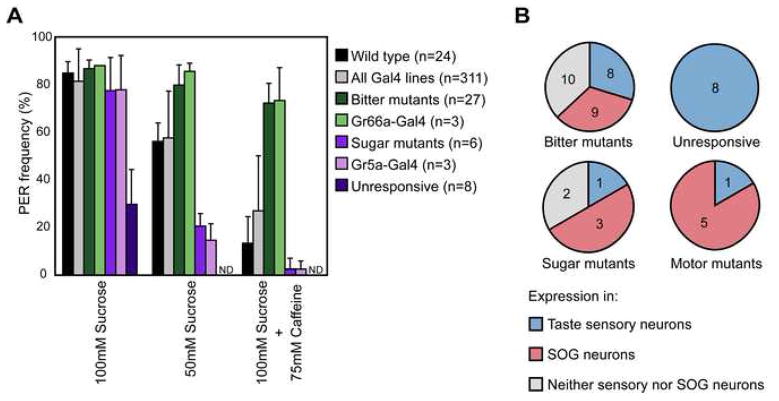
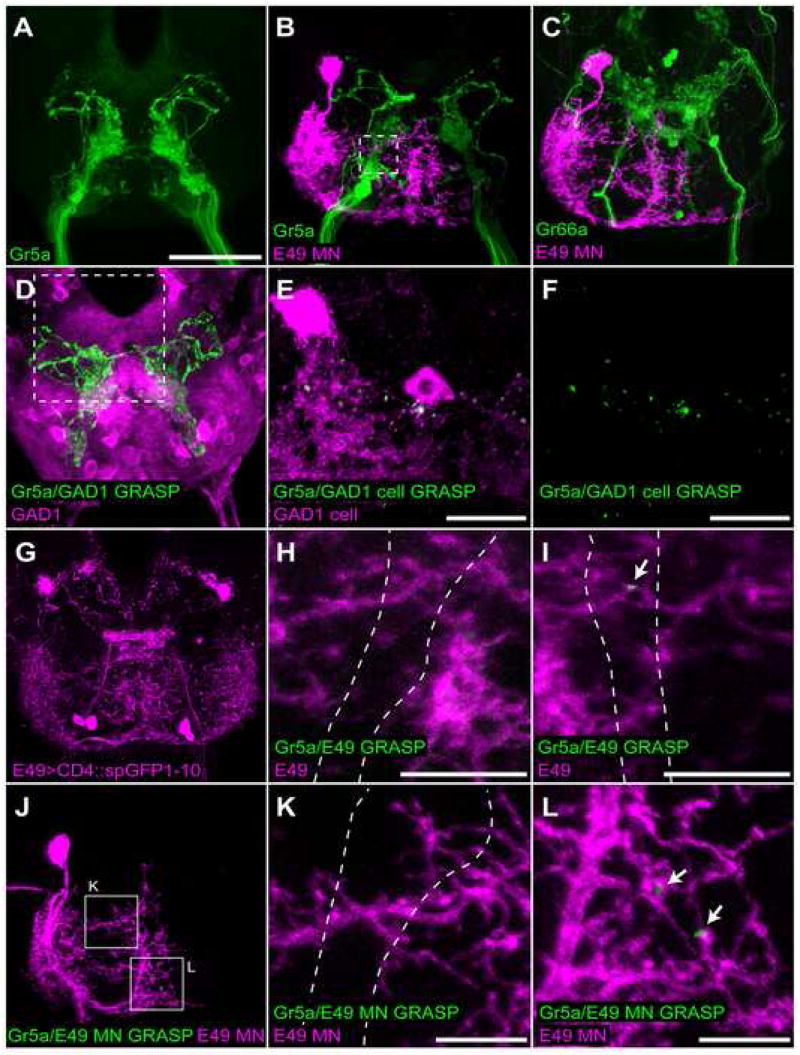
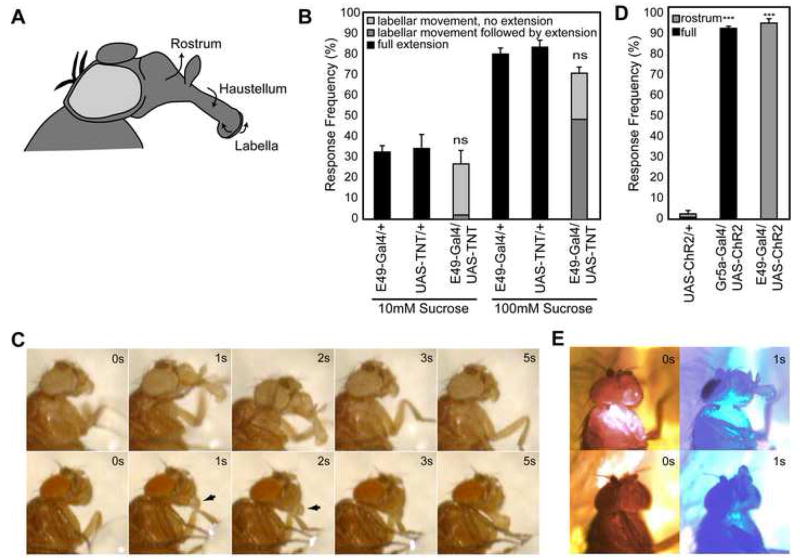
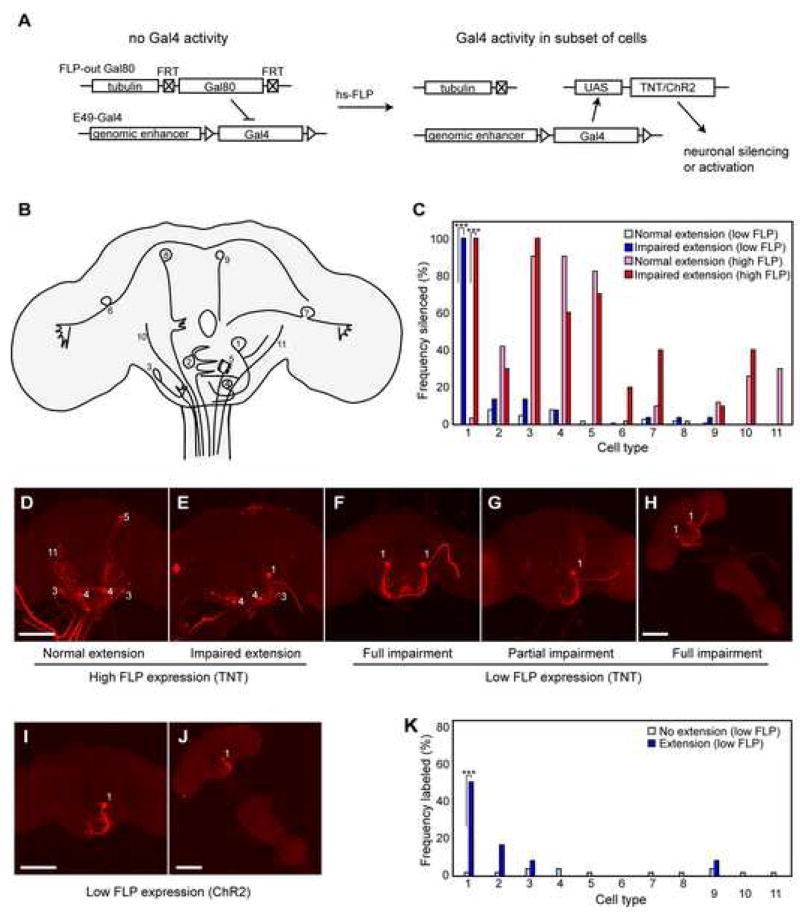
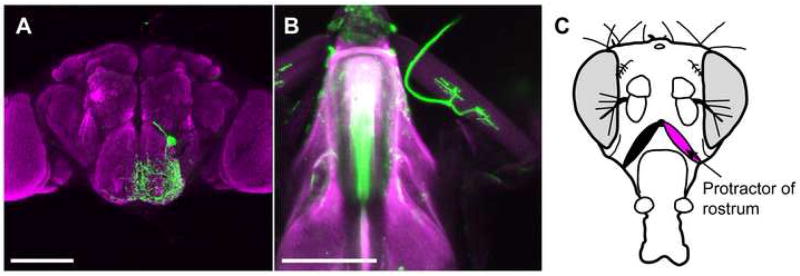
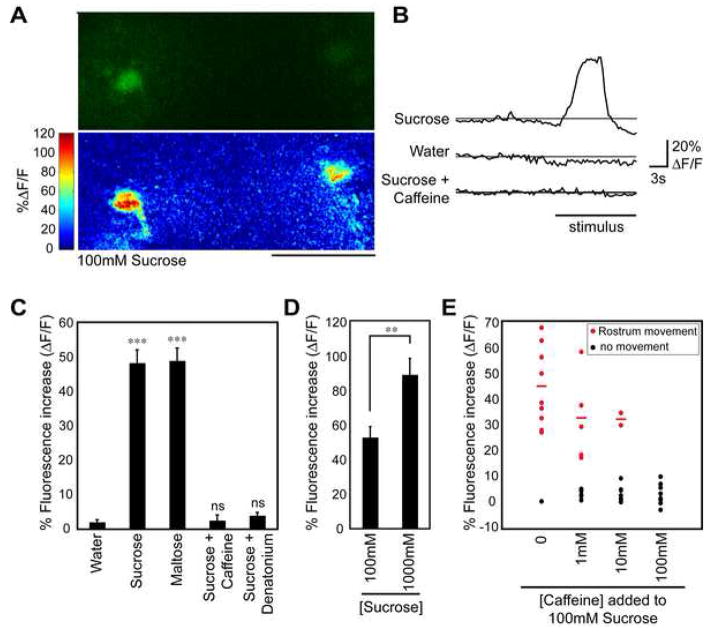
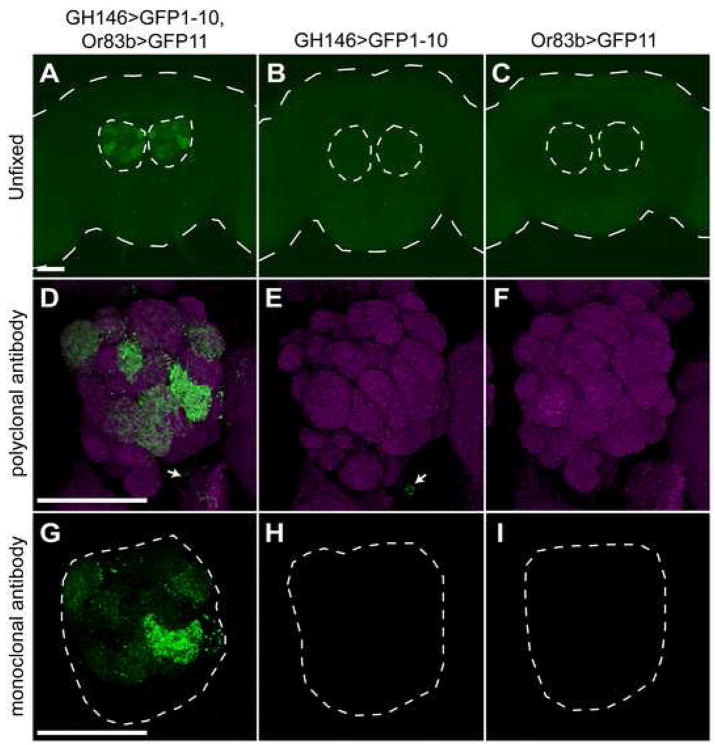
Tastes elicit innate behaviors critical for directing animals to ingest nutritious substances and reject toxic compounds, but the neural basis of these behaviors is not understood. Here, we use a neural silencing screen to identify neurons required for a simple Drosophila taste behavior and characterize a neural population that controls a specific subprogram of this behavior. By silencing and activating subsets of the defined cell population, we identify the neurons involved in the taste behavior as a pair of motor neurons located in the subesophageal ganglion (SOG). The motor neurons are activated by sugar stimulation of gustatory neurons and inhibited by bitter compounds; however, experiments utilizing split-GFP detect no direct connections between the motor neurons and primary sensory neurons, indicating that further study will be necessary to elucidate the circuitry bridging these populations. Combined, these results provide a general strategy and a valuable starting point for future taste circuit analysis.
味觉引发对引导动物摄取营养物质和拒斥有毒化合物至关重要的先天行为,但这些行为的神经基础尚不清楚。在此,我们使用神经沉默筛选来识别果蝇简单味觉行为所需的神经元,并对控制该行为特定子程序的神经群体进行表征。通过沉默和激活已定义细胞群体的子集,我们确定参与味觉行为的神经元是位于咽下神经节(SOG)的一对运动神经元。这些运动神经元由味觉神经元的糖刺激激活,并被苦味化合物抑制;然而,利用分裂绿色荧光蛋白的实验未检测到运动神经元与初级感觉神经元之间的直接连接,这表明需要进一步研究以阐明连接这些群体的神经回路。综合来看,这些结果为未来味觉回路分析提供了一个通用策略和有价值的起点。