Ouyang Wei, Herold Karl F, Hemmings Hugh C
Department of Anesthesiology, Weill Cornell Medical College, New York, New York 10065, USA.
Anesthesiology. 2009 Mar;110(3):582-90. doi: 10.1097/ALN.0b013e318197941e.
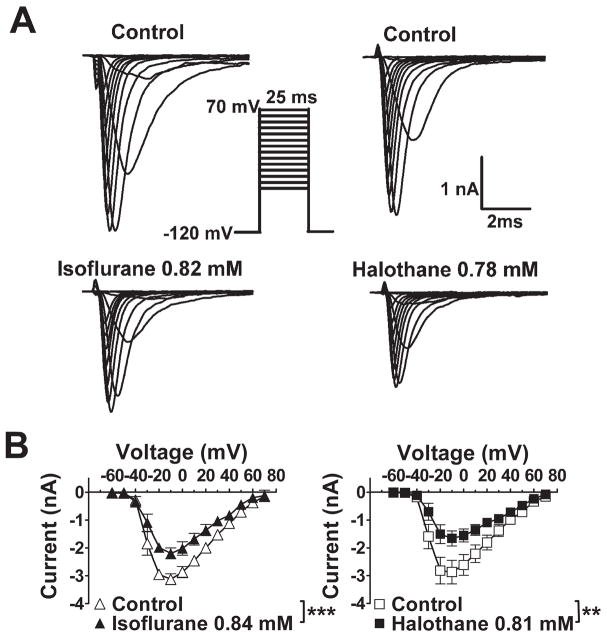
Inhibition of voltage-gated Na channels (Na(v)) is implicated in the synaptic actions of volatile anesthetics. We studied the effects of the major halogenated inhaled anesthetics (halothane, isoflurane, sevoflurane, enflurane, and desflurane) on Na(v)1.4, a well-characterized pharmacological model for Na(v) effects.
Na currents (I(Na)) from rat Na(v)1.4 alpha-subunits heterologously expressed in Chinese hamster ovary cells were analyzed by whole cell voltage-clamp electrophysiological recording.
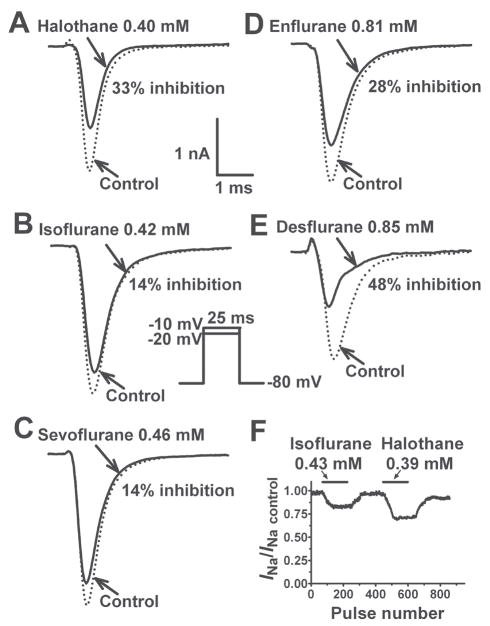
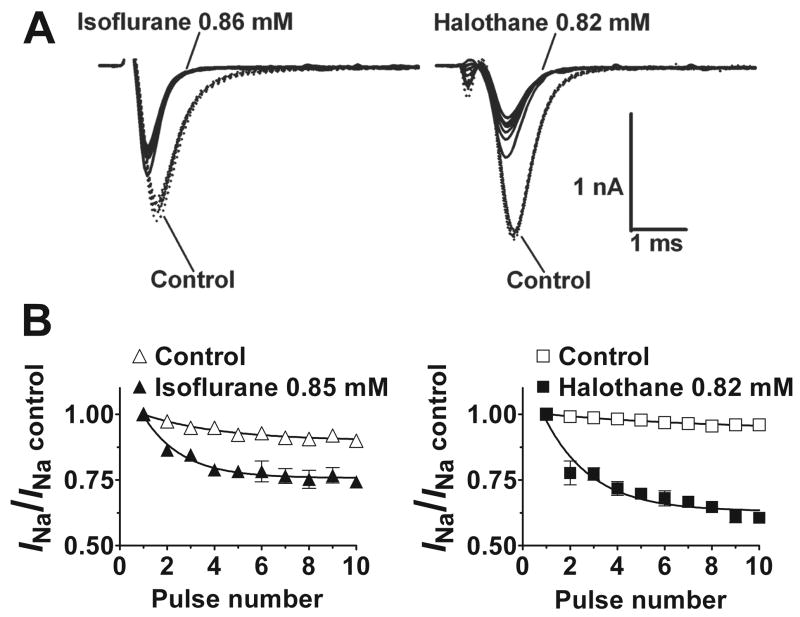
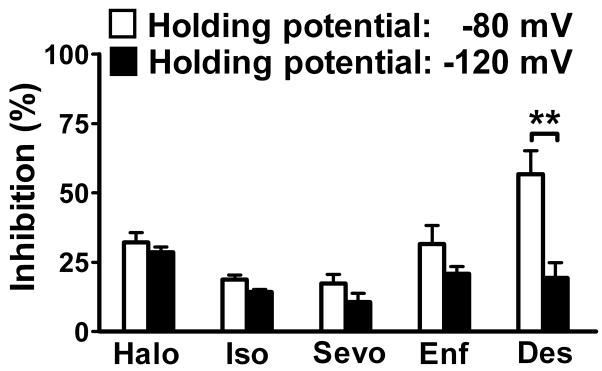
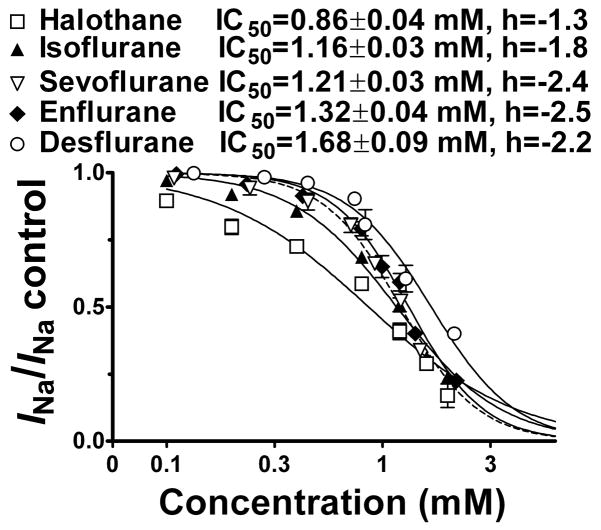
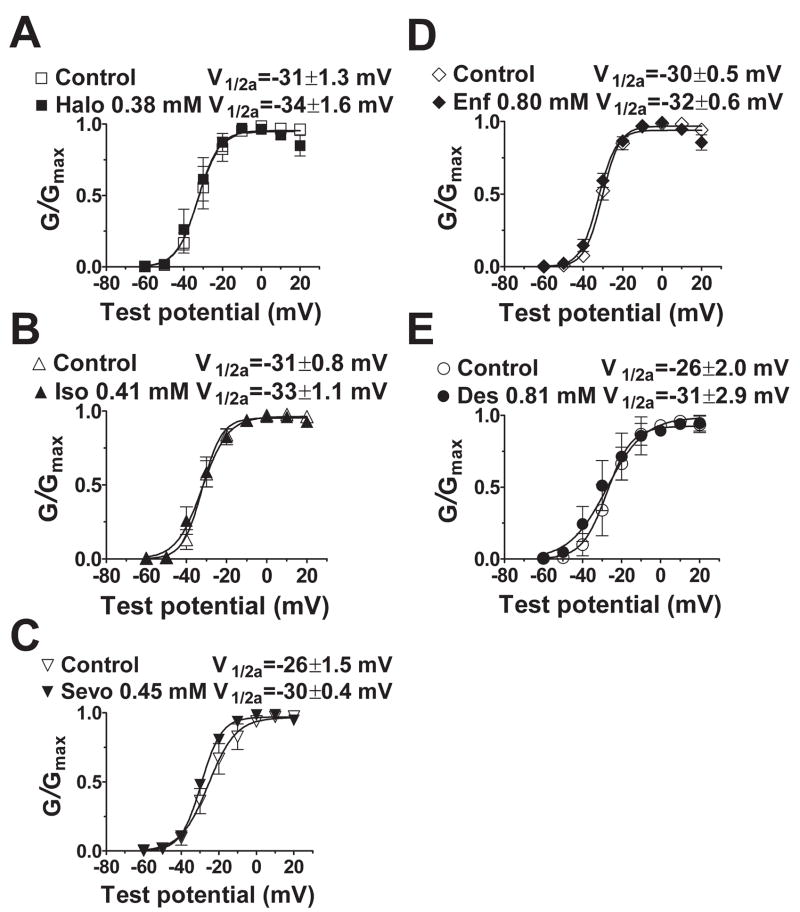
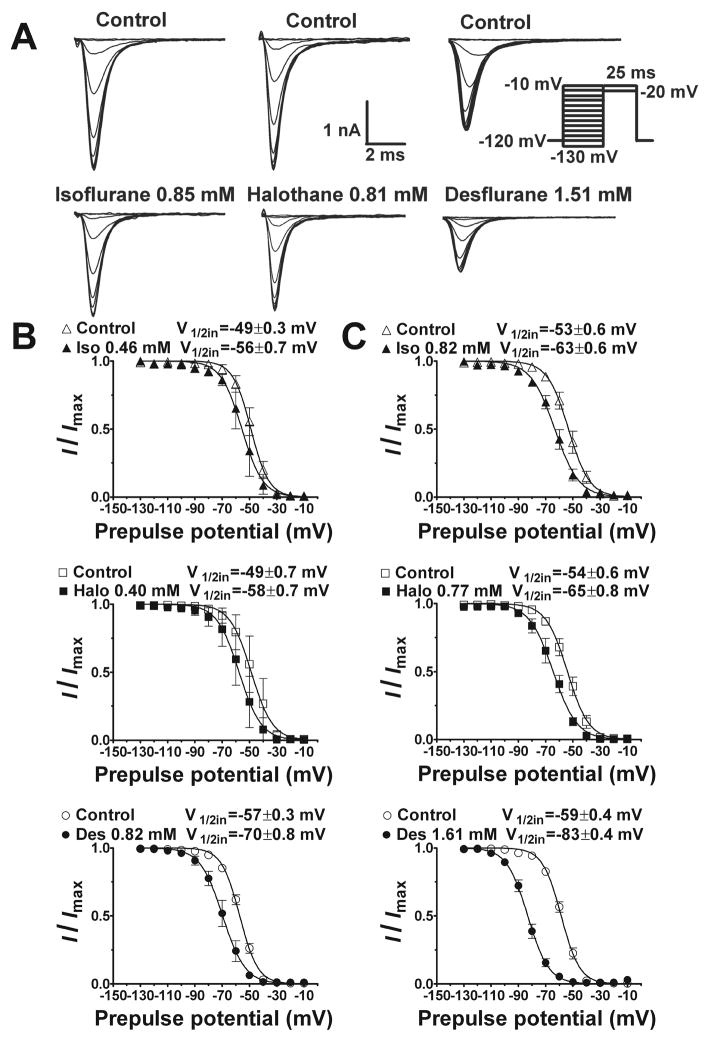
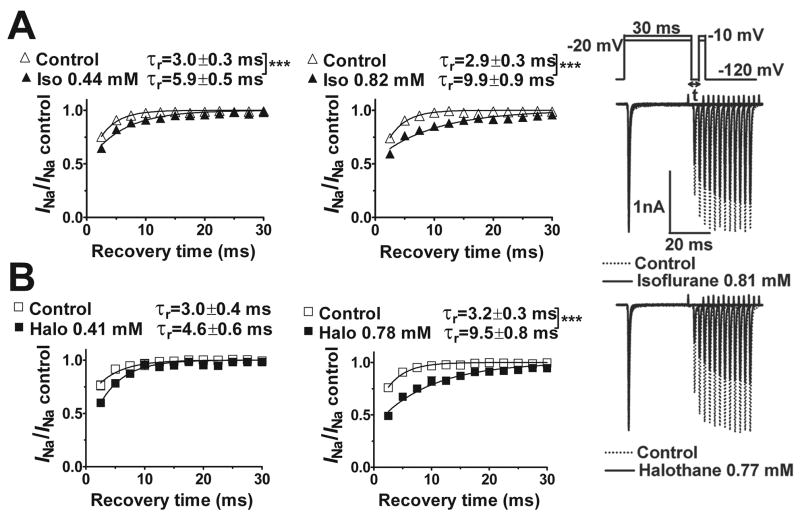
Halogenated inhaled anesthetics reversibly inhibited Na(v)1.4 in a concentration- and voltage-dependent manner at clinical concentrations. At equianesthetic concentrations, peak I(Na) was inhibited with a rank order of desflurane > halothane approximately enflurane > isoflurane approximately sevoflurane from a physiologic holding potential (-80 mV). This suggests that the contribution of Na channel block to anesthesia might vary in an agent-specific manner. From a hyperpolarized holding potential that minimizes inactivation (-120 mV), peak I(Na) was inhibited with a rank order of potency for tonic inhibition of peak I(Na) of halothane > isoflurane approximately sevoflurane > enflurane > desflurane. Desflurane produced the largest negative shift in voltage-dependence of fast inactivation consistent with its more prominent voltage-dependent effects. A comparison between isoflurane and halothane showed that halothane produced greater facilitation of current decay, slowing of recovery from fast inactivation, and use-dependent block than isoflurane.
Five halogenated inhaled anesthetics all inhibit a voltage-gated Na channel by voltage- and use-dependent mechanisms. Agent-specific differences in efficacy for Na channel inhibition due to differential state-dependent mechanisms creates pharmacologic diversity that could underlie subtle differences in anesthetic and nonanesthetic actions.
电压门控钠通道(Na(v))的抑制作用与挥发性麻醉药的突触效应有关。我们研究了主要的卤代吸入麻醉药(氟烷、异氟烷、七氟烷、恩氟烷和地氟烷)对Na(v)1.4的影响,Na(v)1.4是一种用于研究Na(v)效应的特征明确的药理学模型。
通过全细胞膜片钳电生理记录分析在中国仓鼠卵巢细胞中异源表达的大鼠Na(v)1.4α亚基的钠电流(I(Na))。
卤代吸入麻醉药在临床浓度下以浓度和电压依赖性方式可逆地抑制Na(v)1.4。在等效麻醉浓度下,从生理钳制电位(-80 mV)开始,地氟烷>氟烷≈恩氟烷>异氟烷≈七氟烷的顺序抑制I(Na)峰值。这表明钠通道阻滞对麻醉的贡献可能因药物而异。从最小化失活的超极化钳制电位(-120 mV)开始,I(Na)峰值的抑制效力顺序为氟烷>异氟烷≈七氟烷>恩氟烷>地氟烷,用于对I(Na)峰值的强直抑制。地氟烷在快速失活的电压依赖性方面产生最大的负向偏移,与其更显著的电压依赖性效应一致。异氟烷和氟烷的比较表明,氟烷比异氟烷产生更大的电流衰减促进作用、快速失活恢复减慢和使用依赖性阻滞。
五种卤代吸入麻醉药均通过电压和使用依赖性机制抑制电压门控钠通道。由于不同的状态依赖性机制导致的钠通道抑制效力的药物特异性差异产生了药理学多样性,这可能是麻醉和非麻醉作用细微差异的基础。