Bonkowski Michael S, Dominici Fernando P, Arum Oge, Rocha Juliana S, Al Regaiey Khalid A, Westbrook Reyhan, Spong Adam, Panici Jacob, Masternak Michal M, Kopchick John J, Bartke Andrzej
Department of Internal Medicine, Geriatrics Research, Southern Illinois University School of Medicine, Springfield, Illinois, United States of America.
PLoS One. 2009;4(2):e4567. doi: 10.1371/journal.pone.0004567. Epub 2009 Feb 23.
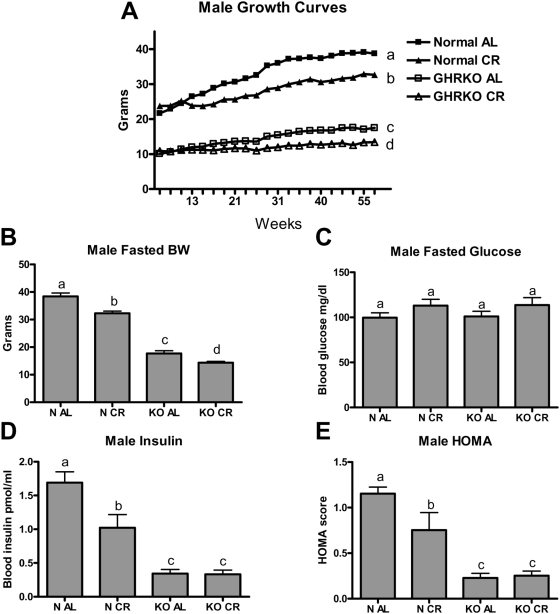
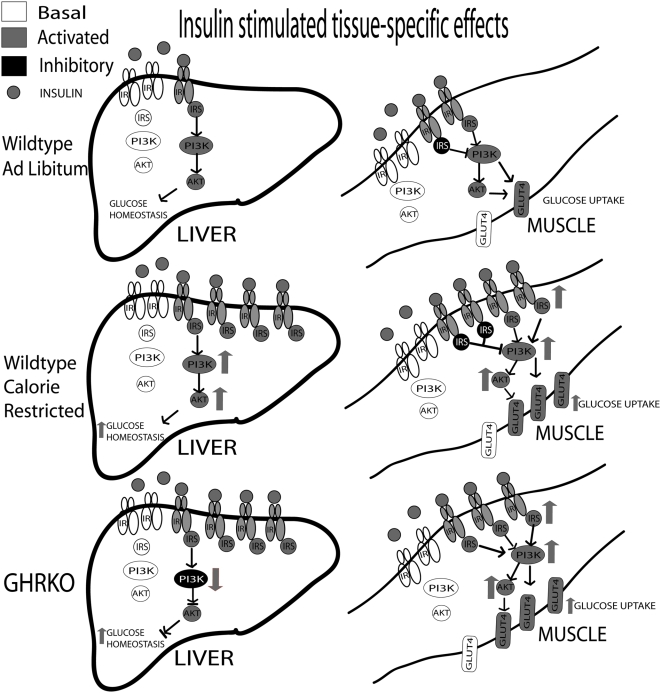
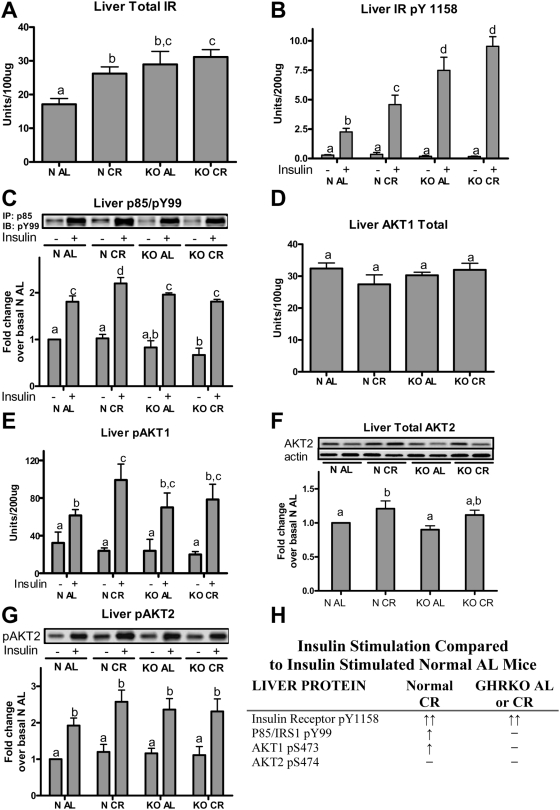
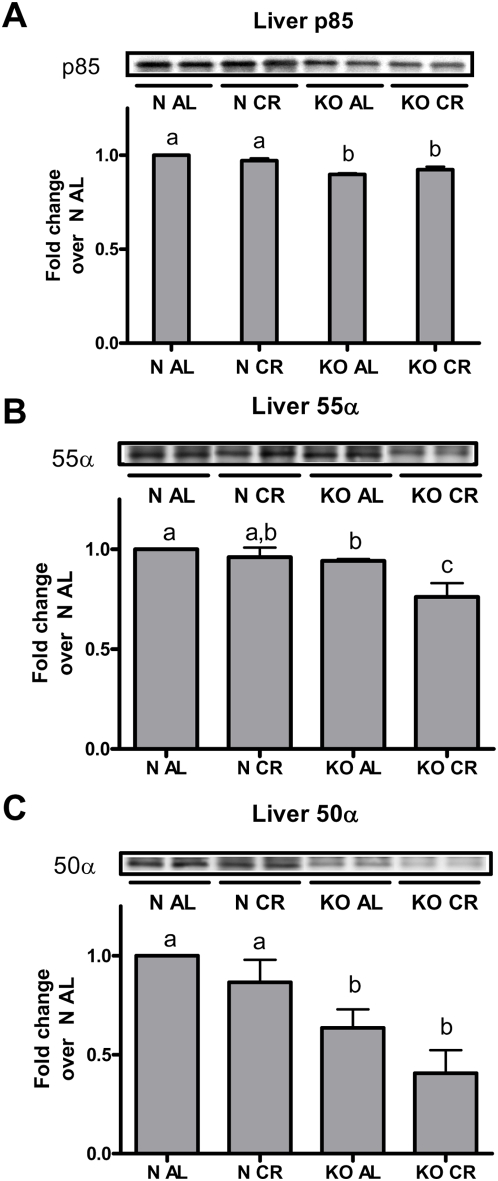
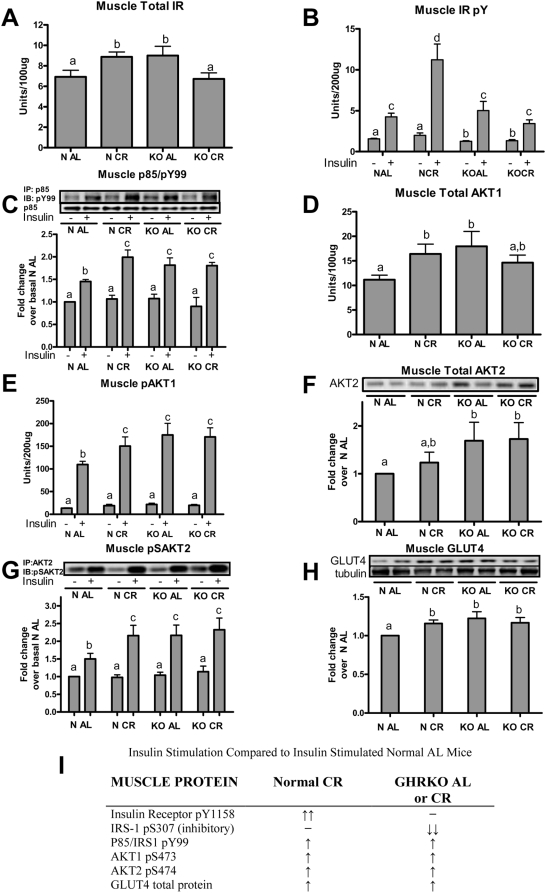
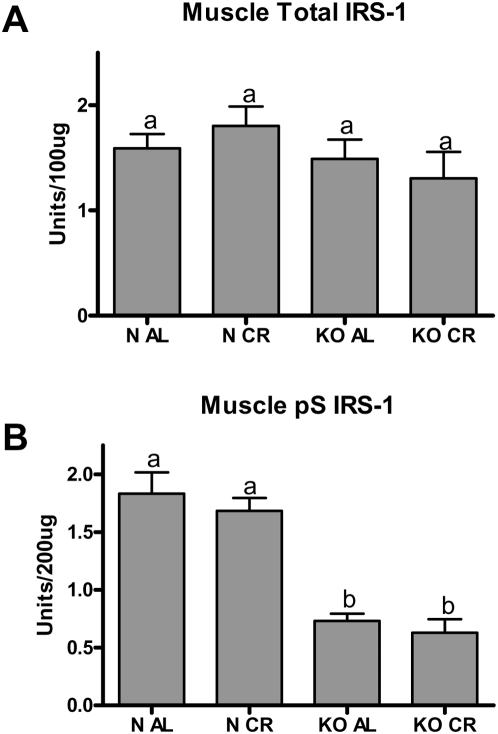
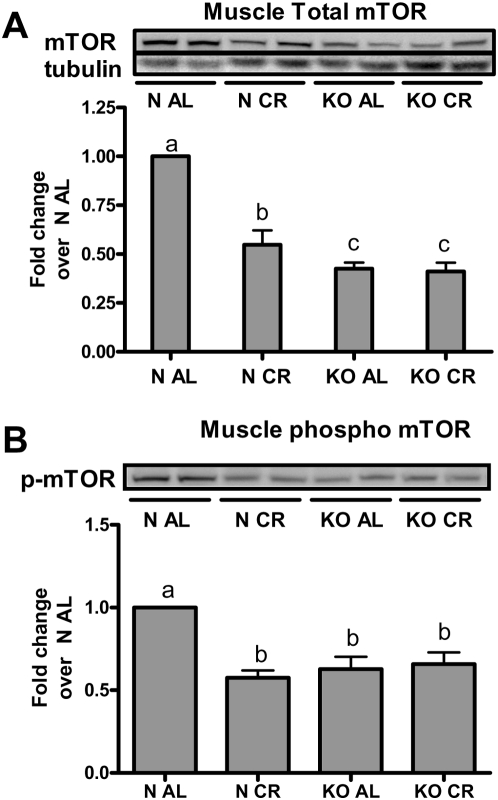
Most mutations that delay aging and prolong lifespan in the mouse are related to somatotropic and/or insulin signaling. Calorie restriction (CR) is the only intervention that reliably increases mouse longevity. There is considerable phenotypic overlap between long-lived mutant mice and normal mice on chronic CR. Therefore, we investigated the interactive effects of CR and targeted disruption or knock out of the growth hormone receptor (GHRKO) in mice on longevity and the insulin signaling cascade. Every other day feeding corresponds to a mild (i.e. 15%) CR which increased median lifespan in normal mice but not in GHRKO mice corroborating our previous findings on the effects of moderate (30%) CR on the longevity of these animals. To determine why insulin sensitivity improves in normal but not GHRKO mice in response to 30% CR, we conducted insulin stimulation experiments after one year of CR. In normal mice, CR increased the insulin stimulated activation of the insulin signaling cascade (IR/IRS/PI3K/AKT) in liver and muscle. Livers of GHRKO mice responded to insulin by increased activation of the early steps of insulin signaling, which was dissipated by altered PI3K subunit abundance which putatively inhibited AKT activation. In the muscle of GHRKO mice, there was elevated downstream activation of the insulin signaling cascade (IRS/PI3K/AKT) in the absence of elevated IR activation. Further, we found a major reduction of inhibitory Ser phosphorylation of IRS-1 seen exclusively in GHRKO muscle which may underpin their elevated insulin sensitivity. Chronic CR failed to further modify the alterations in insulin signaling in GHRKO mice as compared to normal mice, likely explaining or contributing to the absence of CR effects on insulin sensitivity and longevity in these long-lived mice.
大多数能延缓小鼠衰老并延长其寿命的突变都与生长激素和/或胰岛素信号传导有关。热量限制(CR)是唯一能可靠延长小鼠寿命的干预措施。长期进行热量限制的长寿突变小鼠和正常小鼠之间存在相当多的表型重叠。因此,我们研究了热量限制与靶向破坏或敲除小鼠生长激素受体(GHRKO)对寿命和胰岛素信号级联反应的交互作用。隔天喂食相当于轻度(即15%)的热量限制,这增加了正常小鼠的中位寿命,但对GHRKO小鼠无效,这证实了我们之前关于中度(30%)热量限制对这些动物寿命影响的研究结果。为了确定为什么正常小鼠而非GHRKO小鼠在30%热量限制下胰岛素敏感性会提高,我们在热量限制一年后进行了胰岛素刺激实验。在正常小鼠中,热量限制增加了肝脏和肌肉中胰岛素刺激的胰岛素信号级联反应(IR/IRS/PI3K/AKT)的激活。GHRKO小鼠的肝脏对胰岛素的反应是胰岛素信号早期步骤的激活增加,但由于PI3K亚基丰度改变,这种激活被消散,这可能抑制了AKT的激活。在GHRKO小鼠的肌肉中,在胰岛素受体(IR)激活未升高的情况下,胰岛素信号级联反应(IRS/PI3K/AKT)的下游激活升高。此外,我们发现仅在GHRKO小鼠的肌肉中,IRS-1的抑制性丝氨酸磷酸化显著降低,这可能是其胰岛素敏感性升高的基础。与正常小鼠相比,长期热量限制未能进一步改变GHRKO小鼠胰岛素信号的改变,这可能解释或导致了热量限制对这些长寿小鼠的胰岛素敏感性和寿命没有影响。