Almeida Teresa, Alonso Isabel, Martins Sandra, Ramos Eliana Marisa, Azevedo Luísa, Ohno Kinji, Amorim António, Saraiva-Pereira Maria Luiza, Jardim Laura Bannach, Matsuura Tohru, Sequeiros Jorge, Silveira Isabel
UnIGENe, Instituto de Biologia Molecular e Celular, Universidade do Porto, Porto, Portugal.
PLoS One. 2009;4(2):e4553. doi: 10.1371/journal.pone.0004553. Epub 2009 Feb 23.
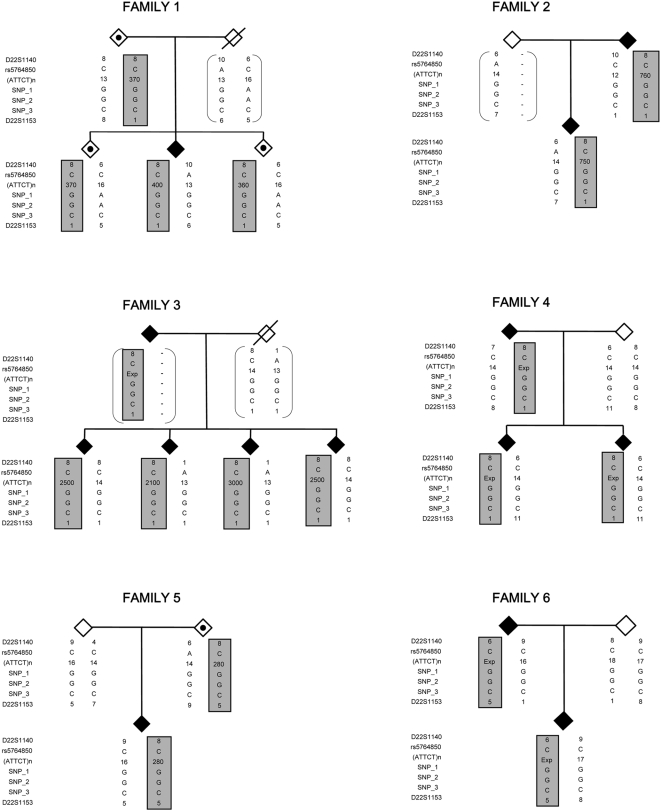
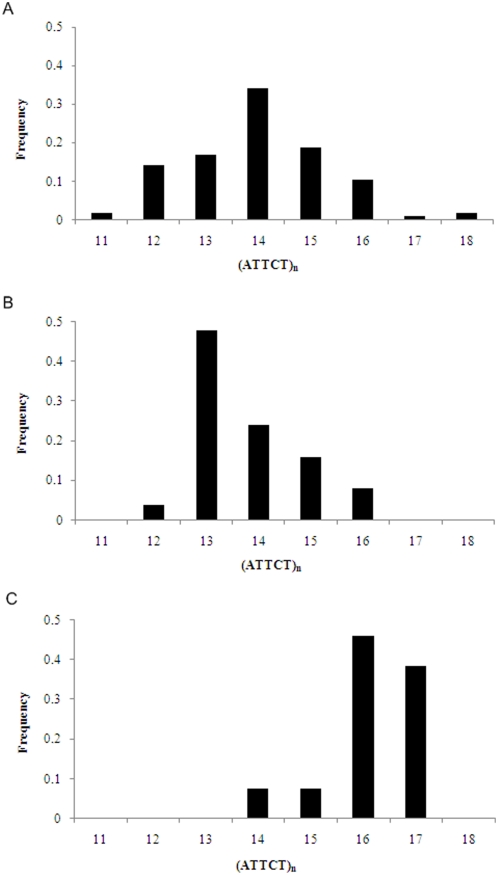
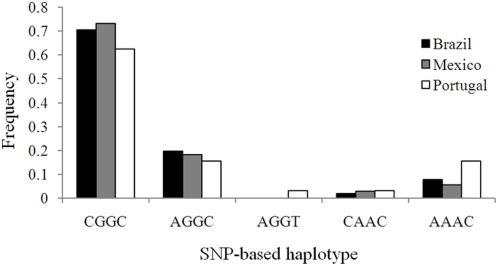
Spinocerebellar ataxia type 10 (SCA10) is an autosomal dominant neurodegenerative disease characterized by cerebellar ataxia and seizures. The disease is caused by a large ATTCT repeat expansion in the ATXN10 gene. The first families reported with SCA10 were of Mexican origin, but the disease was soon after described in Brazilian families of mixed Portuguese and Amerindian ancestry. The origin of the SCA10 expansion and a possible founder effect that would account for its geographical distribution have been the source of speculation over the last years. To unravel the mutational origin and spread of the SCA10 expansion, we performed an extensive haplotype study, using closely linked STR markers and intragenic SNPs, in families from Brazil and Mexico. Our results showed (1) a shared disease haplotype for all Brazilian and one of the Mexican families, and (2) closely-related haplotypes for the additional SCA10 Mexican families; (3) little or null genetic distance in small normal alleles of different repeat sizes, from the same SNP lineage, indicating that they are being originated by a single step mechanism; and (4) a shared haplotype for pure and interrupted expanded alleles, pointing to a gene conversion model for its generation. In conclusion, we show evidence for an ancestral common origin for SCA10 in Latin America, which might have arisen in an ancestral Amerindian population and later have been spread into the mixed populations of Mexico and Brazil.
10型脊髓小脑共济失调(SCA10)是一种常染色体显性神经退行性疾病,其特征为小脑共济失调和癫痫发作。该疾病由ATXN10基因中一段大量的ATTCT重复序列扩增所致。最初报道的患SCA10的家族来自墨西哥,但此后不久在具有葡萄牙和美洲印第安人混合血统的巴西家族中也发现了这种疾病。在过去几年里,SCA10扩增的起源以及可能解释其地理分布的奠基者效应一直是人们猜测的焦点。为了阐明SCA10扩增的突变起源和传播情况,我们利用紧密连锁的STR标记和基因内SNP,对来自巴西和墨西哥的家族进行了广泛的单倍型研究。我们的结果显示:(1)所有巴西家族和一个墨西哥家族共享一种疾病单倍型;(2)其他SCA10墨西哥家族具有密切相关的单倍型;(3)来自同一SNP谱系、不同重复序列大小小的正常等位基因之间的遗传距离很小或为零,表明它们是由单一机制产生的;(4)纯合和中断的扩增等位基因共享一种单倍型,表明其产生存在基因转换模型。总之,我们证明了拉丁美洲的SCA10有一个共同的祖先起源,它可能起源于一个美洲印第安人群体,后来传播到墨西哥和巴西的混合人群中。