Frank C Andrew, Pielage Jan, Davis Graeme W
Department of Biochemistry and Biophysics, 1550 4th Street, Rock Hall 4th Floor North, University of California, San Francisco, San Francisco, CA 94158, USA.
Neuron. 2009 Feb 26;61(4):556-69. doi: 10.1016/j.neuron.2008.12.028.
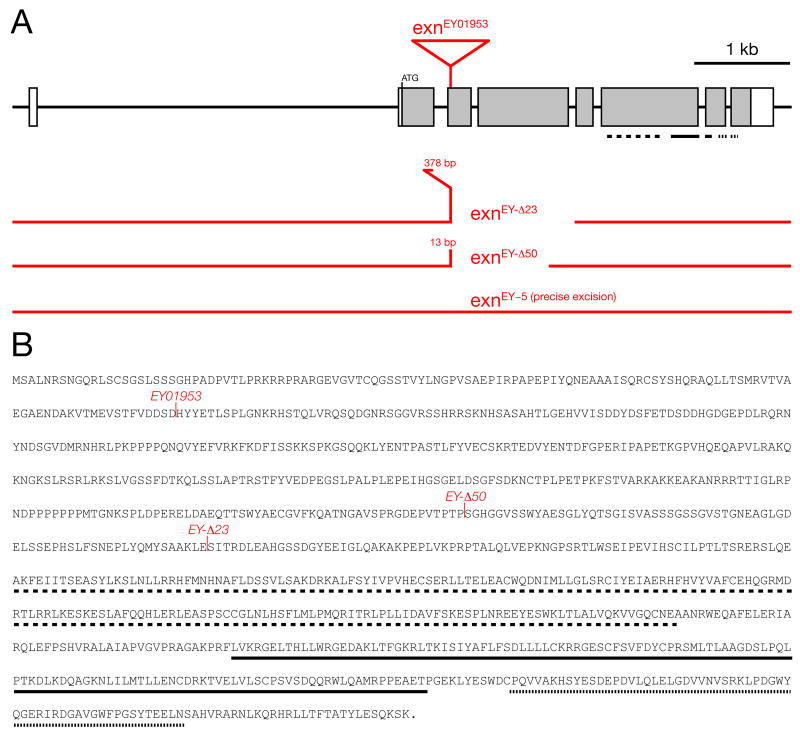
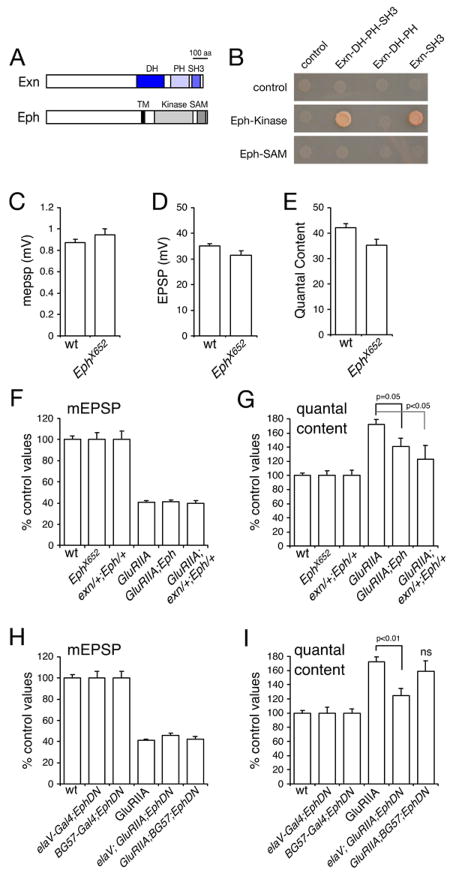
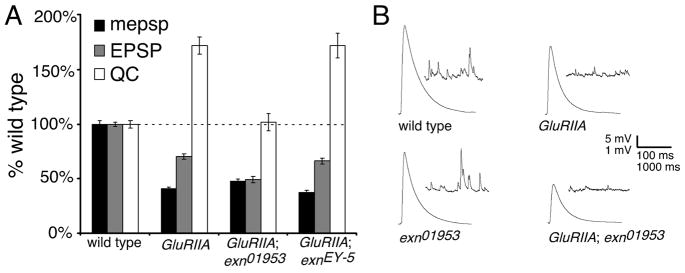
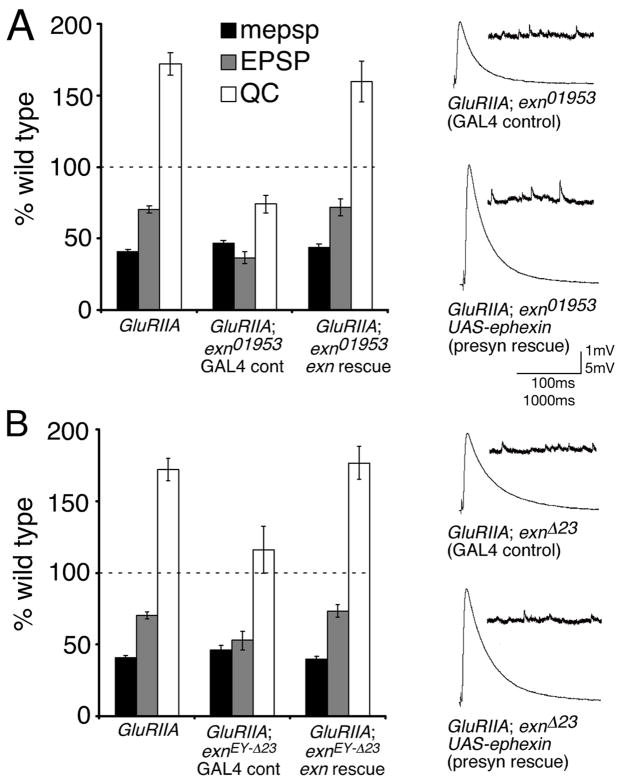
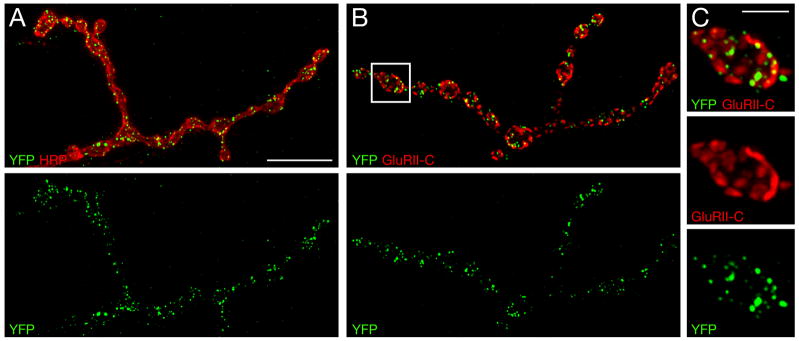
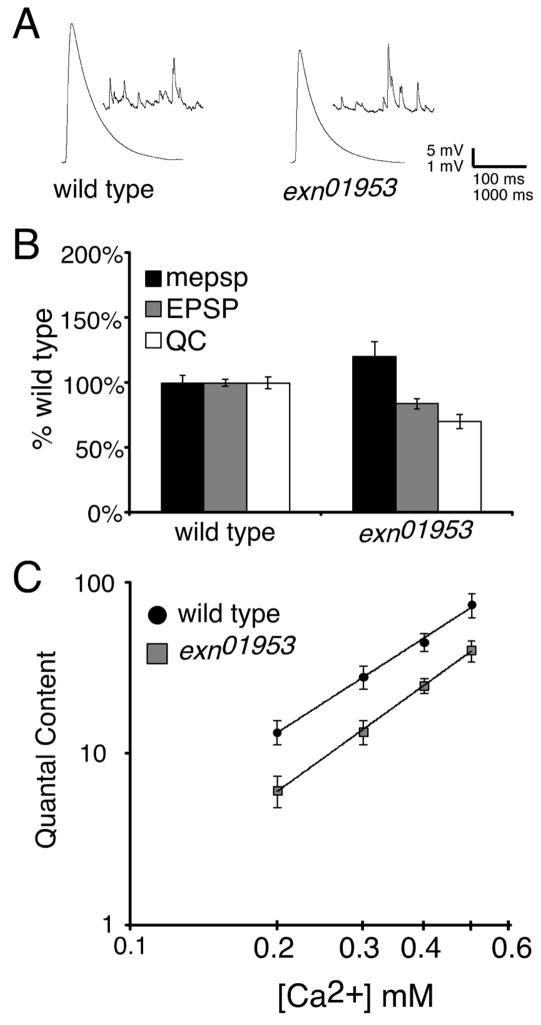
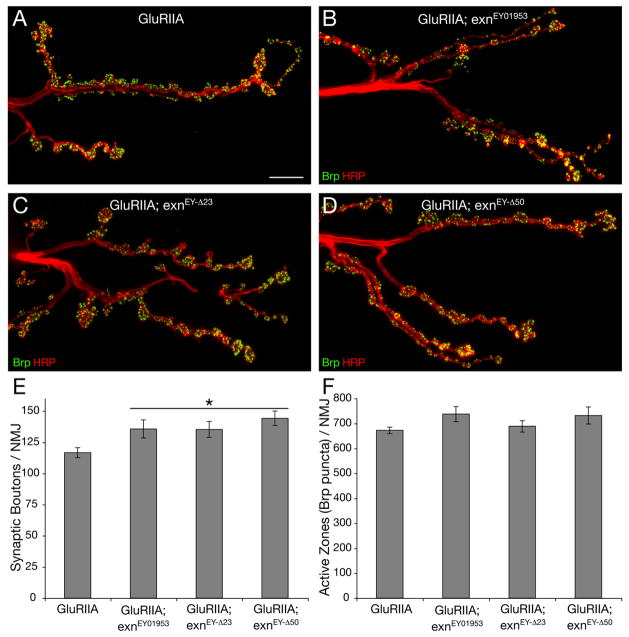
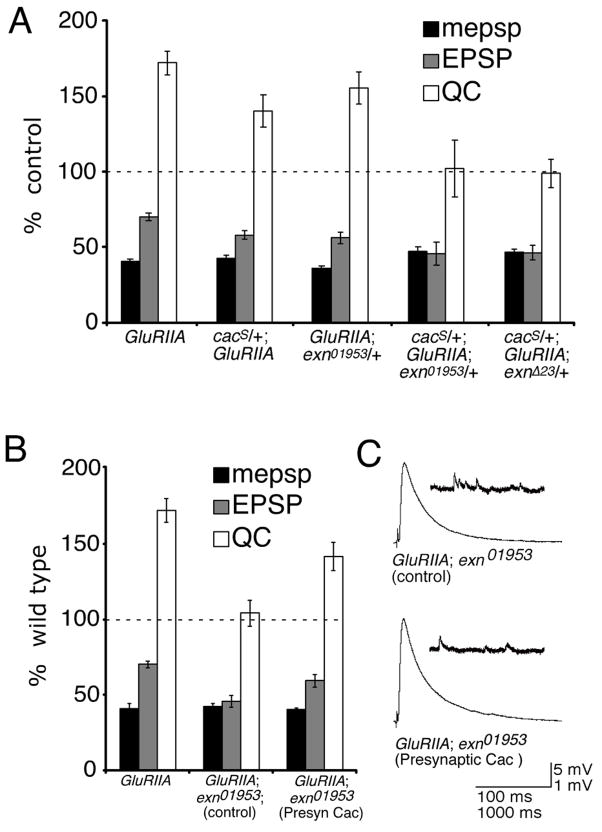
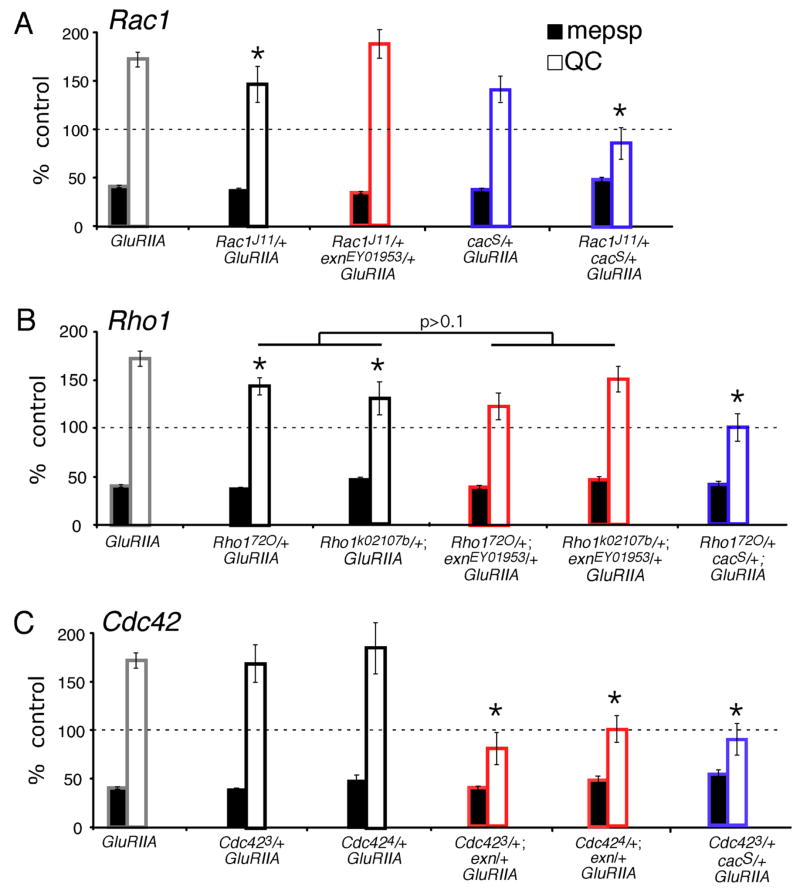
The molecular mechanisms underlying the homeostatic modulation of presynaptic neurotransmitter release remain largely unknown. In a screen, we isolated mutations in Drosophila ephexin (Rho-type guanine nucleotide exchange factor) that disrupt the homeostatic enhancement of presynaptic release following impairment of postsynaptic glutamate receptor function at the Drosophila neuromuscular junction. We show that Ephexin is sufficient presynaptically for synaptic homeostasis and localizes in puncta throughout the nerve terminal. However, ephexin mutations do not alter other aspects of neuromuscular development, including morphology or active zone number. We then show that, during synaptic homeostasis, Ephexin functions primarily with Cdc42 in a signaling system that converges upon the presynaptic CaV2.1 calcium channel. Finally, we show that Ephexin binds the Drosophila Eph receptor (Eph) and Eph mutants disrupt synaptic homeostasis. Based on these data, we propose that Ephexin/Cdc42 couples synaptic Eph signaling to the modulation of presynaptic CaV2.1 channels during the homeostatic enhancement of presynaptic release.
突触前神经递质释放稳态调节的分子机制在很大程度上仍然未知。在一次筛选中,我们在果蝇ephexin(Rho型鸟嘌呤核苷酸交换因子)中分离出突变,这些突变会破坏果蝇神经肌肉接头处突触后谷氨酸受体功能受损后突触前释放的稳态增强。我们表明,Ephexin在突触前对于突触稳态是足够的,并定位于整个神经末梢的点状结构中。然而,ephexin突变不会改变神经肌肉发育的其他方面,包括形态或活性区数量。然后我们表明,在突触稳态期间,Ephexin主要在一个信号系统中与Cdc42一起发挥作用,该信号系统汇聚于突触前CaV2.1钙通道。最后,我们表明Ephexin与果蝇Eph受体(Eph)结合,Eph突变体会破坏突触稳态。基于这些数据,我们提出Ephexin/Cdc42在突触前释放的稳态增强过程中将突触Eph信号与突触前CaV2.1通道的调节耦合起来。