Matthews Brandy R, Chang Chiung-Chih, De May Mary, Engstrom John, Miller Bruce L
Department of Neurology, Indiana University School of Medicine, Regenstrief Health Center 6th Floor, 1050 Wishard Blvd., Indianapolis, IN 46202-2859, USA.
Neurocase. 2009 Jun;15(3):248-59. doi: 10.1080/13554790802632934.
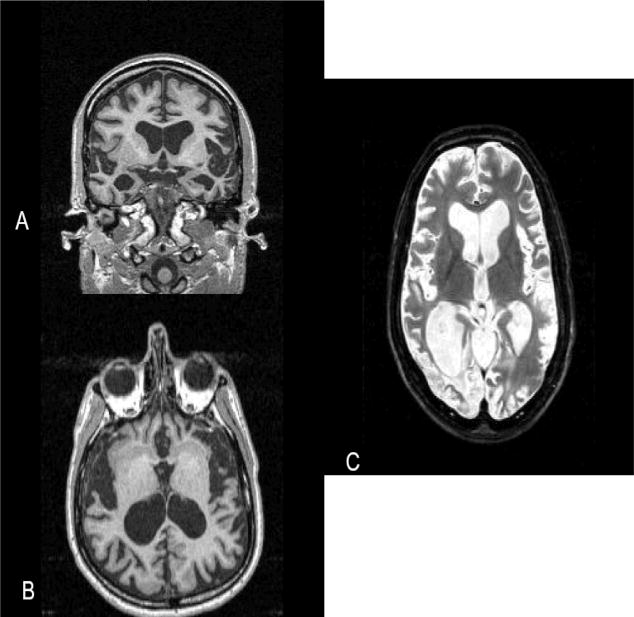
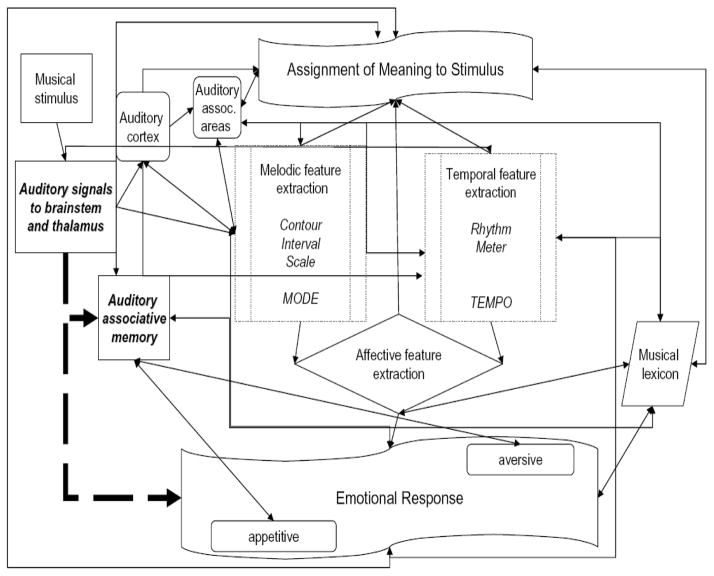
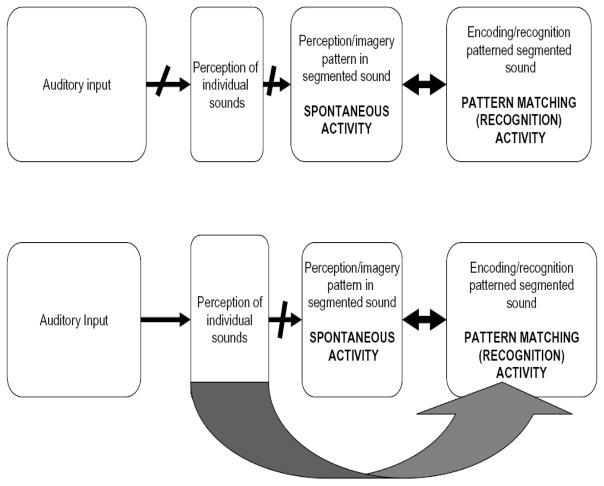
Recent functional neuroimaging studies implicate the network of mesolimbic structures known to be active in reward processing as the neural substrate of pleasure associated with listening to music. Psychoacoustic and lesion studies suggest that there is a widely distributed cortical network involved in processing discreet musical variables. Here we present the case of a young man with auditory agnosia as the consequence of cortical neurodegeneration who continues to experience pleasure when exposed to music. In a series of musical tasks, the subject was unable to accurately identify any of the perceptual components of music beyond simple pitch discrimination, including musical variables known to impact the perception of affect. The subject subsequently misidentified the musical character of personally familiar tunes presented experimentally, but continued to report that the activity of 'listening' to specific musical genres was an emotionally rewarding experience. The implications of this case for the evolving understanding of music perception, music misperception, music memory, and music-associated emotion are discussed.
近期的功能性神经影像学研究表明,中脑边缘结构网络在奖励处理过程中活跃,被认为是与听音乐相关的愉悦感的神经基础。心理声学和损伤研究表明,存在一个广泛分布的皮层网络参与处理离散的音乐变量。在此,我们报告一例因皮层神经退行性变导致听觉失认症的年轻男性病例,该患者在接触音乐时仍能体验到愉悦感。在一系列音乐任务中,该受试者除了能进行简单的音高辨别外,无法准确识别音乐的任何感知成分,包括已知会影响情感感知的音乐变量。该受试者随后错误识别了实验中呈现的个人熟悉曲调的音乐特征,但仍报告称“聆听”特定音乐类型的活动是一种情感上有回报的体验。本文讨论了该病例对音乐感知、音乐错认、音乐记忆和音乐相关情感不断发展的理解的影响。