Tian Weiming, Kyriakides Themis R
Vascular Biology and Therapeutics Program, Departments of Pathology and Biomedical Engineering, Yale University, New Haven, CT 06519, USA.
Matrix Biol. 2009 Apr;28(3):148-59. doi: 10.1016/j.matbio.2009.02.002. Epub 2009 Mar 3.
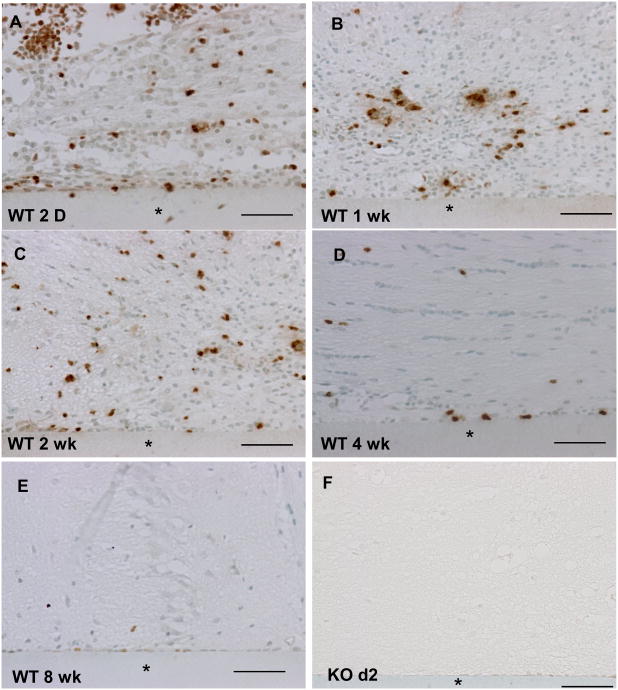
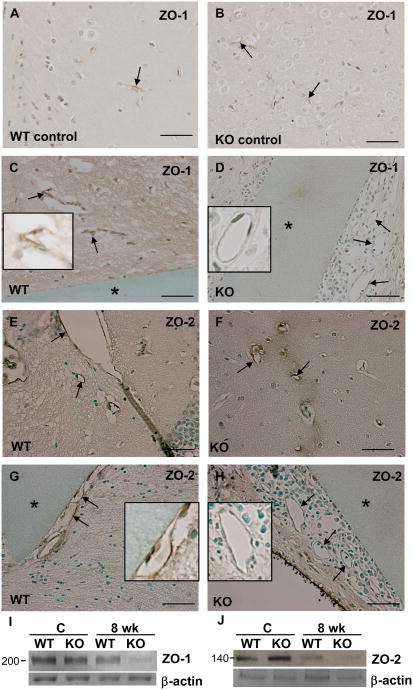
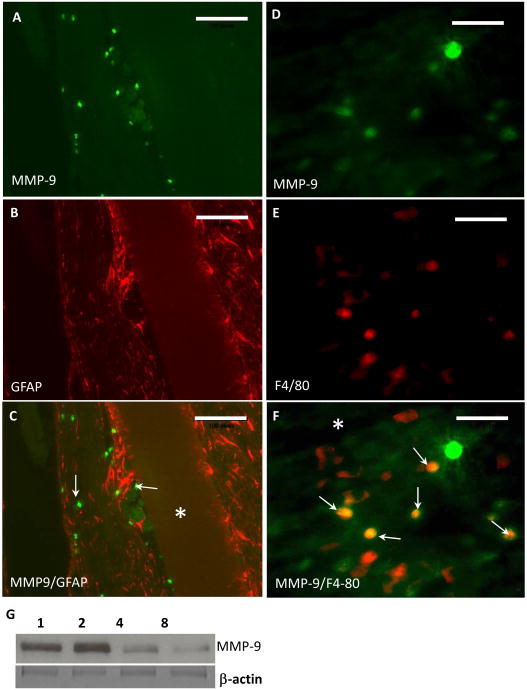
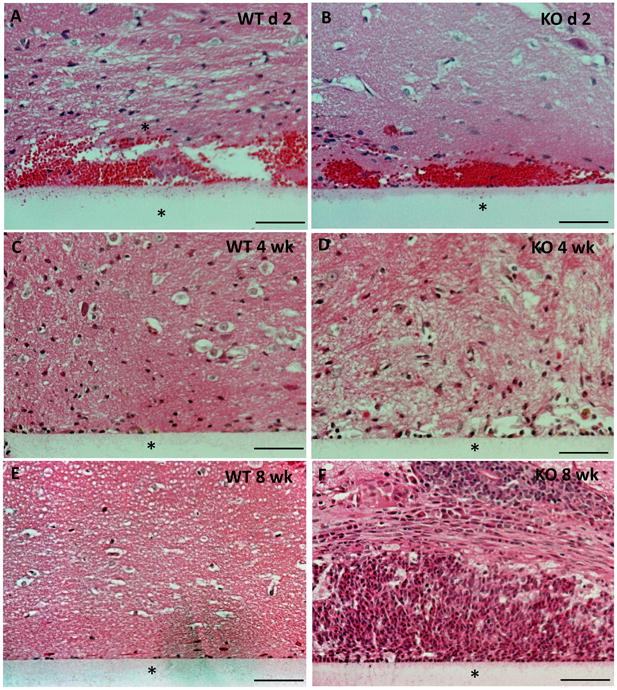
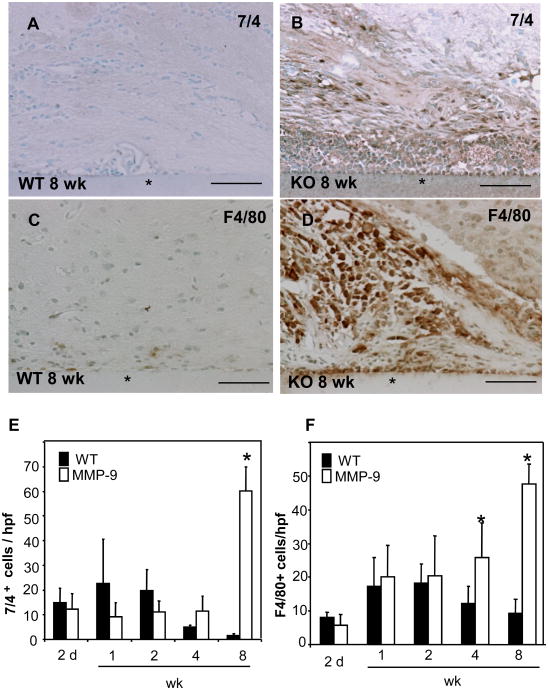
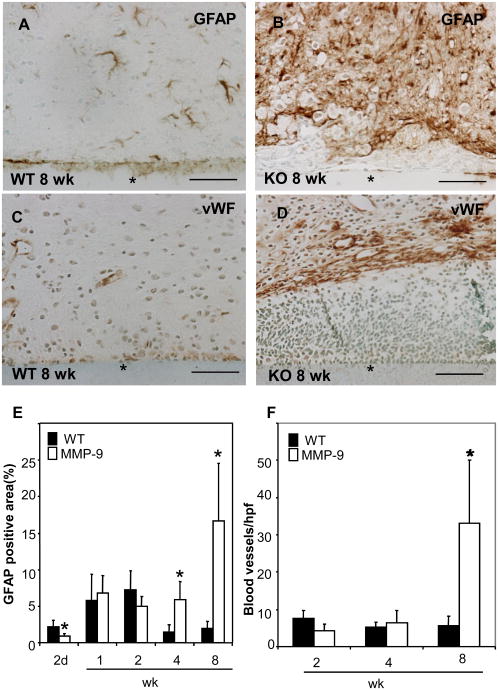
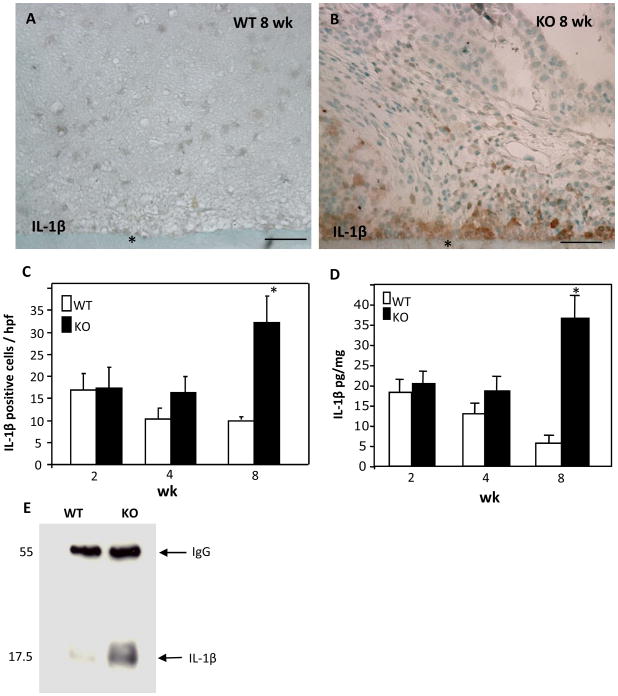
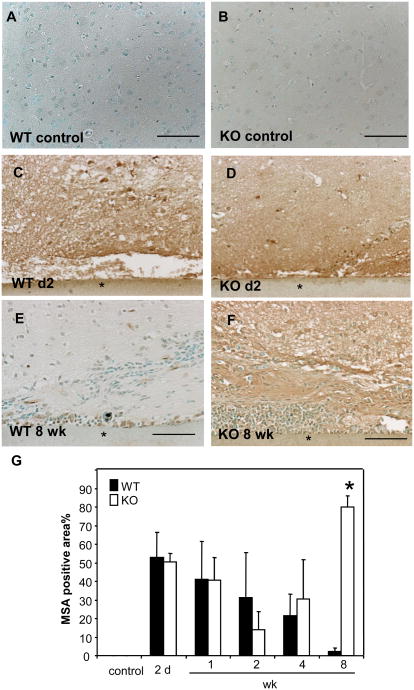
Matrix metalloproteinases (MMPs) are enzymes with specificity towards extracellular matrix (ECM) components. MMPs, especially MMP-9, have been shown to degrade components of the basal lamina and disrupt the blood-brain barrier (BBB) and thus, contribute to neuroinflammation. In the present study we examined the role of MMP-9 in the foreign body response in the brain. Millipore filters of mixed cellulose ester were implanted into the brain cortex of wild type and MMP-9-null mice for a period of 2 d to 8 wks and the response was analyzed by histology and immunohistochemistry. We observed enhanced and prolonged neuroinflammation in MMP-9-null mice, evidenced by persistence of neutrophils, macrophages/microglia, and reactive astrocytes up to 8 wks post-implantation. In addition, blood vessel density around implants was increased in MMP-9-null mice and detection of mouse serum albumin (MSA) indicated that vessels were leaky. Immunohistochemical and western blot analyses indicated that this defect was associated with the absence of tight junction proteins zonula occludens-1 (ZO-1) and ZO-2 from vessels in proximity to implants. Analysis of brain sections and brain protein extracts revealed that the levels of the pro-inflammatory cytokine interleukin-1beta (IL-1beta), which is a substrate for MMP-9, were significantly higher in MMP-9-null mice at 8wks post-implantation. Collectively, our studies suggest that increased levels of IL-1beta and the delayed repair of BBB are associated with prolongation of the FBR in MMP-9-null mice.
基质金属蛋白酶(MMPs)是一类对细胞外基质(ECM)成分具有特异性的酶。MMPs,尤其是MMP-9,已被证明可降解基底膜成分并破坏血脑屏障(BBB),从而导致神经炎症。在本研究中,我们研究了MMP-9在脑内异物反应中的作用。将混合纤维素酯微孔滤膜植入野生型和MMP-9基因敲除小鼠的大脑皮层,持续2天至8周,通过组织学和免疫组织化学分析反应情况。我们观察到MMP-9基因敲除小鼠的神经炎症增强且持续时间延长,植入后8周仍有中性粒细胞、巨噬细胞/小胶质细胞和反应性星形胶质细胞存在。此外,MMP-9基因敲除小鼠植入物周围的血管密度增加,小鼠血清白蛋白(MSA)检测表明血管有渗漏。免疫组织化学和蛋白质印迹分析表明,这种缺陷与植入物附近血管中紧密连接蛋白闭合蛋白-1(ZO-1)和闭合蛋白-2(ZO-2)的缺失有关。对脑切片和脑蛋白提取物的分析显示,作为MMP-9底物的促炎细胞因子白细胞介素-1β(IL-1β)水平在植入后8周时,MMP-9基因敲除小鼠中显著更高。总体而言,我们的研究表明,IL-1β水平升高和血脑屏障修复延迟与MMP-9基因敲除小鼠异物反应延长有关。