Thakur Ashwani K, Jayaraman Murali, Mishra Rakesh, Thakur Monika, Chellgren Veronique M, Byeon In-Ja L, Anjum Dalaver H, Kodali Ravindra, Creamer Trevor P, Conway James F, Gronenborn Angela M, Wetzel Ronald
Department of Structural Biology, University of Pittsburgh School of Medicine, Pittsburgh, Pennsylvania 15260, USA.
Nat Struct Mol Biol. 2009 Apr;16(4):380-9. doi: 10.1038/nsmb.1570. Epub 2009 Mar 8.
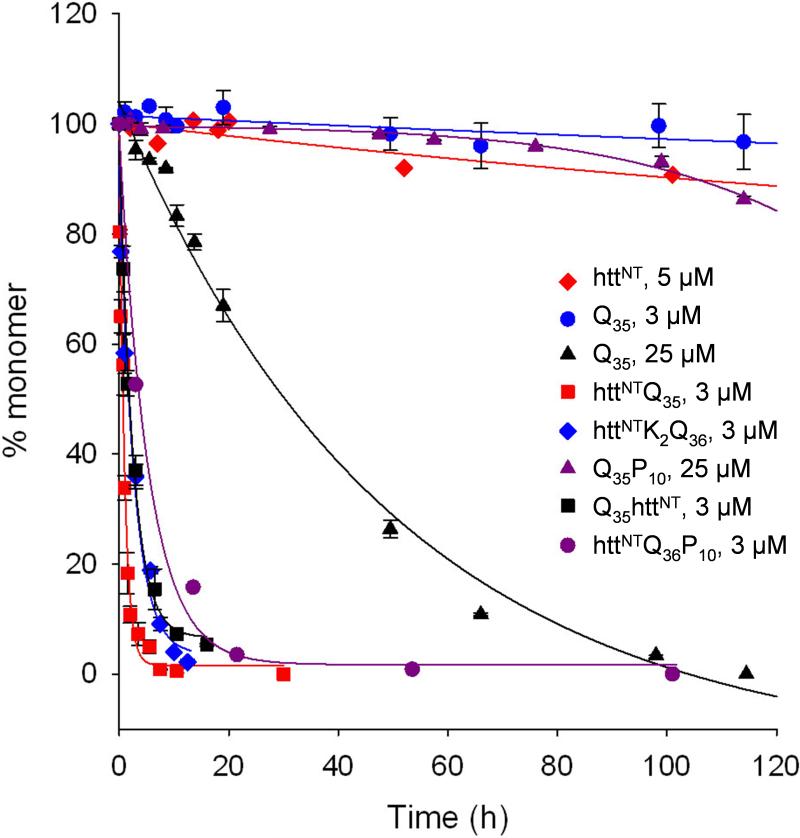
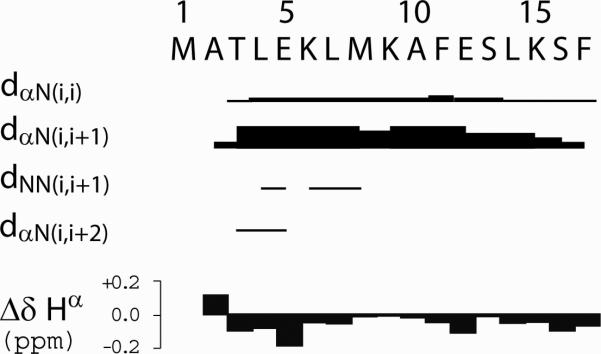
Simple polyglutamine (polyQ) peptides aggregate in vitro via a nucleated growth pathway directly yielding amyloid-like aggregates. We show here that the 17-amino-acid flanking sequence (HTT(NT)) N-terminal to the polyQ in the toxic huntingtin exon 1 fragment imparts onto this peptide a complex alternative aggregation mechanism. In isolation, the HTT(NT) peptide is a compact coil that resists aggregation. When polyQ is fused to this sequence, it induces in HTT(NT), in a repeat-length dependent fashion, a more extended conformation that greatly enhances its aggregation into globular oligomers with HTT(NT) cores and exposed polyQ. In a second step, a new, amyloid-like aggregate is formed with a core composed of both HTT(NT) and polyQ. The results indicate unprecedented complexity in how primary sequence controls aggregation within a substantially disordered peptide and have implications for the molecular mechanism of Huntington's disease.
简单的聚谷氨酰胺(polyQ)肽在体外通过成核生长途径聚集,直接产生淀粉样聚集体。我们在此表明,毒性亨廷顿蛋白外显子1片段中聚谷氨酰胺N端的17个氨基酸侧翼序列(HTT(NT))赋予该肽一种复杂的替代性聚集机制。单独存在时,HTT(NT)肽是一种紧密的卷曲结构,能抵抗聚集。当聚谷氨酰胺与该序列融合时,它会以一种依赖重复长度的方式在HTT(NT)中诱导出一种更伸展的构象,极大地增强其聚集成具有HTT(NT)核心且暴露聚谷氨酰胺的球状低聚物。在第二步中,形成了一种新的淀粉样样聚集体,其核心由HTT(NT)和聚谷氨酰胺组成。结果表明,在一个基本无序的肽中,一级序列如何控制聚集方面存在前所未有的复杂性,这对亨廷顿病的分子机制具有重要意义。