Fraser Christopher S, Hershey John W B, Doudna Jennifer A
Howard Hughes Medical Institute, University of California, Berkeley, California 94720, USA.
Nat Struct Mol Biol. 2009 Apr;16(4):397-404. doi: 10.1038/nsmb.1572. Epub 2009 Mar 15.
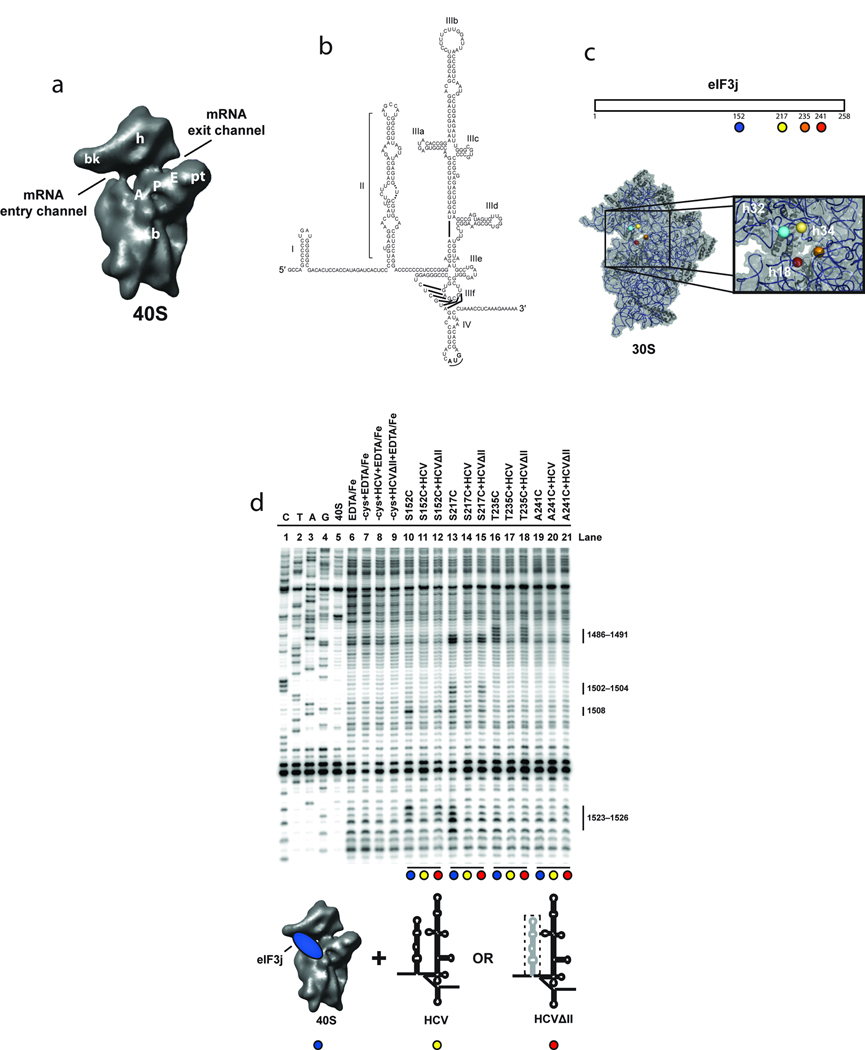
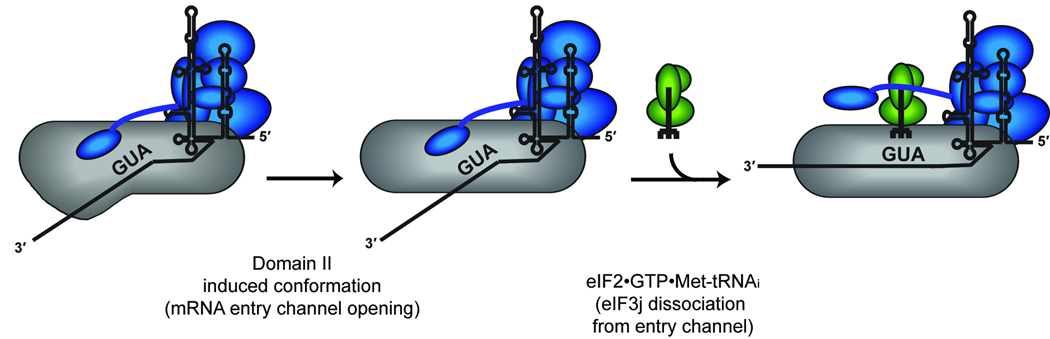
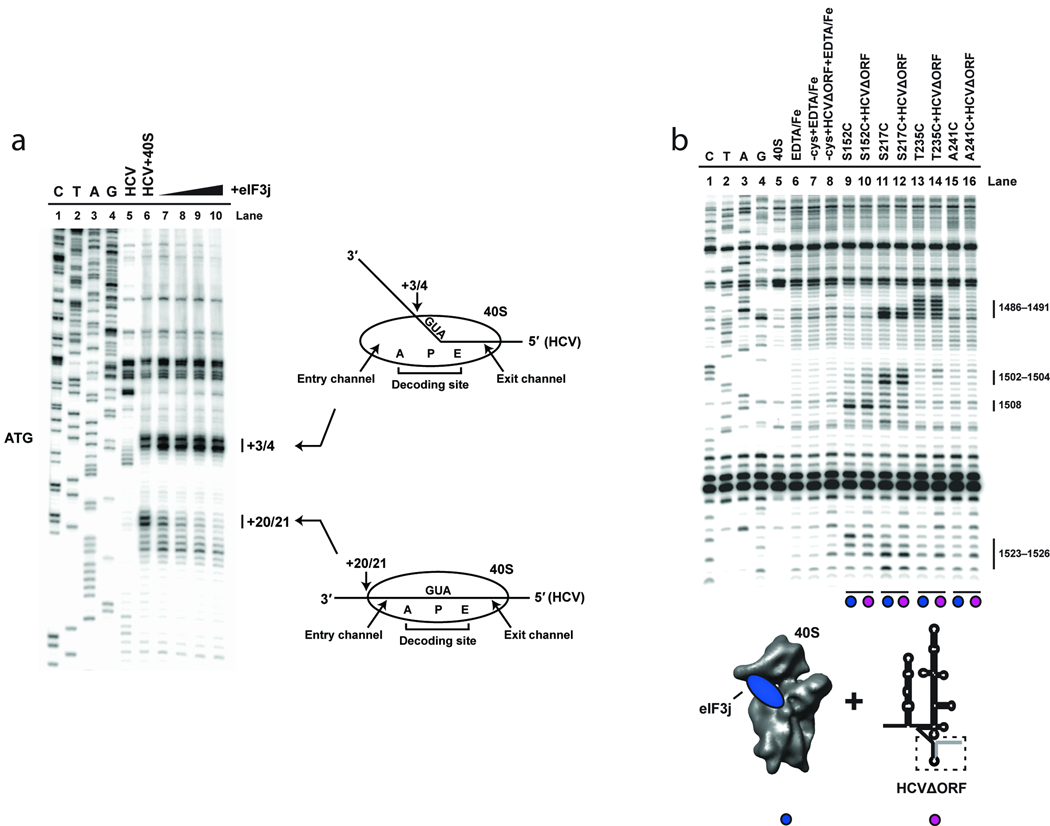
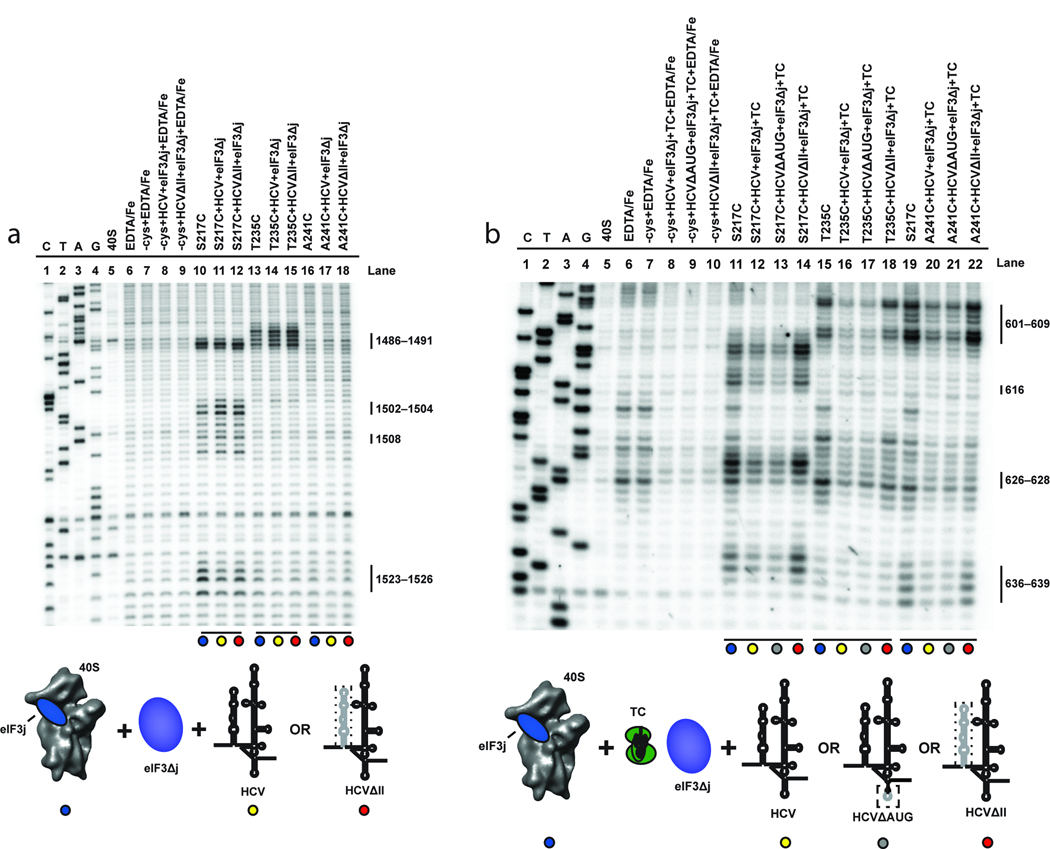
Eukaryotic protein synthesis begins with mRNA positioning in the ribosomal decoding channel in a process typically controlled by translation-initiation factors. Some viruses use an internal ribosome entry site (IRES) in their mRNA to harness ribosomes independently of initiation factors. We show here that a ribosome conformational change that is induced upon hepatitis C viral IRES binding is necessary but not sufficient for correct mRNA positioning. Using directed hydroxyl radical probing to monitor the assembly of IRES-containing translation-initiation complexes, we have defined a crucial step in which mRNA is stabilized upon initiator tRNA binding. Unexpectedly, however, this stabilization occurs independently of the AUG codon, underscoring the importance of initiation factor-mediated interactions that influence the configuration of the decoding channel. These results reveal how an IRES RNA supplants some, but not all, of the functions normally carried out by protein factors during initiation of protein synthesis.
真核生物的蛋白质合成始于信使核糖核酸(mRNA)在核糖体解码通道中的定位,这一过程通常由翻译起始因子控制。一些病毒在其mRNA中使用内部核糖体进入位点(IRES),以独立于起始因子的方式利用核糖体。我们在此表明,丙型肝炎病毒IRES结合后诱导的核糖体构象变化对于正确的mRNA定位是必要的,但并不充分。使用定向羟基自由基探测来监测含IRES的翻译起始复合物的组装,我们确定了一个关键步骤,即起始转运RNA(tRNA)结合后mRNA得以稳定。然而,出乎意料的是,这种稳定作用独立于AUG密码子发生,这突出了起始因子介导的相互作用对解码通道构型的影响的重要性。这些结果揭示了IRES RNA如何在蛋白质合成起始过程中取代部分而非全部通常由蛋白质因子执行的功能。