Litt Mark D, Kadden Ronald M, Kabela-Cormier Elise, Petry Nancy M
Department of Behavioral Sciences and Community Health, University of Connecticut Health Center, Farmington, CT 06030, USA.
J Consult Clin Psychol. 2009 Apr;77(2):229-42. doi: 10.1037/a0015252.
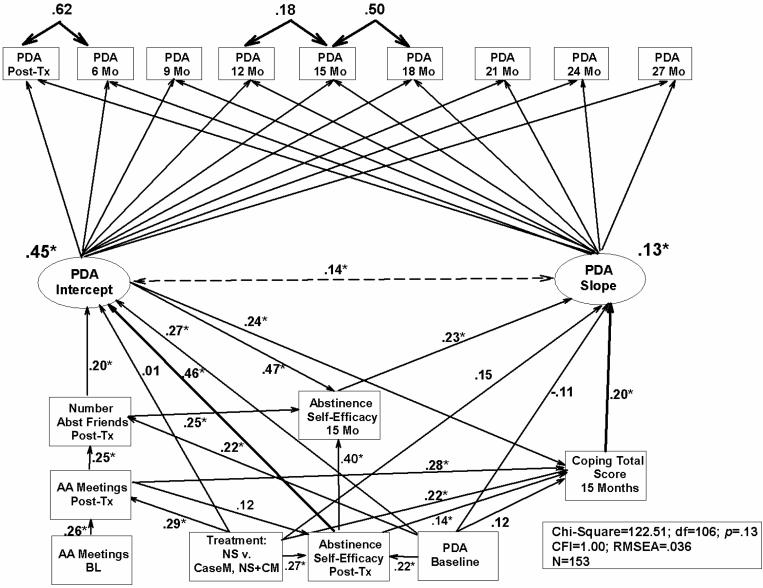
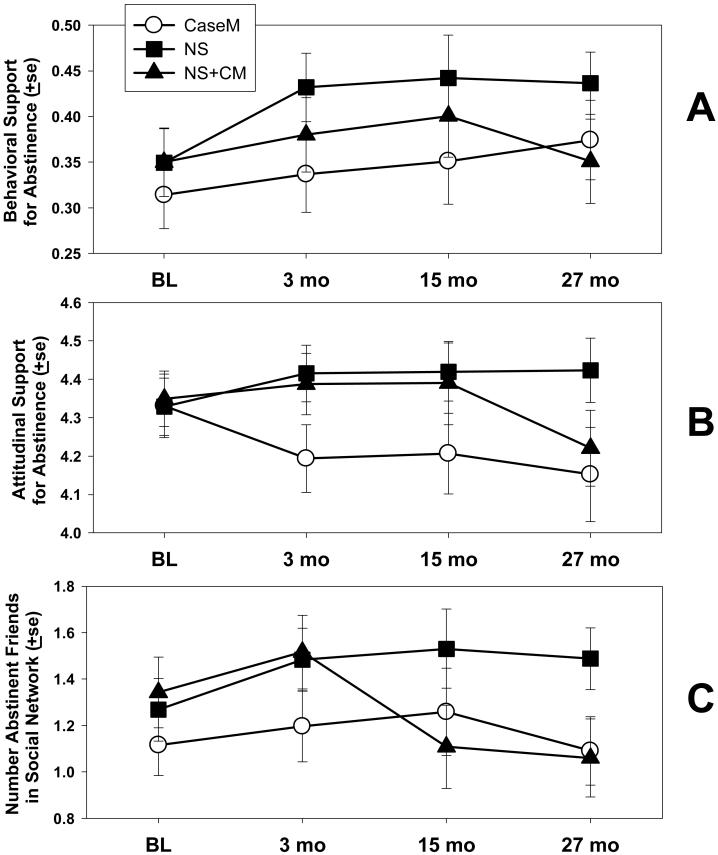
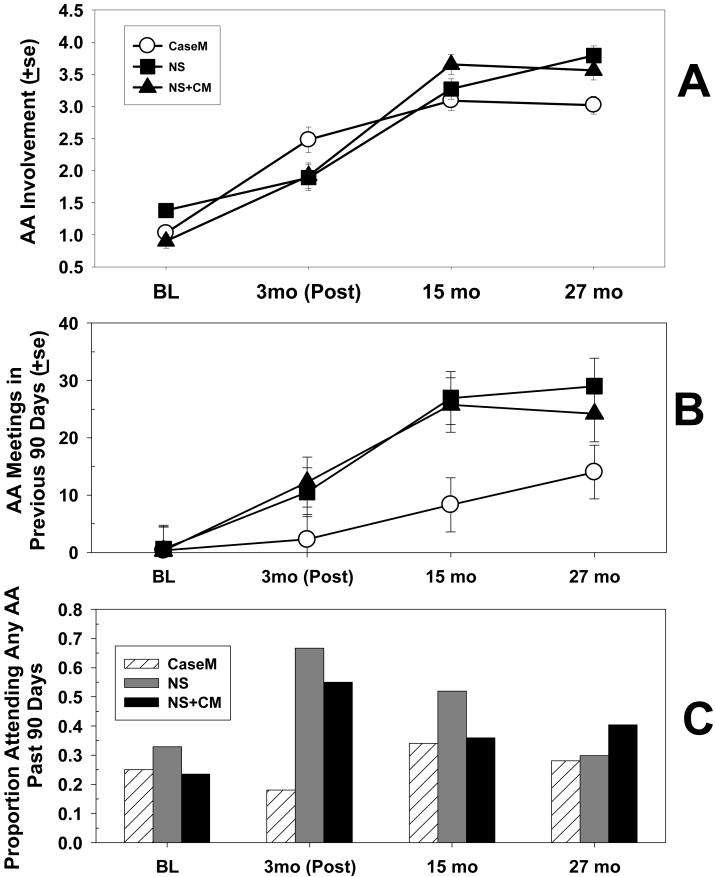
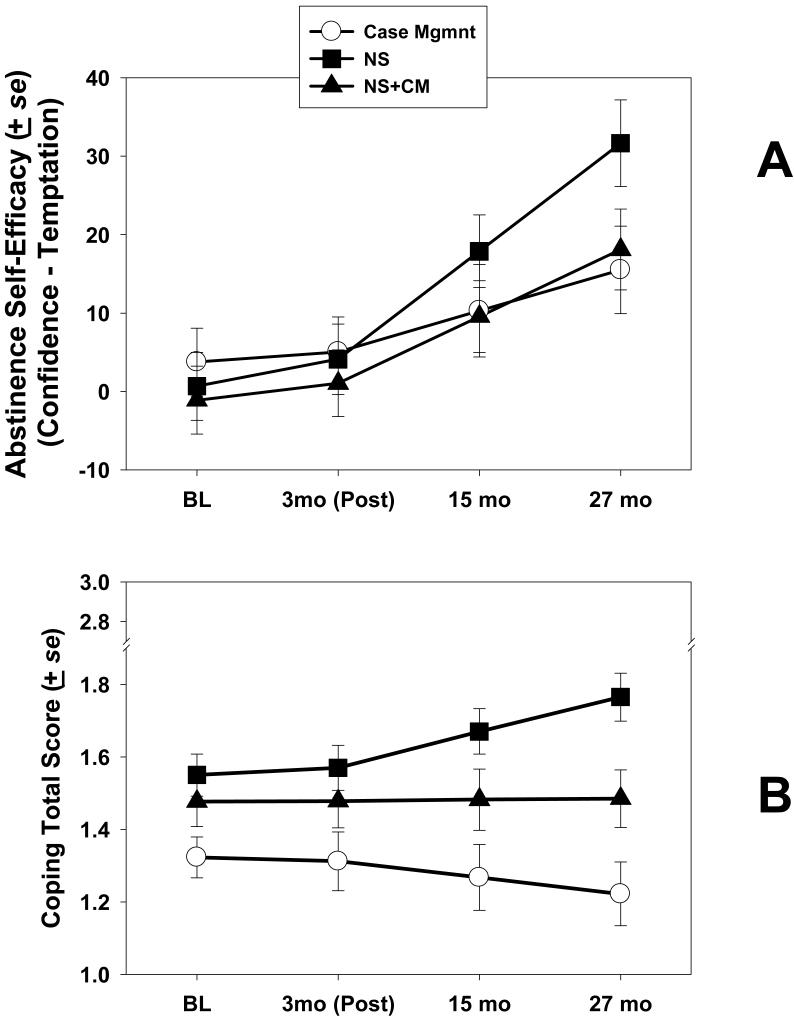
The Network Support Project was designed to determine whether a treatment could lead patients to change their social network from one that supports drinking to one that supports sobriety. This study reports 2-year posttreatment outcomes. Alcohol-dependent men and women (N = 210) were randomly assigned to 1 of 3 outpatient treatment conditions: network support (NS), network support + contingency management (NS + CM), or case management (CaseM, a control condition). Analysis of drinking rates indicated that the NS condition yielded up to 20% more days abstinent than the other conditions at 2 years posttreatment. NS treatment also resulted in greater increases at 15 months in social network support for abstinence, as well as in AA attendance and AA involvement than did the other conditions. Latent growth modeling suggested that social network changes were accompanied by increases in self-efficacy and coping that were strongly predictive of long-term drinking outcomes. The findings indicate that a network support treatment can effect long-term adaptive changes in drinkers' social networks and that these changes contribute to improved drinking outcomes in the long term.
网络支持项目旨在确定一种治疗方法是否能引导患者将其社交网络从支持饮酒的网络转变为支持戒酒的网络。本研究报告了治疗后两年的结果。酒精依赖的男性和女性(N = 210)被随机分配到三种门诊治疗条件中的一种:网络支持(NS)、网络支持+应急管理(NS + CM)或病例管理(CaseM,一种对照条件)。饮酒率分析表明,在治疗后两年,NS条件下的戒酒天数比其他条件多20%。与其他条件相比,NS治疗在15个月时还导致社交网络对戒酒的支持有更大增加,以及参加戒酒互助会(AA)的次数和参与度更高。潜在增长模型表明,社交网络的变化伴随着自我效能感和应对能力的提高,而这强烈预测了长期饮酒结果。研究结果表明,网络支持治疗可以在饮酒者的社交网络中产生长期的适应性变化,并且这些变化有助于长期改善饮酒结果。