Pereyra Ricardo T, Bergström Lena, Kautsky Lena, Johannesson Kerstin
Department of Marine Ecology-Tjärnö, University of Gothenburg, Strömstad, Sweden.
BMC Evol Biol. 2009 Mar 31;9:70. doi: 10.1186/1471-2148-9-70.
Theory predicts that speciation can be quite rapid. Previous examples comprise a wide range of organisms such as sockeye salmon, polyploid hybrid plants, fruit flies and cichlid fishes. However, few studies have shown natural examples of rapid evolution giving rise to new species in marine environments.
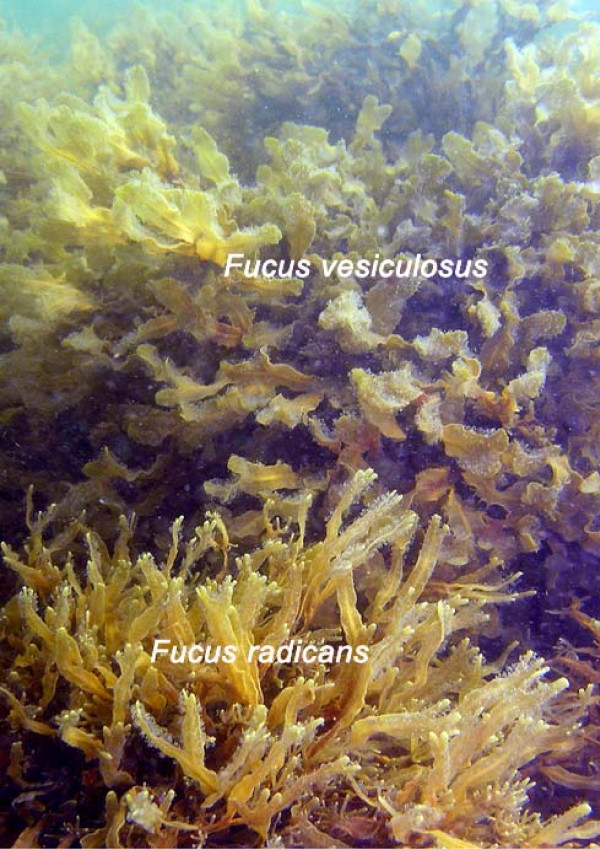
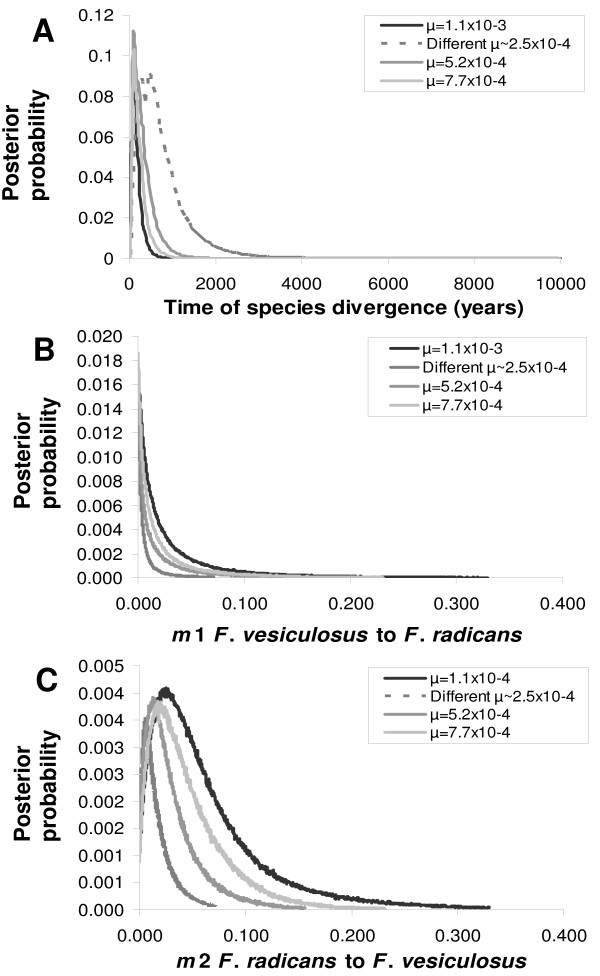
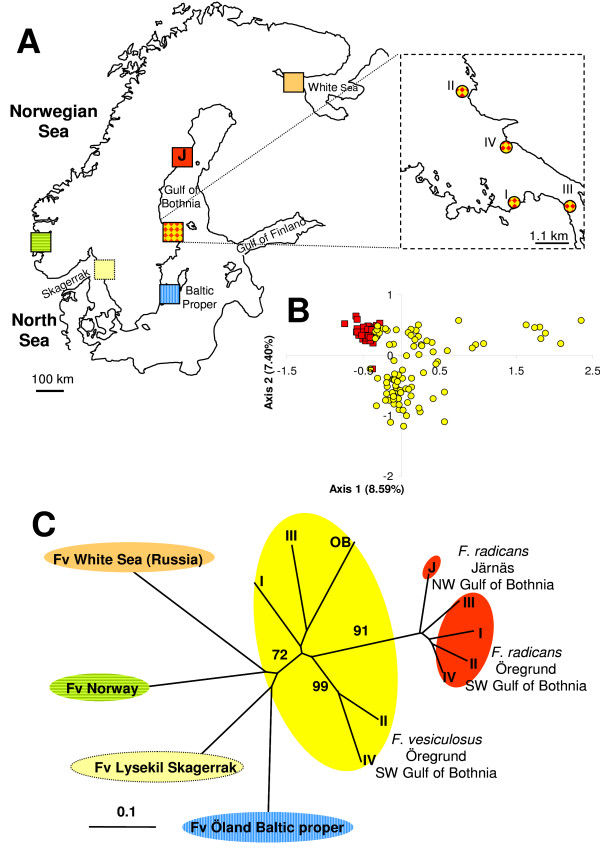
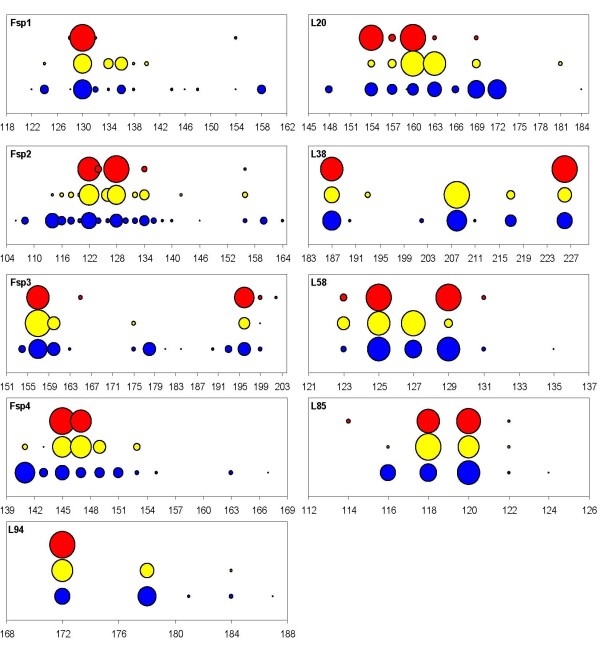
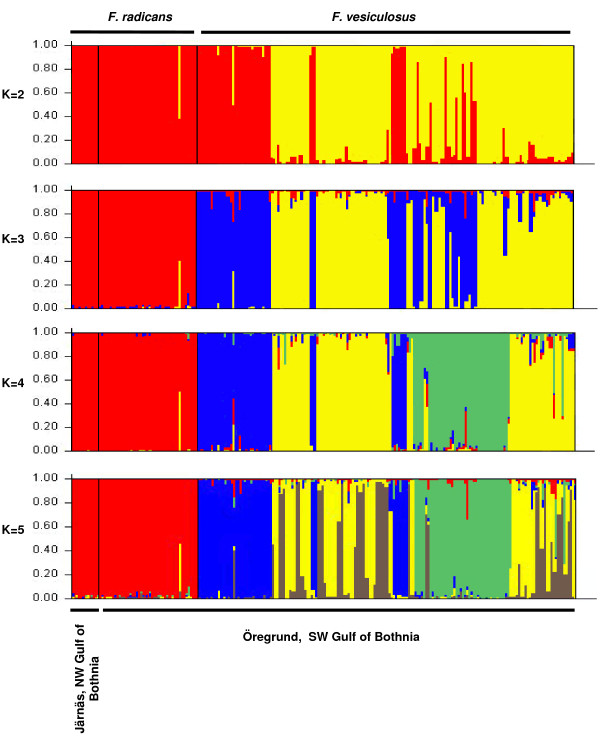
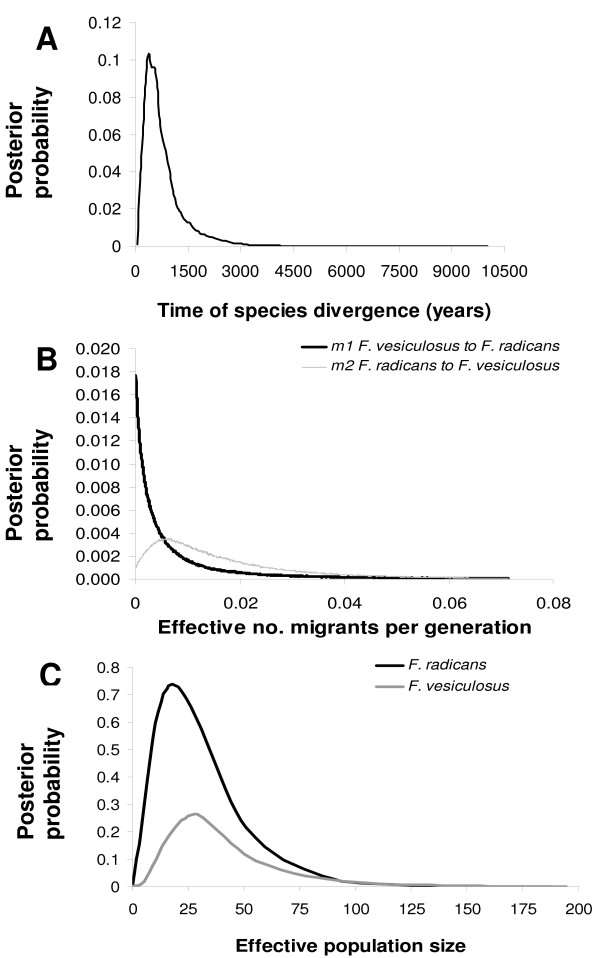
Using microsatellite markers, we show the evolution of a new species of brown macroalga (Fucus radicans) in the Baltic Sea in the last 400 years, well after the formation of this brackish water body ~8-10 thousand years ago. Sympatric individuals of F. radicans and F. vesiculosus (bladder wrack) show significant reproductive isolation. Fucus radicans, which is endemic to the Baltic, is most closely related to Baltic Sea F. vesiculosus among north Atlantic populations, supporting the hypothesis of a recent divergence. Fucus radicans exhibits considerable clonal reproduction, probably induced by the extreme conditions of the Baltic. This reproductive mode is likely to have facilitated the rapid foundation of the new taxon.
This study represents an unparalleled example of rapid speciation in a species-poor open marine ecosystem and highlights the importance of increasing our understanding on the role of these habitats in species formation. This observation also challenges presumptions that rapid speciation takes place only in hybrid plants or in relatively confined geographical places such as postglacial or crater lakes, oceanic islands or rivers.
理论预测物种形成可能相当迅速。先前的例子包括各种生物,如红大马哈鱼、多倍体杂交植物、果蝇和丽鱼科鱼类。然而,很少有研究展示在海洋环境中快速进化产生新物种的自然实例。
利用微卫星标记,我们发现一种新的棕色大型海藻(波罗的海岩藻)在过去400年里于波罗的海进化形成,这是在这个咸淡水水体于约8000 - 10000年前形成之后很久的事了。波罗的海岩藻和囊藻(囊状墨角藻)的同域个体表现出显著的生殖隔离。波罗的海特有的波罗的海岩藻在北大西洋种群中与波罗的海囊藻关系最为密切,支持了近期分化的假说。波罗的海岩藻表现出相当程度的克隆繁殖,可能是由波罗的海的极端条件所诱导。这种繁殖方式可能促进了新分类群的快速形成。
本研究代表了在物种贫乏的开放海洋生态系统中快速物种形成的一个无与伦比的实例,并突出了增进我们对这些栖息地在物种形成中作用理解的重要性。这一观察结果也挑战了那种认为快速物种形成仅发生在杂交植物或相对受限的地理区域(如冰后期或火山口湖、海洋岛屿或河流)的假设。