Kudo Takashi, Tamagawa Toru, Shibata Shigenobu
Department of Pharmacology, School of Advanced Science and Engineering, Waseda University, Wakamatsu-cho 2-2, Shinjuku-ku, Tokyo, 162-8480, Japan.
J Circadian Rhythms. 2009 Apr 1;7:4. doi: 10.1186/1740-3391-7-4.
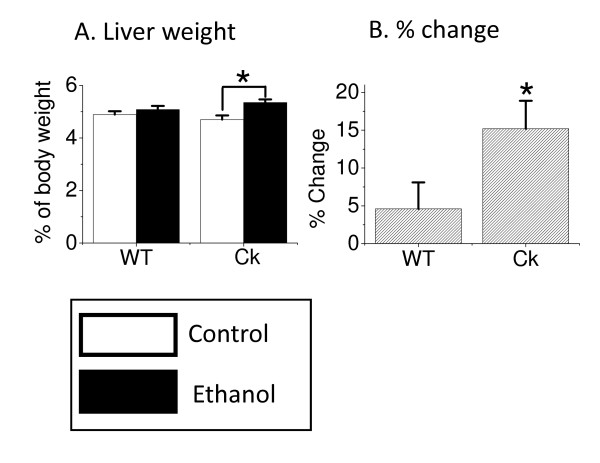
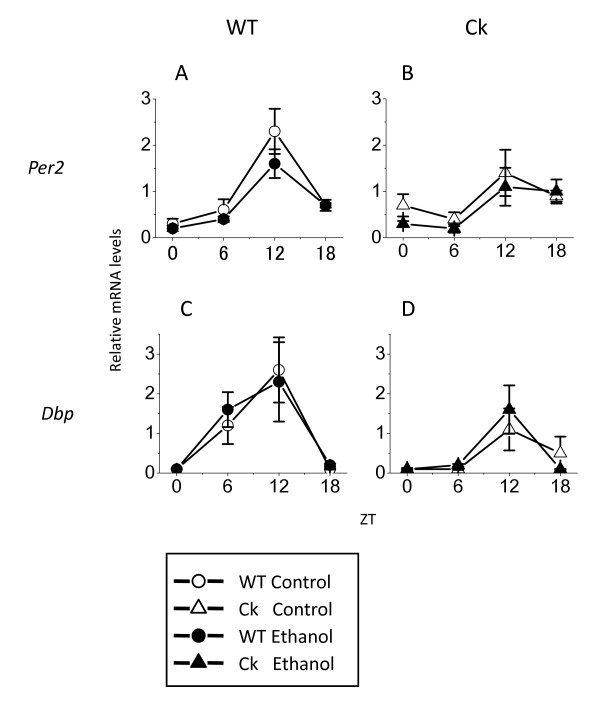
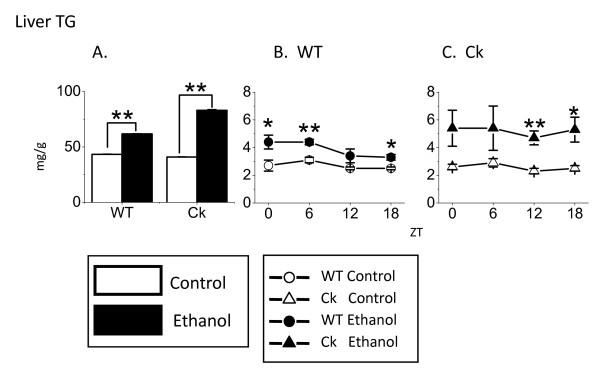
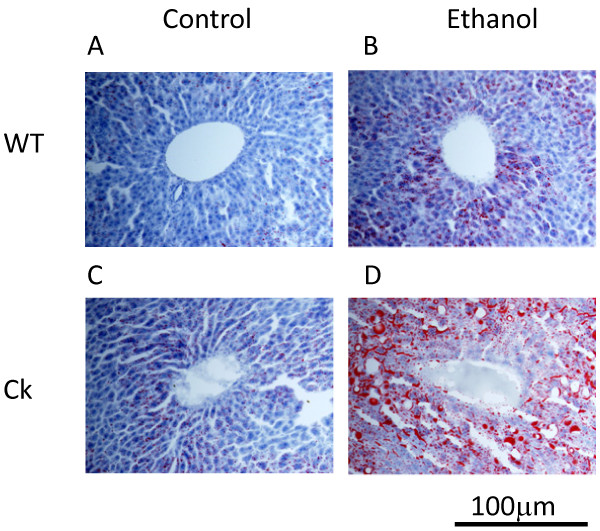
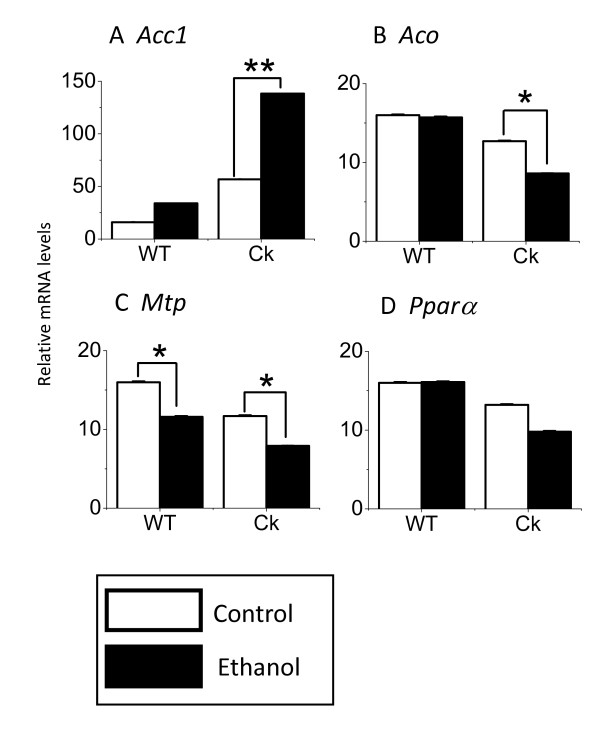
In humans, chronic ethanol consumption leads to a characteristic set of changes to the metabolism of lipids in the liver that is referred to as an "alcoholic fatty liver (AFL)". In severe cases, these metabolic changes result in the enlargement and fibrillization of the liver and are considered risk factors for cirrhosis and liver cancer. Clock-mutant mice have been shown to display abnormal lipid metabolism and alcohol preferences. To further understand the potential interactions between ethanol consumption, lipid metabolism, and the circadian clock, we investigated the effect of chronic ethanol intake on the lipid metabolism of Clock-mutant mice. We found that ethanol treatment produced a number of changes in the liver of Clock-mutant mice without impacting the wild-type controls. First, we found that 8 weeks of exposure to ethanol in the drinking water increased the weight of the liver in Clock-mutant mice. Ethanol treatment also increased triglyceride content of liver in Clock-mutant and wild-type mice. This increase was larger in the mutant mice. Finally, ethanol treatment altered the expression of a number of genes related to lipid metabolism in the Clock-mutant mice. Interestingly, this treatment did not impact circadian clock gene expression in the liver of either genotype. Thus, ethanol produces a number of changes in the liver of Clock-mutant mice that are not seen in the wild-type mice. These changes are consistent with the possibility that disturbance of circadian rhythmicity associated with the Clock mutation could be a risk factor for the development of an alcoholic fatty liver.
在人类中,长期摄入乙醇会导致肝脏脂质代谢发生一系列特征性变化,这被称为“酒精性脂肪肝(AFL)”。在严重情况下,这些代谢变化会导致肝脏肿大和纤维化,并被认为是肝硬化和肝癌的危险因素。研究表明,生物钟突变小鼠表现出异常的脂质代谢和对酒精的偏好。为了进一步了解乙醇摄入、脂质代谢和生物钟之间的潜在相互作用,我们研究了长期摄入乙醇对生物钟突变小鼠脂质代谢的影响。我们发现,乙醇处理使生物钟突变小鼠的肝脏发生了许多变化,而对野生型对照没有影响。首先,我们发现,在饮用水中接触乙醇8周会增加生物钟突变小鼠的肝脏重量。乙醇处理还增加了生物钟突变小鼠和野生型小鼠肝脏中的甘油三酯含量。这种增加在突变小鼠中更大。最后,乙醇处理改变了生物钟突变小鼠中一些与脂质代谢相关基因的表达。有趣的是,这种处理对两种基因型小鼠肝脏中的生物钟基因表达均无影响。因此,乙醇使生物钟突变小鼠的肝脏发生了一些野生型小鼠中未见的变化。这些变化与以下可能性一致,即与生物钟突变相关的昼夜节律紊乱可能是酒精性脂肪肝发生的一个危险因素。