Lee Sang-Chul, Bajcsy Peter
National Center for Supercomputing Applications, University of Illinois at Urbana-Champaign, 1205 W. Clark St, Urbana, IL 61801.
Comput Vis Image Underst. 2008 Apr;110(1):19-31. doi: 10.1016/j.cviu.2007.02.005.
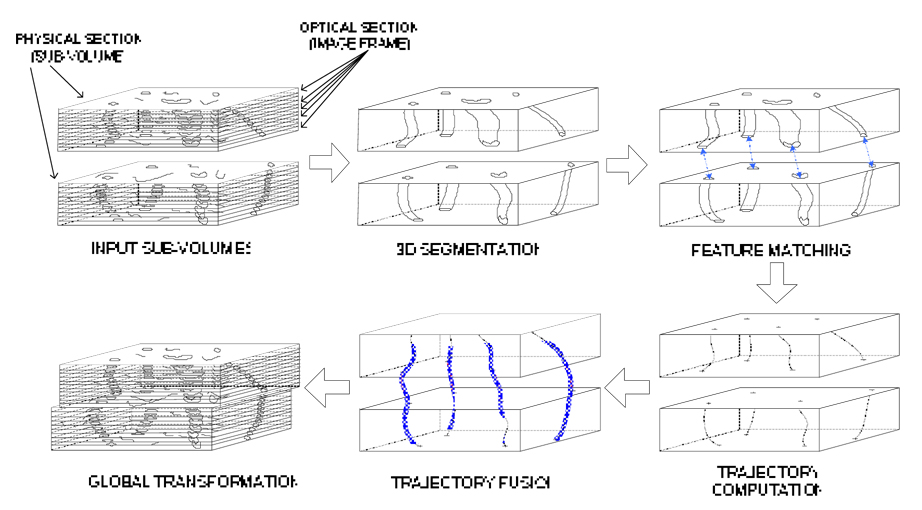
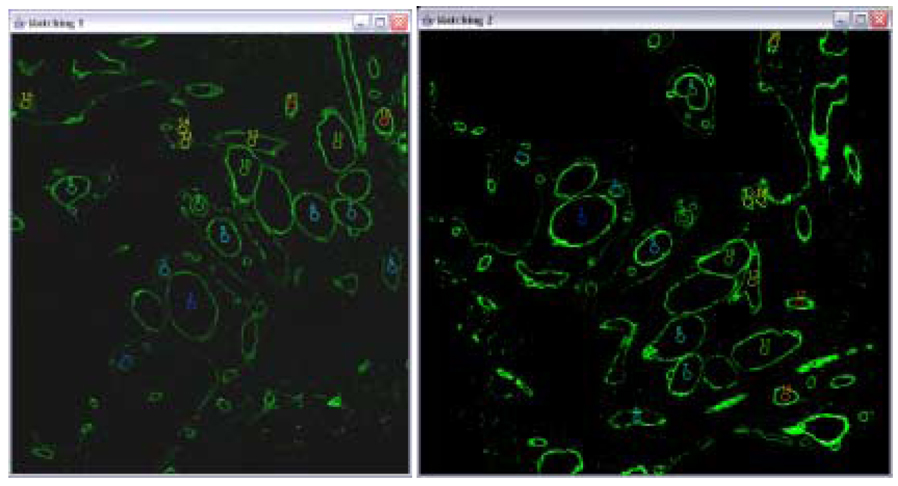
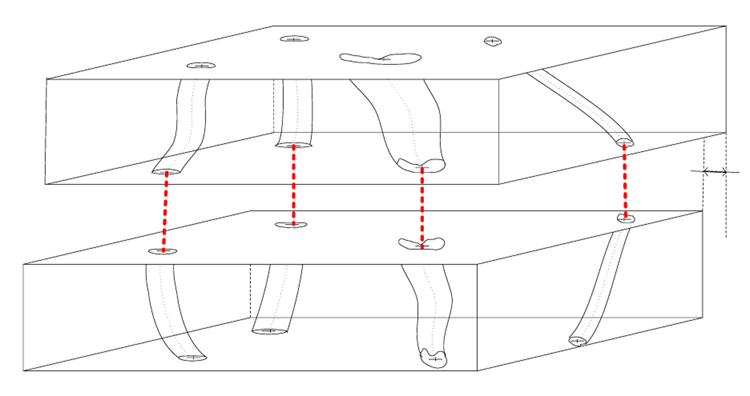
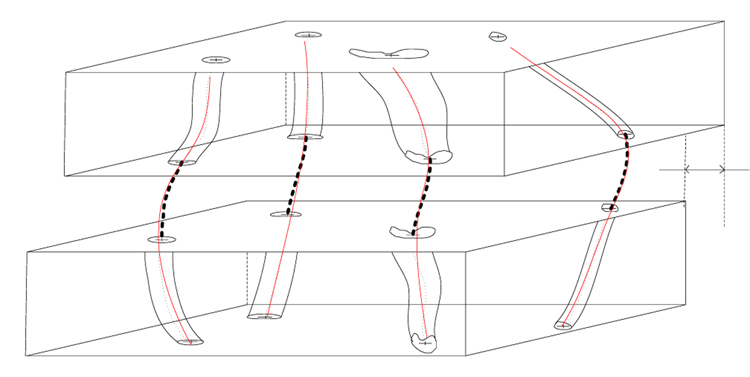
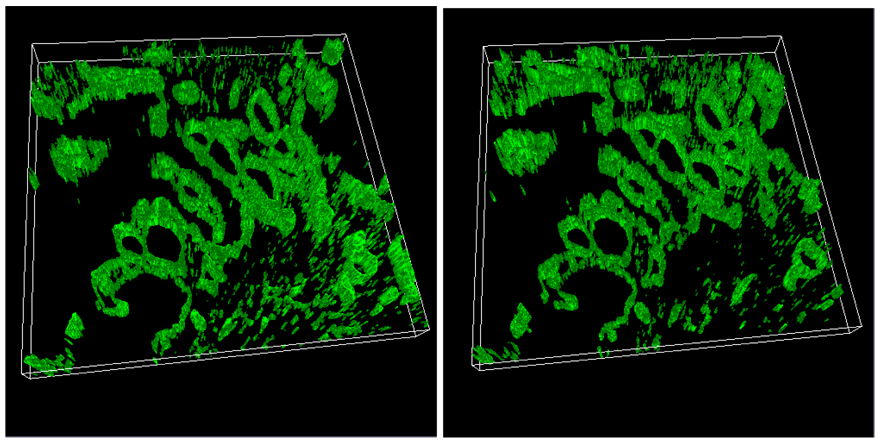
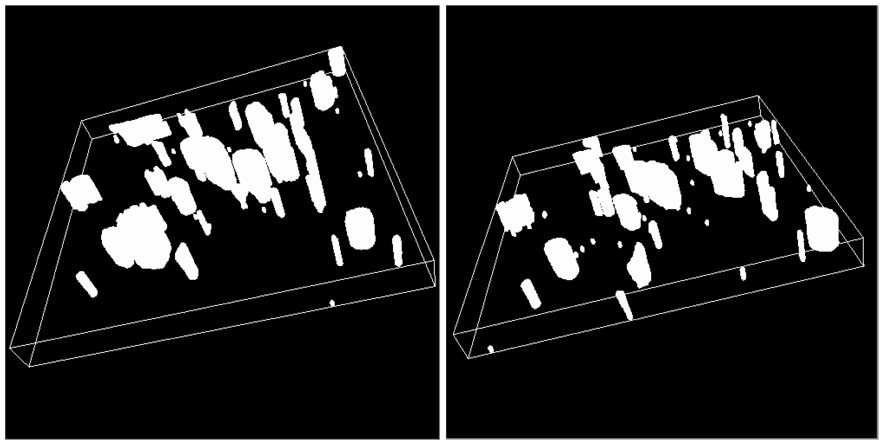
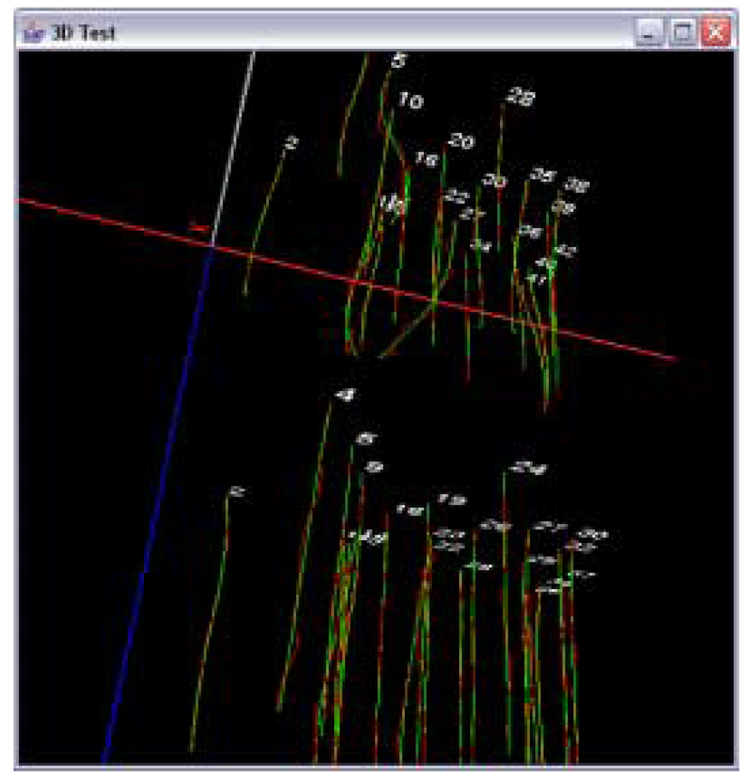
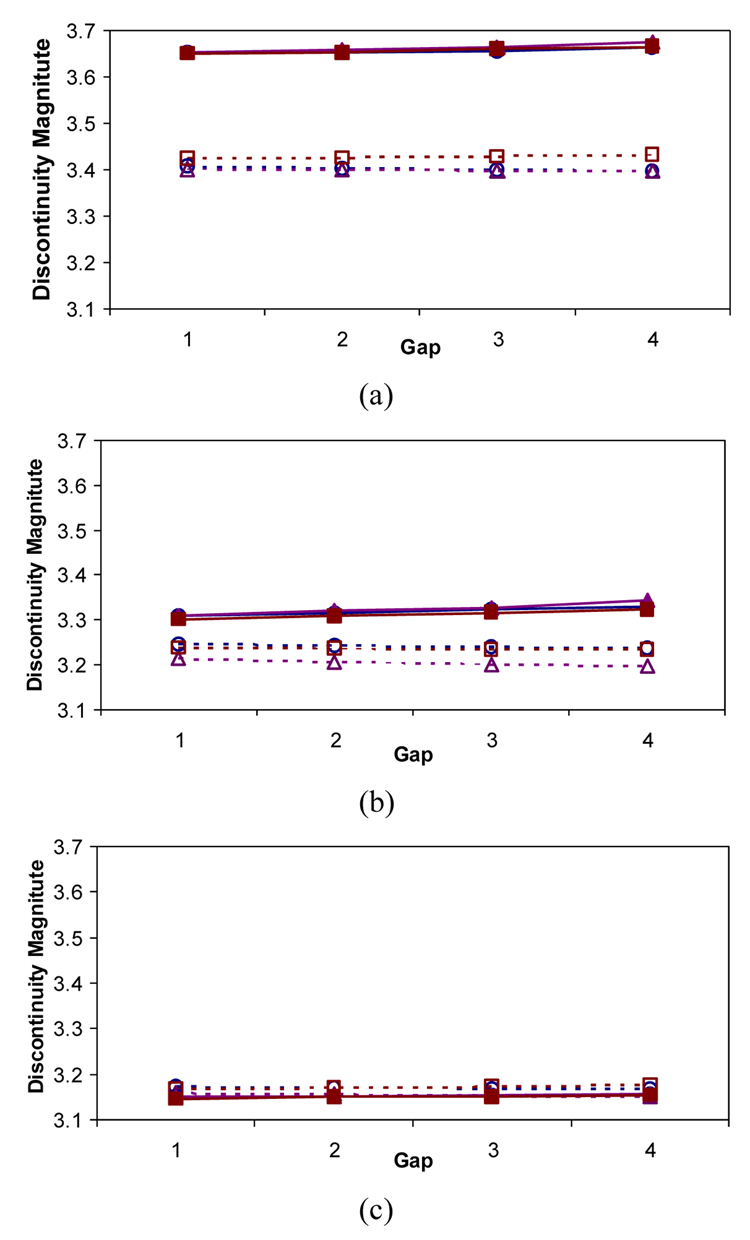
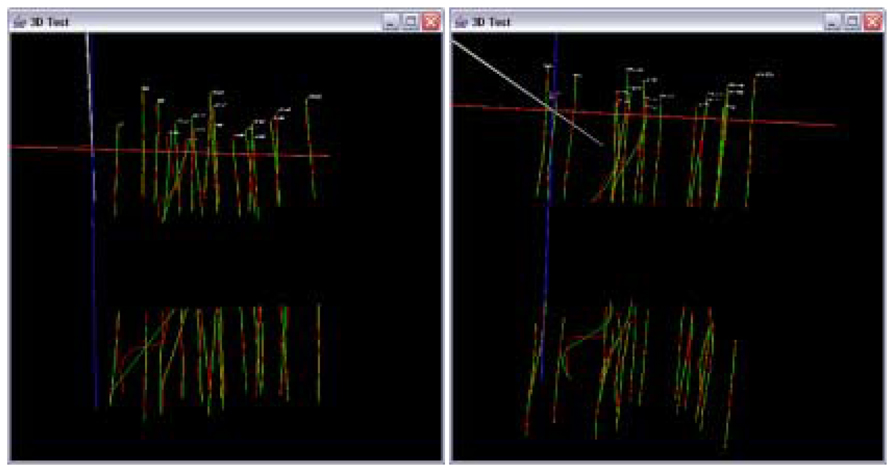
We address the 3D volume reconstruction problem from depth adjacent sub-volumes acquired by a confocal laser scanning microscope (CLSM). Our goal is to align the sub-volumes by estimating a set of optimal global transformations that preserve morphological continuity of medical structures, e.g., blood vessels, in the reconstructed 3D volume. We approach the problem by learning morphological characteristics of structures of interest in each sub-volume to understand global alignment transformations. Based on the observations of morphology, sub-volumes are aligned by connecting the morphological features at the sub-volume boundaries by minimizing morphological discontinuity. To minimize the discontinuity, we introduce three morphological discontinuity metrics: discontinuity magnitude at sub-volume boundary points, and overall and junction discontinuity residuals after polynomial curve fitting to multiple aligned sub-volumes. The proposed techniques have been applied to the problem of aligning CLSM sub-volumes acquired from four consecutive physical cross sections. Our experimental results demonstrated significant improvements of morphological smoothness of medical structures in comparison with the results obtained by feature matching at the sub-volume boundaries. The experimental results were evaluated by visual inspection and by quantifying morphological discontinuity metrics.
我们解决了由共聚焦激光扫描显微镜(CLSM)获取的深度相邻子体积的三维体积重建问题。我们的目标是通过估计一组最优的全局变换来对齐子体积,这些变换能保持重建三维体积中诸如血管等医学结构的形态连续性。我们通过学习每个子体积中感兴趣结构的形态特征来理解全局对齐变换,从而解决这个问题。基于形态学观察,通过最小化形态不连续性,在子体积边界处连接形态特征来对齐子体积。为了最小化不连续性,我们引入了三个形态不连续性度量:子体积边界点处的不连续幅度,以及对多个对齐子体积进行多项式曲线拟合后的整体和连接不连续残差。所提出的技术已应用于对齐从四个连续物理横截面获取的CLSM子体积的问题。与通过子体积边界处的特征匹配获得的结果相比,我们的实验结果表明医学结构的形态平滑度有显著提高。通过目视检查和量化形态不连续性度量对实验结果进行了评估。