Raymond Benoit, Batsche Eric, Boutillon Florence, Wu Yong-Zheng, Leduc Dominique, Balloy Viviane, Raoust Eloïse, Muchardt Christian, Goossens Pierre L, Touqui Lhousseine
Institut Pasteur, Unité de Défense Innée et Inflammation, Paris, France.
PLoS Pathog. 2009 Apr;5(4):e1000359. doi: 10.1371/journal.ppat.1000359. Epub 2009 Apr 3.
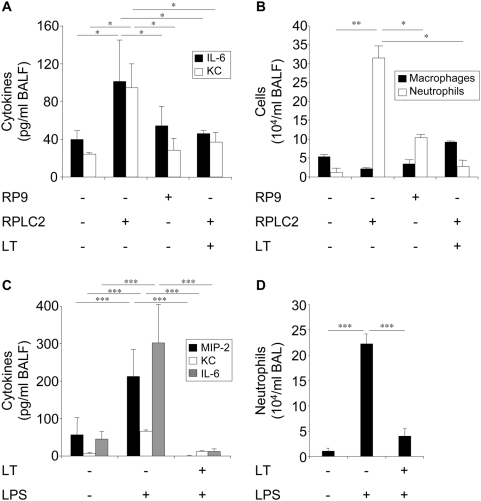
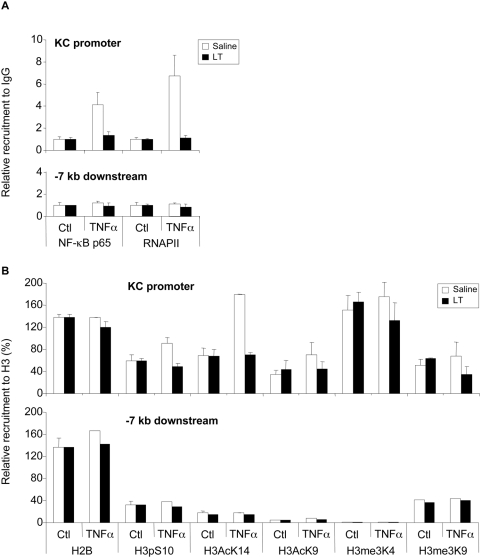
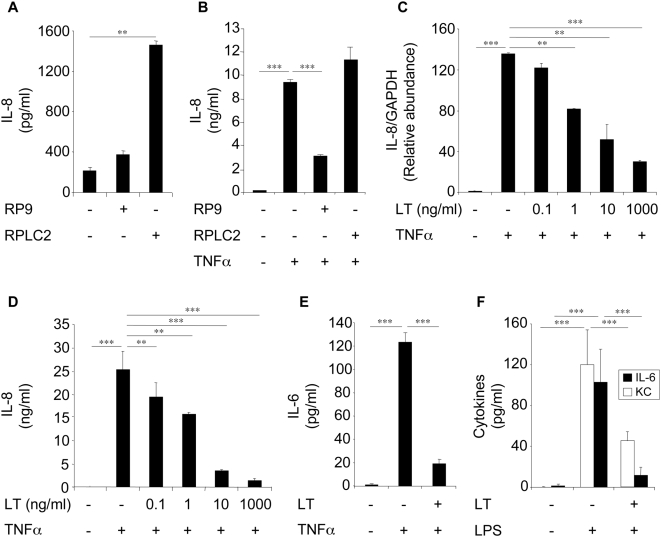
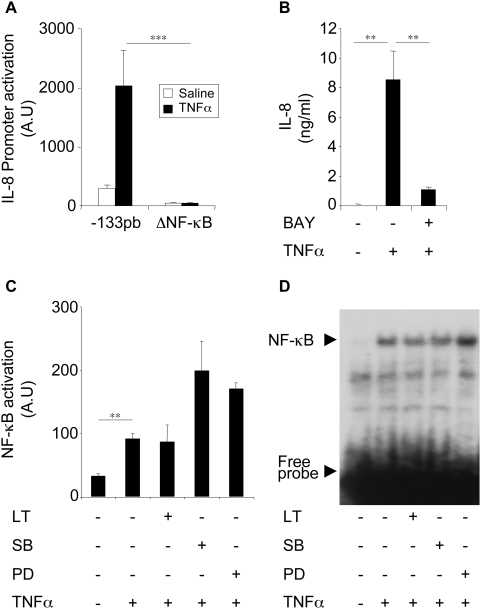
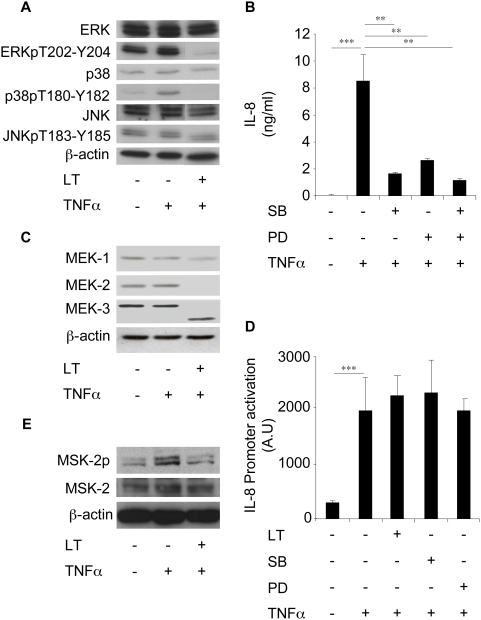
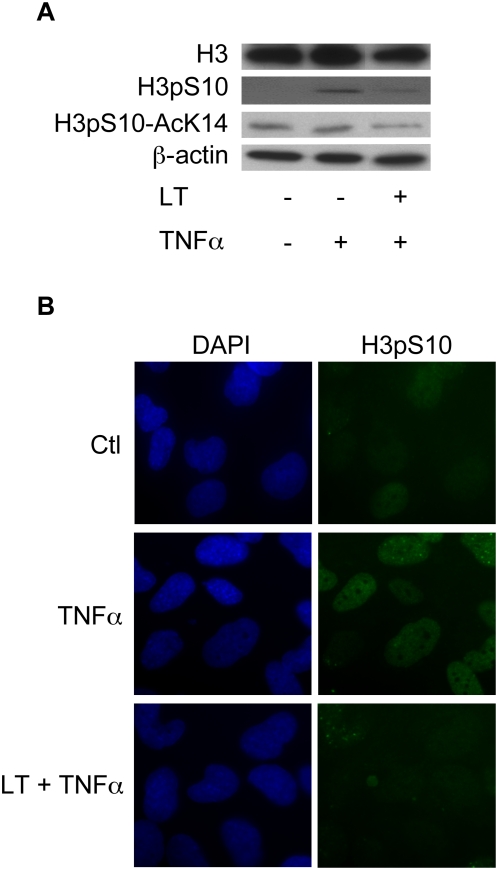
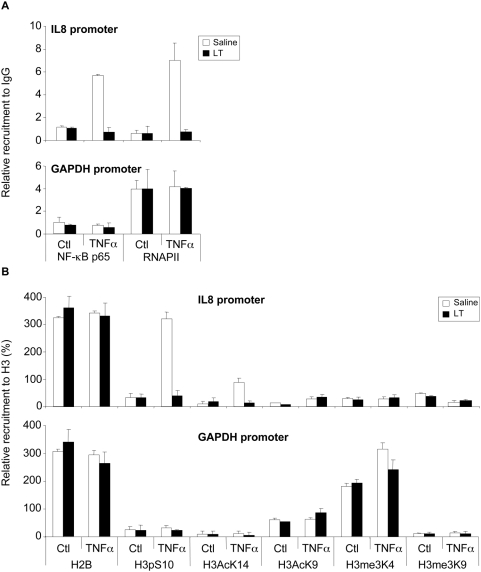
Lethal toxin (LT) is a critical virulence factor of Bacillus anthracis, the etiological agent of anthrax, whose pulmonary form is fatal in the absence of treatment. Inflammatory response is a key process of host defense against invading pathogens. We report here that intranasal instillation of a B. anthracis strain bearing inactive LT stimulates cytokine production and polymorphonuclear (PMN) neutrophils recruitment in lungs. These responses are repressed by a prior instillation of an LT preparation. In contrast, instillation of a B. anthracis strain expressing active LT represses lung inflammation. The inhibitory effects of LT on cytokine production are also observed in vitro using mouse and human pulmonary epithelial cells. These effects are associated with an alteration of ERK and p38-MAPK phosphorylation, but not JNK phosphorylation. We demonstrate that although NF-kappaB is essential for IL-8 expression, LT downregulates this expression without interfering with NF-kappaB activation in epithelial cells. Histone modifications are known to induce chromatin remodelling, thereby enhancing NF-kappaB binding on promoters of a subset of genes involved in immune response. We show that LT selectively prevents histone H3 phosphorylation at Ser 10 and recruitment of the p65 subunit of NF-kappaB at the IL-8 and KC promoters. Our results suggest that B. anthracis represses the immune response, in part by altering chromatin accessibility of IL-8 promoter to NF-kappaB in epithelial cells. This epigenetic reprogramming, in addition to previously reported effects of LT, may represent an efficient strategy used by B. anthracis for invading the host.
致死毒素(LT)是炭疽杆菌的一种关键毒力因子,炭疽杆菌是炭疽病的病原体,其肺部感染形式若不治疗则会致命。炎症反应是宿主抵御入侵病原体的关键过程。我们在此报告,经鼻内滴注携带无活性LT的炭疽杆菌菌株可刺激肺部细胞因子产生和多形核(PMN)中性粒细胞募集。这些反应会被预先滴注的LT制剂所抑制。相反,滴注表达活性LT的炭疽杆菌菌株会抑制肺部炎症。在体外使用小鼠和人肺上皮细胞也观察到了LT对细胞因子产生的抑制作用。这些作用与ERK和p38 - MAPK磷酸化的改变有关,但与JNK磷酸化无关。我们证明,尽管NF-κB对IL-8表达至关重要,但LT在不干扰上皮细胞中NF-κB激活的情况下下调该表达。已知组蛋白修饰可诱导染色质重塑,从而增强NF-κB在参与免疫反应的一部分基因启动子上的结合。我们表明,LT选择性地阻止组蛋白H3在Ser 10处的磷酸化以及NF-κB的p65亚基在IL-8和KC启动子处的募集。我们的结果表明,炭疽杆菌部分通过改变上皮细胞中IL-8启动子对NF-κB的染色质可及性来抑制免疫反应。这种表观遗传重编程,除了先前报道的LT的作用外,可能代表了炭疽杆菌用于入侵宿主的一种有效策略。