Nelson Aimee J, Hoque Tasnuva, Gunraj Carolyn, Ni Zhen, Chen Robert
Division of Neurology and Krembil Neuroscience Centre, Toronto Western Research Institute, University of Toronto, Toronto, Canada.
BMC Neurosci. 2009 Apr 4;10:31. doi: 10.1186/1471-2202-10-31.
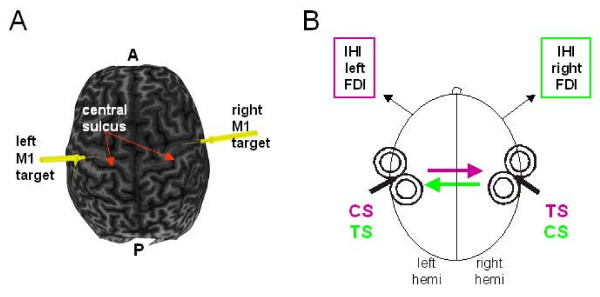
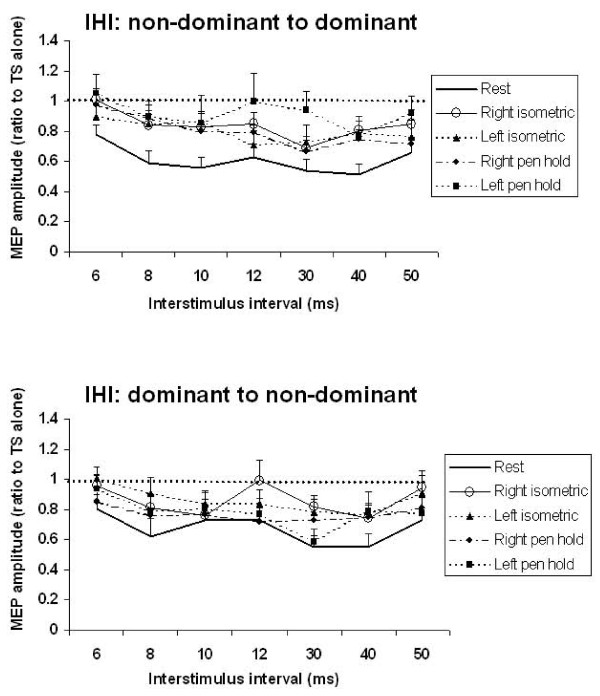
The interaction between homologous muscle representations in the right and left primary motor cortex was studied using a paired-pulse transcranial magnetic stimulation (TMS) protocol known to evoke interhemispheric inhibition (IHI). The time course and magnitude of IHI was studied in fifteen healthy right-handed adults at several interstimulus intervals between the conditioning stimulus and test stimulus (6, 8, 10, 12, 30, 40, 50 ms). IHI was studied in the motor dominant to non-dominant direction and vice versa while the right or left hand was at rest, performing isometric contraction of the first dorsal interosseous (FDI) muscle, and isometric contraction of the FDI muscle in the context of holding a pen.
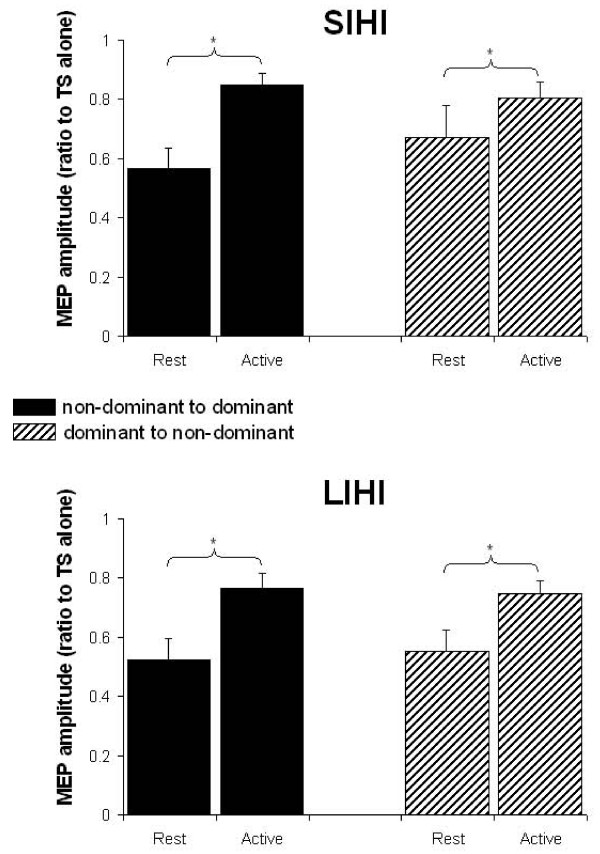
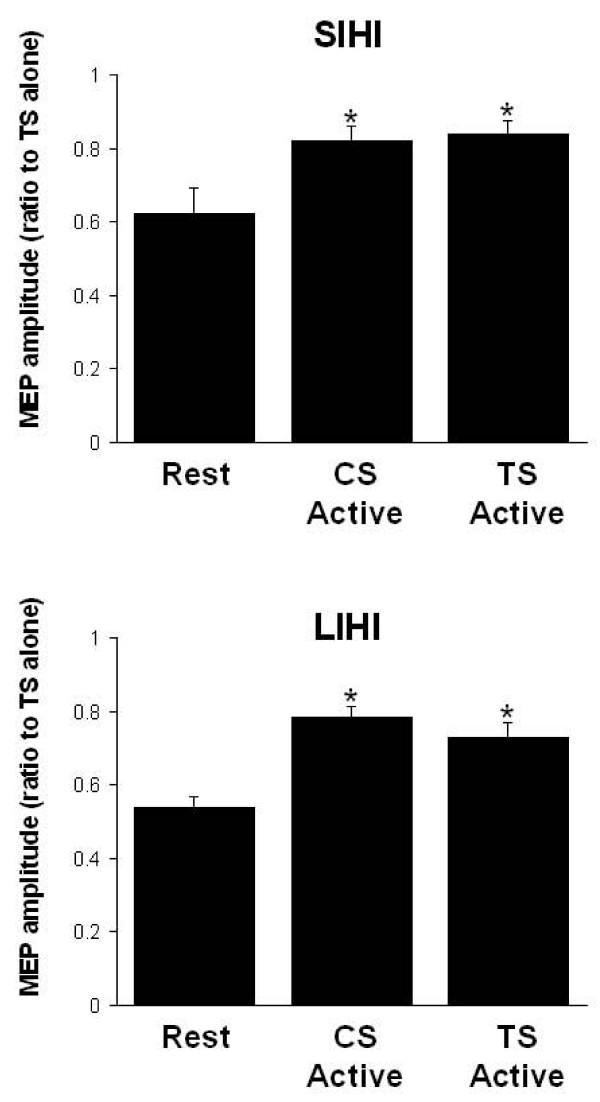
Compared with rest, IHI was reduced at all ISIs during contraction of either type (with or without the context of pen). IHI was reduced bi-directionally without evidence of hemispheric dominance. Further, contraction of the hand contralateral to the conditioning and test pulse yielded similar reductions in IHI.
These data provide evidence for bi-directional reduction of IHI during unimanual contractions. During unimanual, sustained contractions of the hand, the contralateral and ipsilateral motor cortices demonstrate reduced inhibition. The data suggest that unimanual movement decreases inhibition bi-directionally across motor hemispheres and offer one explanation for the observation of ipsilateral M1 activity during hand movements.
采用已知可诱发半球间抑制(IHI)的成对脉冲经颅磁刺激(TMS)方案,研究了右侧和左侧初级运动皮层中同源肌肉表征之间的相互作用。在15名健康右利手成年人中,研究了条件刺激和测试刺激之间几个不同刺激间隔(6、8、10、12、30、40、50毫秒)下IHI的时间进程和幅度。在右手或左手处于休息状态、进行第一背侧骨间肌(FDI)等长收缩以及在握笔状态下进行FDI等长收缩时,分别研究了从运动优势半球到非优势半球方向以及相反方向的IHI。
与休息状态相比,在任何一种类型的收缩过程中(无论是否有握笔情境),所有刺激间隔下的IHI均降低。IHI呈双向降低,无半球优势证据。此外,与条件刺激和测试脉冲对侧的手进行收缩时,IHI也有类似程度的降低。
这些数据为单手收缩期间IHI的双向降低提供了证据。在单手持续收缩过程中,对侧和同侧运动皮层的抑制作用均减弱。数据表明,单手运动可双向降低运动半球间的抑制,并为手部运动期间同侧M1活动的观察结果提供了一种解释。