Ji Yingbiao, Tulin Alexei V
Fox Chase Cancer Center, Philadelphia, PA 19111, USA.
Nucleic Acids Res. 2009 Jun;37(11):3501-13. doi: 10.1093/nar/gkp218. Epub 2009 Apr 3.
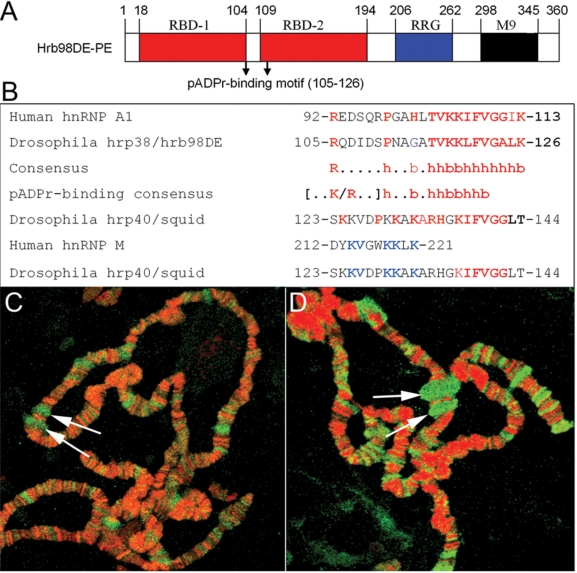
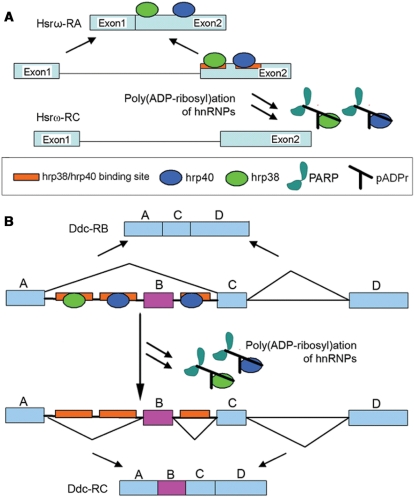
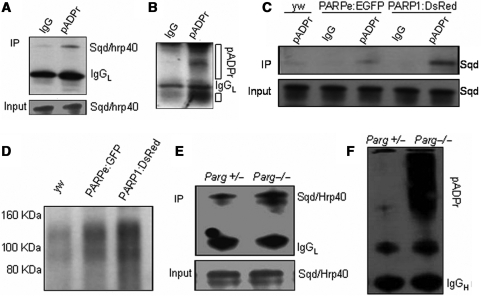
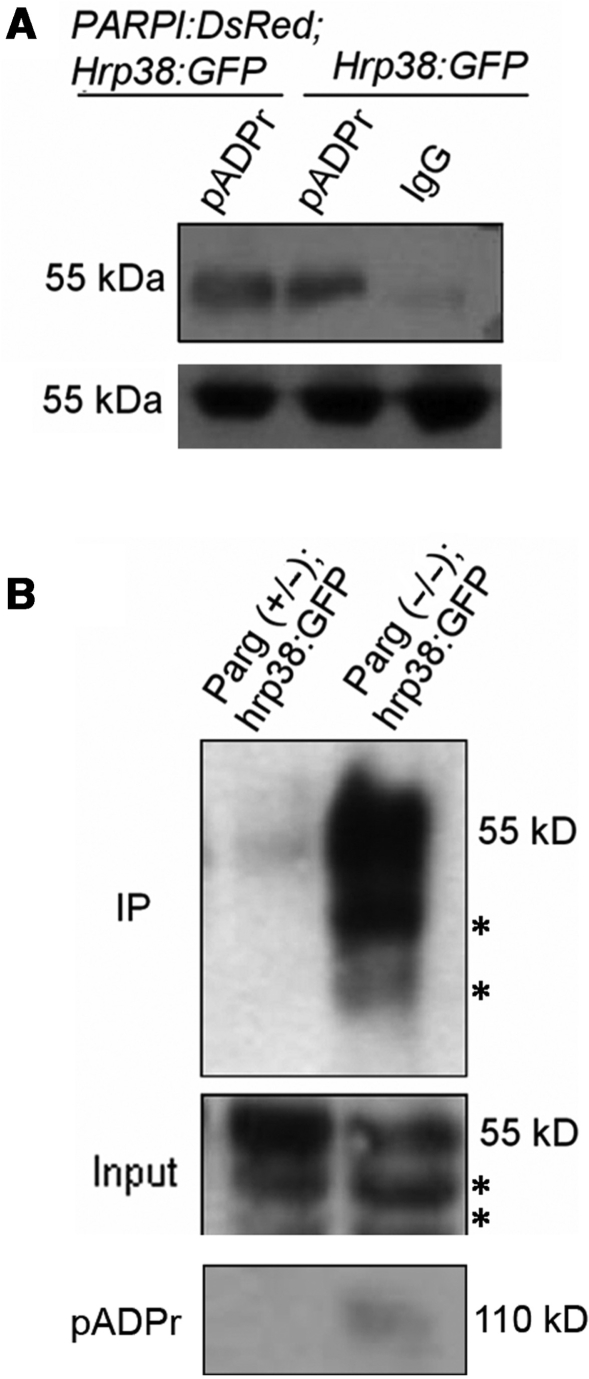
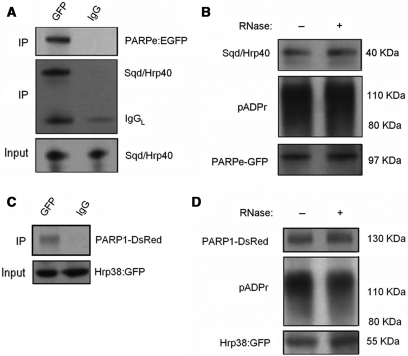
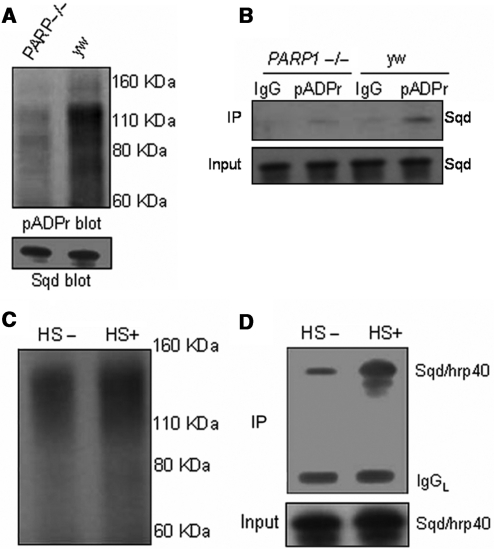
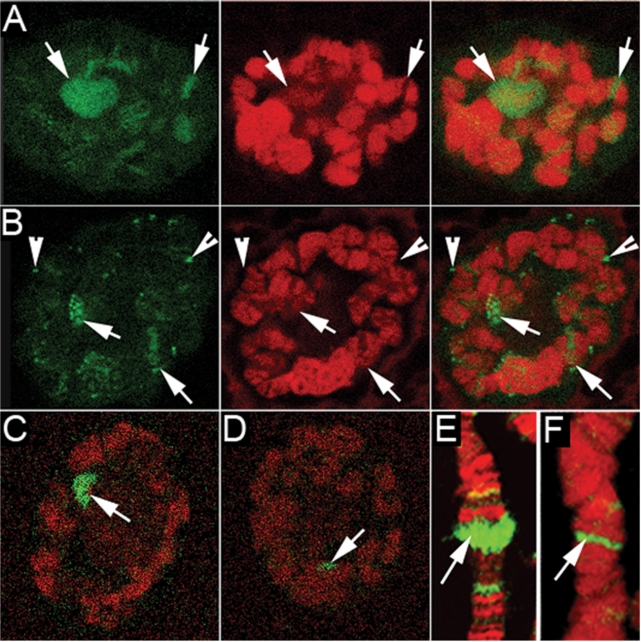
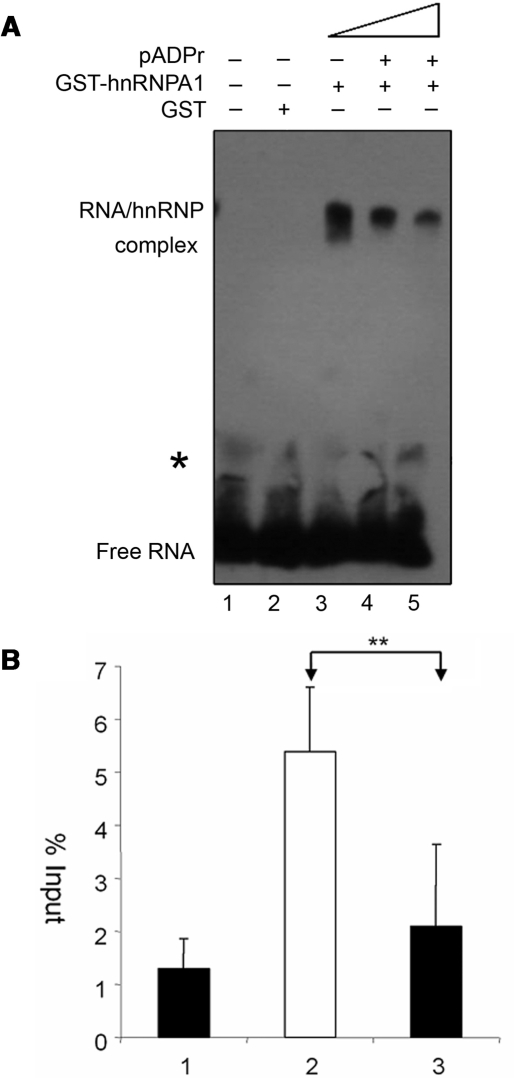
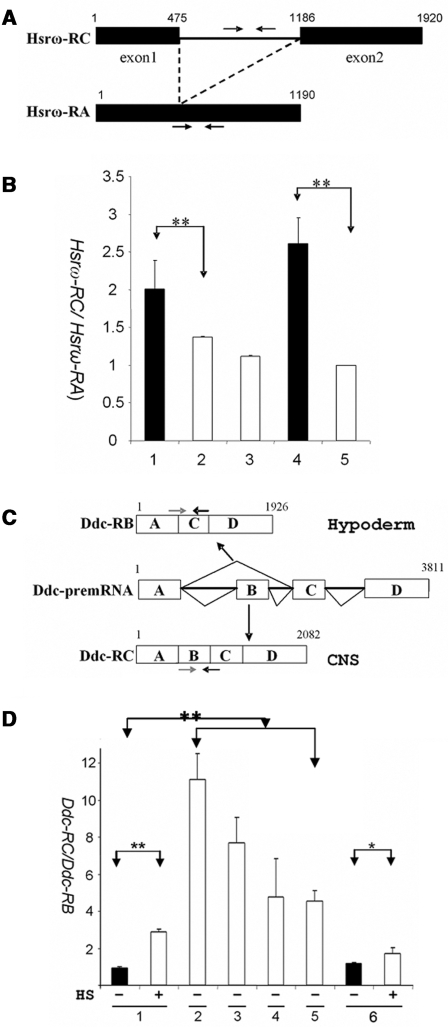
The biological functions of poly(ADP-ribosyl)ation of heterogeneous nuclear ribonucleoproteins (hnRNPs) are not well understood. However, it is known that hnRNPs are involved in the regulation of alternative splicing for many genes, including the Ddc gene in Drosophila. Therefore, we first confirmed that poly(ADP-ribose) (pADPr) interacts with two Drosophila hnRNPs, Squid/hrp40 and Hrb98DE/hrp38, and that this function is regulated by Poly(ADP-ribose) Polymerase 1 (PARP1) and Poly(ADP-ribose) Glycohydrolase (PARG) in vivo. These findings then provided a basis for analyzing the role of pADPr binding to these two hnRNPs in terms of alternative splicing regulation. Our results showed that Parg null mutation does cause poly(ADP-ribosyl)ation of Squid and hrp38 protein, as well as their dissociation from active chromatin. Our data also indicated that pADPr binding to hnRNPs inhibits the RNA-binding ability of hnRNPs. Following that, we demonstrated that poly(ADP-ribosyl)ation of Squid and hrp38 proteins inhibits splicing of the intron in the Hsr omega-RC transcript, but enhances splicing of the intron in the Ddc pre-mRNA. Taken together, these findings suggest that poly(ADP-ribosyl)ation regulates the interaction between hnRNPs and RNA and thus modulates the splicing pathways.
异质性细胞核核糖核蛋白(hnRNPs)的多聚(ADP-核糖基)化的生物学功能尚未完全明确。然而,已知hnRNPs参与许多基因的可变剪接调控,包括果蝇中的Ddc基因。因此,我们首先证实了多聚(ADP-核糖)(pADPr)与两种果蝇hnRNPs,即Squid/hrp40和Hrb98DE/hrp38相互作用,并且这种功能在体内受多聚(ADP-核糖)聚合酶1(PARP1)和多聚(ADP-核糖)糖苷水解酶(PARG)的调节。这些发现为从可变剪接调控角度分析pADPr与这两种hnRNPs结合的作用提供了基础。我们的结果表明,Parg基因敲除突变确实会导致Squid和hrp38蛋白的多聚(ADP-核糖基)化,以及它们从活性染色质上解离。我们的数据还表明,pADPr与hnRNPs的结合会抑制hnRNPs的RNA结合能力。在此之后,我们证明了Squid和hrp38蛋白的多聚(ADP-核糖基)化会抑制Hsr omega-RC转录本中内含子的剪接,但会增强Ddc前体mRNA中内含子的剪接。综上所述,这些发现表明多聚(ADP-核糖基)化调节hnRNPs与RNA之间的相互作用,从而调控剪接途径。