Cancer Biology Program, Fox Chase Cancer Center, Philadelphia, PA 19111, USA.
Int J Mol Sci. 2013 Aug 5;14(8):16168-83. doi: 10.3390/ijms140816168.
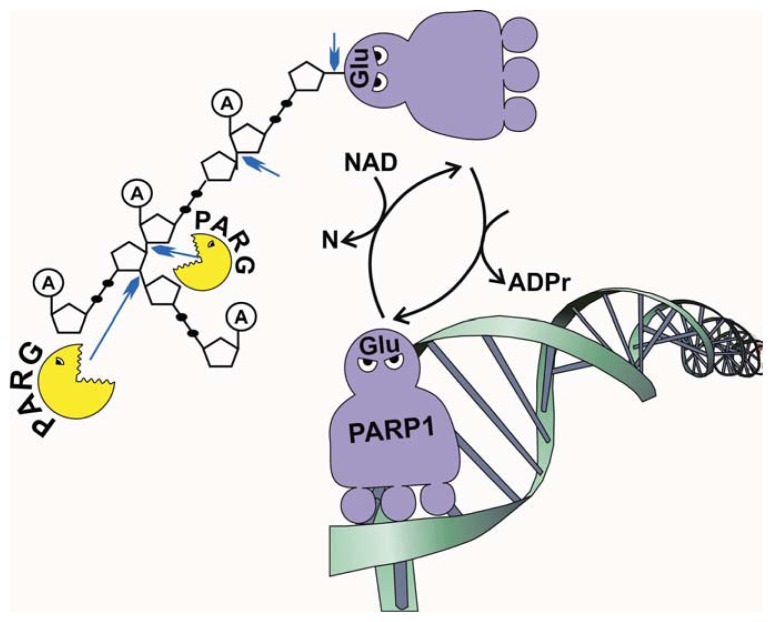
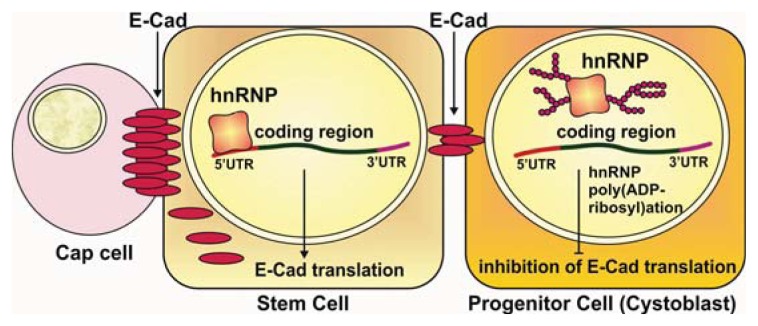
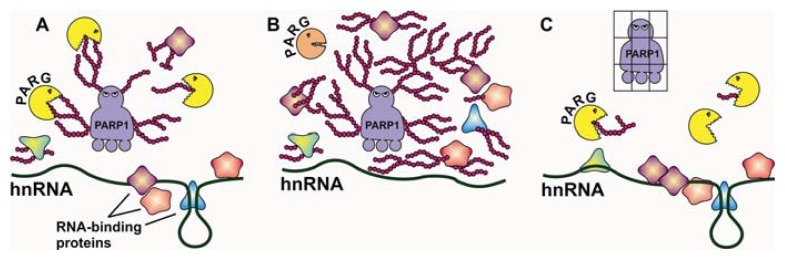
Gene expression is intricately regulated at the post-transcriptional level by RNA-binding proteins (RBPs) via their interactions with pre-messenger RNA (pre-mRNA) and mRNA during development. However, very little is known about the mechanism regulating RBP activities in RNA metabolism. During the past few years, a large body of evidence has suggested that many RBPs, such as heterogeneous nuclear ribonucleoproteins (hnRNPs), undergo post-translational modification through poly(ADP-ribosyl)ation to modulate RNA processing, including splicing, polyadenylation, translation, miRNA biogenesis and rRNA processing. Accordingly, RBP poly(ADP-ribosyl)ation has been shown to be involved in stress responses, stem cell differentiation and retinal morphogenesis. Here, we summarize recent advances in understanding the biological roles of RBP poly(ADP-ribosyl)ation, as controlled by Poly(ADP-ribose) Polymerases (PARPs) and Poly(ADP-ribose) Glycohydrolase (PARG). In addition, we discuss the potential of PARP and PARG inhibitors for the treatment of RBP-related human diseases, including cancer and neurodegenerative disorders.
基因表达在转录后水平受到 RNA 结合蛋白 (RBPs) 的精细调控,这些蛋白通过与发育过程中前信使 RNA (pre-mRNA) 和 mRNA 的相互作用来实现。然而,对于调节 RNA 代谢中 RBP 活性的机制知之甚少。在过去的几年中,大量证据表明,许多 RBP,如异质核核糖核蛋白 (hnRNPs),通过多聚 ADP-核糖基化进行翻译后修饰,以调节 RNA 加工,包括剪接、多聚腺苷酸化、翻译、miRNA 生物发生和 rRNA 加工。因此,RBP 多聚 ADP-核糖基化已被证明参与应激反应、干细胞分化和视网膜形态发生。在这里,我们总结了近年来对 PARPs 和 PARG 控制的 RBP 多聚 ADP-核糖基化的生物学作用的理解的最新进展。此外,我们还讨论了 PARP 和 PARG 抑制剂在治疗与 RBP 相关的人类疾病(包括癌症和神经退行性疾病)方面的潜力。