Stefani Laura, Pedrizzetti Gianni, De Luca Alessio, Mercuri Roberto, Innocenti Gabriele, Galanti Giorgio
Sport Medicine Center, University of Florence, Italy.
Cardiovasc Ultrasound. 2009 Apr 8;7:17. doi: 10.1186/1476-7120-7-17.
Strain, and particularly Longitudinal Peak Systolic Strain (LPSS), plays a role in investigating the segmental and overall contractility of the heart which is a particularly interesting feature in athletes in whom regular training determines several morphological and functional modifications in both the ventricles, that normally work at different loads. Speckle tracking techniques assess the LPSS of LV and RV from B-mode imaging in real time, with uniform accuracy in all segments, and can verify the possible dissimilar segmental contributions of the two chambers to overall myocardial contraction. The aim of the study is to quantify the LPSS in real time in both the ventricles in order to estimate any possible different deformation properties in them during a systolic period.
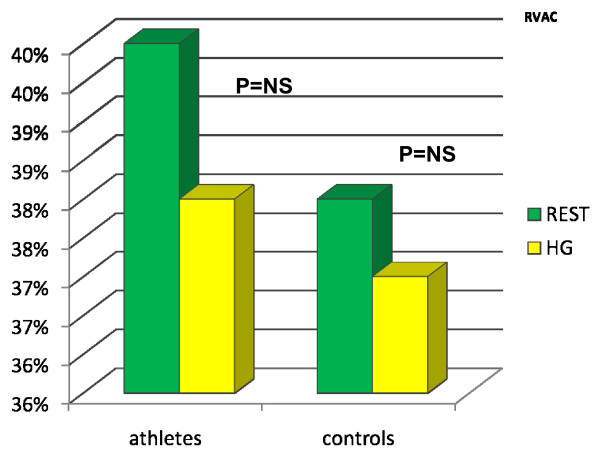
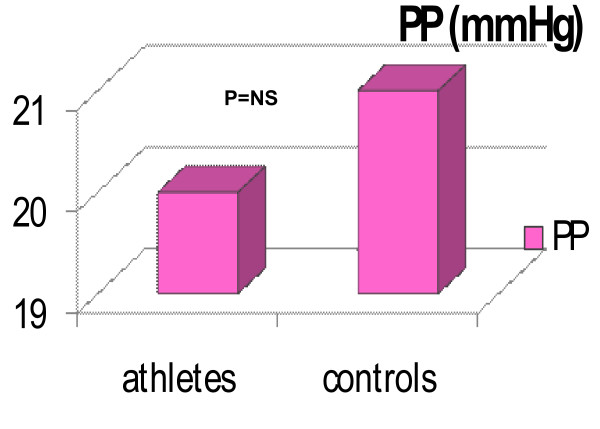
32 subjects (20 athletes and 18 controls) were submitted to a standard echocardiographic examination at rest and after a Hand Grip (HG) stress. From a four-chamber-view image, the LPSS parameter was measured with Speckle Tracking analysis in the basal and medium-apical segments of the two ventricles, at rest and after HG.
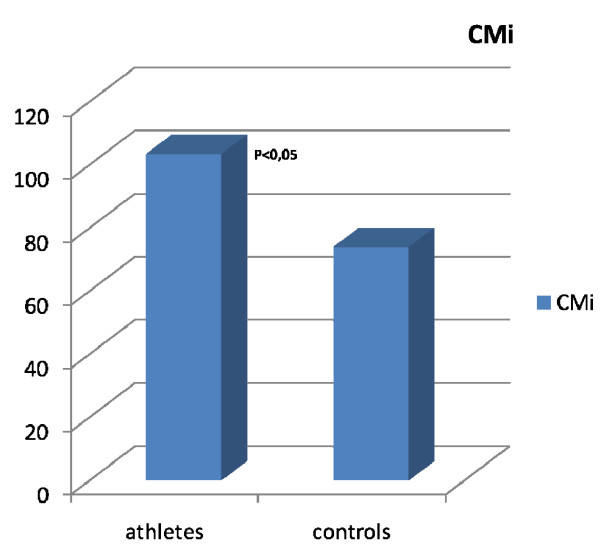
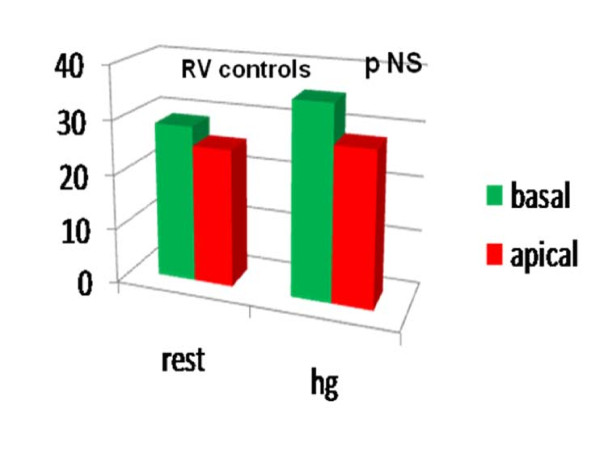
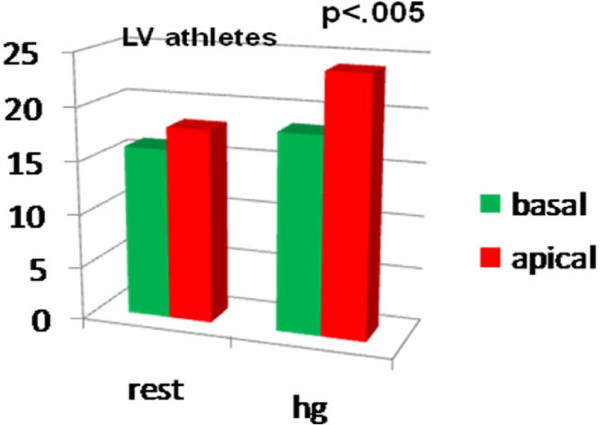
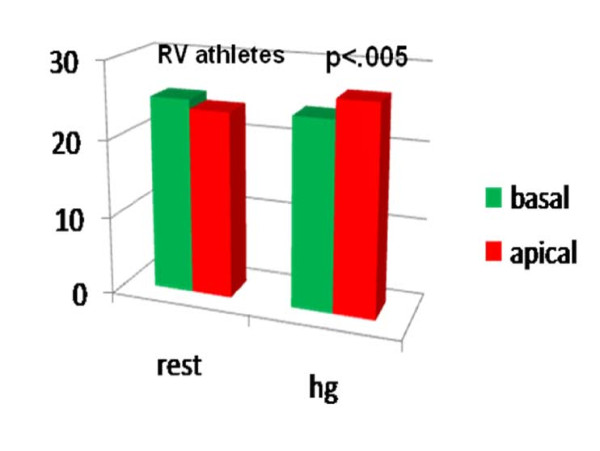
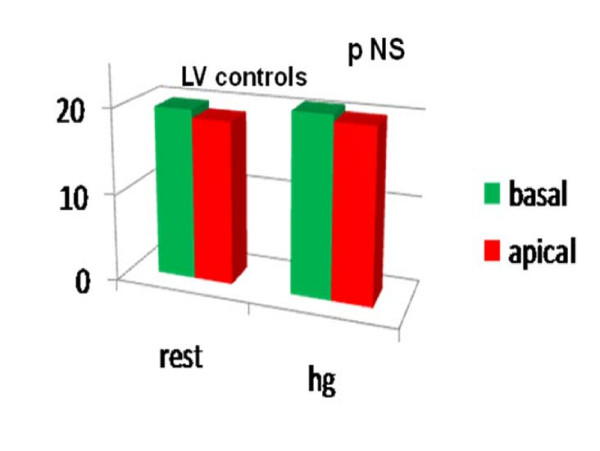
In both athletes and controls, LPSS values were significantly higher in the RV of athletes (RV LPSS medium-apical -23.87 +/- 4.94; basalfreewall -25.04 +/- 4.12 at rest) and controls (RV LPSSmedium-apical -25.21 +/- 4.97; basalfreewall -28.69 +/- 4.62 at rest) than in the LV of both (athletes LV LPSS medium-apical -18.14 +/- 4.16; basallateralwall -16.05 +/- 12.32; controls medium-apical -18.81 +/- 2.64; basallateralwall -19.74 +/- 3.84) With the HG test a significant enhancement of the LPSS(with P < .05) in the medium-apical segments of LV and RV was evident, but only in athletes; there was no modification of the standard echo-parameters in either group.
ST analysis is an easy method for investigating the contractility of the RV through deformation parameters, showing greater involvement of the RV than LV at rest. In athletes only, after isometric stress the two ventricles show particular myocardial deformation properties of the regions around the apex where the curvature of the wall is more marked. The clinical application of this new approach in athletes and normal subjects requires further investigation.
应变,尤其是纵向峰值收缩应变(LPSS),在研究心脏节段性和整体收缩功能中发挥作用,这在运动员中是一个特别有趣的特征,因为规律训练会使两个心室发生多种形态和功能改变,而两个心室通常在不同负荷下工作。斑点追踪技术可从B模式成像实时评估左心室和右心室的LPSS,各节段准确性一致,且能验证两个心室对整体心肌收缩可能存在的不同节段贡献。本研究的目的是实时量化两个心室的LPSS,以估计收缩期它们中任何可能存在的不同变形特性。
32名受试者(20名运动员和18名对照组)在静息状态和握力(HG)应激后接受标准超声心动图检查。从四腔心视图图像中,在静息状态和HG后,用斑点追踪分析测量两个心室基底段和中间心尖段的LPSS参数。
在运动员和对照组中,运动员右心室的LPSS值(静息时右心室中间心尖段LPSS -23.87±4.94;基底游离壁 -25.04±4.12)和对照组(静息时右心室中间心尖段LPSS -25.21±4.97;基底游离壁 -28.69±4.62)均显著高于两者的左心室(运动员左心室中间心尖段LPSS -18.14±4.16;基底侧壁 -16.05±12.32;对照组中间心尖段 -18.81±2.64;基底侧壁 -19.74±3.84)。通过HG试验,左心室和右心室中间心尖段的LPSS有显著增强(P <.05),但仅在运动员中;两组的标准超声心动图均无改变。
斑点追踪分析是一种通过变形参数研究右心室收缩功能的简便方法,显示静息时右心室比左心室受累更明显。仅在运动员中,等长应激后两个心室的心尖周围区域表现出特殊的心肌变形特性,此处壁的曲率更明显。这种新方法在运动员和正常受试者中的临床应用需要进一步研究。