Wenke Dorit, Gaschler Robert, Nattkemper Dieter, Frensch Peter A
Department of Psychology, Max Planck Institute for Human Cognitive and Brain Sciences, Stephanstrasse 1a, 04103, Leipzig, Germany.
Psychol Res. 2009 Jul;73(4):587-601. doi: 10.1007/s00426-009-0239-x. Epub 2009 Apr 10.
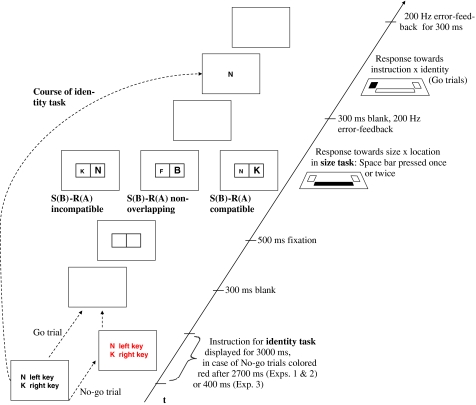
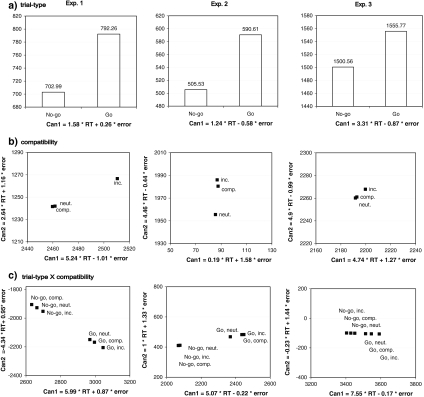
Temporal and strategic factors that might influence the transformation of verbal task rules into functional stimulus-response associations were investigated in three experiments. In a dual task paradigm of the ABBA type participants were presented new S-R instructions for the A-task at the beginning of each trial. On varying proportions of trials No-go signals rendered the instructed A-task mappings irrelevant before instruction implementation was assessed during performance of an unrelated B-task. Our results indicate that participants refrain from implementing the mappings during instruction presentation when No-go signals appear frequently and late (Exp. 2), and that they can interrupt implementing instructed S-R mappings when frequent No-go signals appear early enough during implementation (Exp. 3). When No-go signals are rare and late, however (Exp. 1), the instructed stimulus features always activate their associated responses during performance of the embedded B-task in an automatic manner. Together, these findings suggest that participants strategically control whether or not they implement verbal instructions. Once implemented, however, instructed S-R associations influence behaviour even when the instructed mappings are no longer task relevant.
在三个实验中,研究了可能影响言语任务规则转化为功能性刺激-反应关联的时间和策略因素。在ABBA类型的双重任务范式中,在每次试验开始时向参与者呈现A任务的新刺激-反应指令。在不同比例的试验中,在无关的B任务执行期间评估指令实施之前,“不执行”信号使指令的A任务映射变得无关紧要。我们的结果表明,当“不执行”信号频繁且出现较晚时(实验2),参与者在指令呈现期间会避免执行映射,并且当频繁的“不执行”信号在实施期间足够早地出现时,他们可以中断执行指令的刺激-反应映射(实验3)。然而,当“不执行”信号很少且出现较晚时(实验1),在执行嵌入式B任务期间,指令的刺激特征总是以自动的方式激活其相关的反应。总之,这些发现表明参与者会策略性地控制是否执行言语指令。然而,一旦执行,即使指令的映射不再与任务相关,指令的刺激-反应关联也会影响行为。