Meneely Kathleen M, Barr Eric W, Bollinger J Martin, Lamb Audrey L
Department of Molecular Biosciences, University of Kansas, 1200 Sunnyside Avenue, Lawrence, Kansas 66045, USA.
Biochemistry. 2009 May 26;48(20):4371-6. doi: 10.1021/bi900442z.
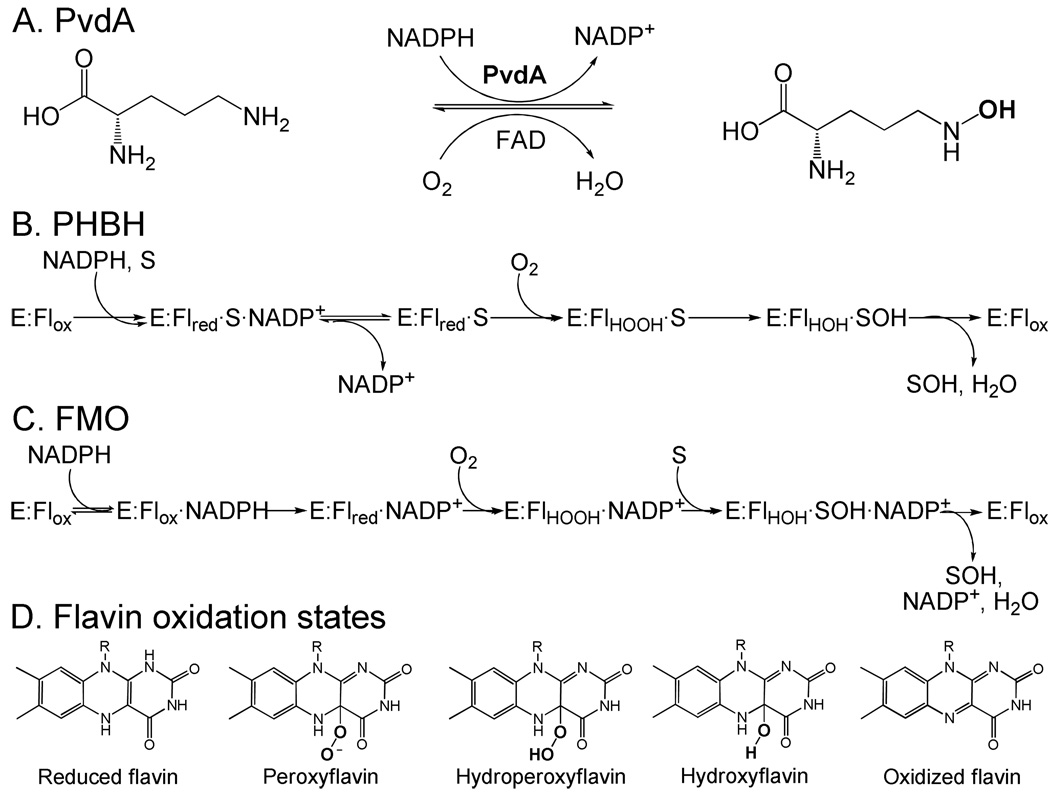
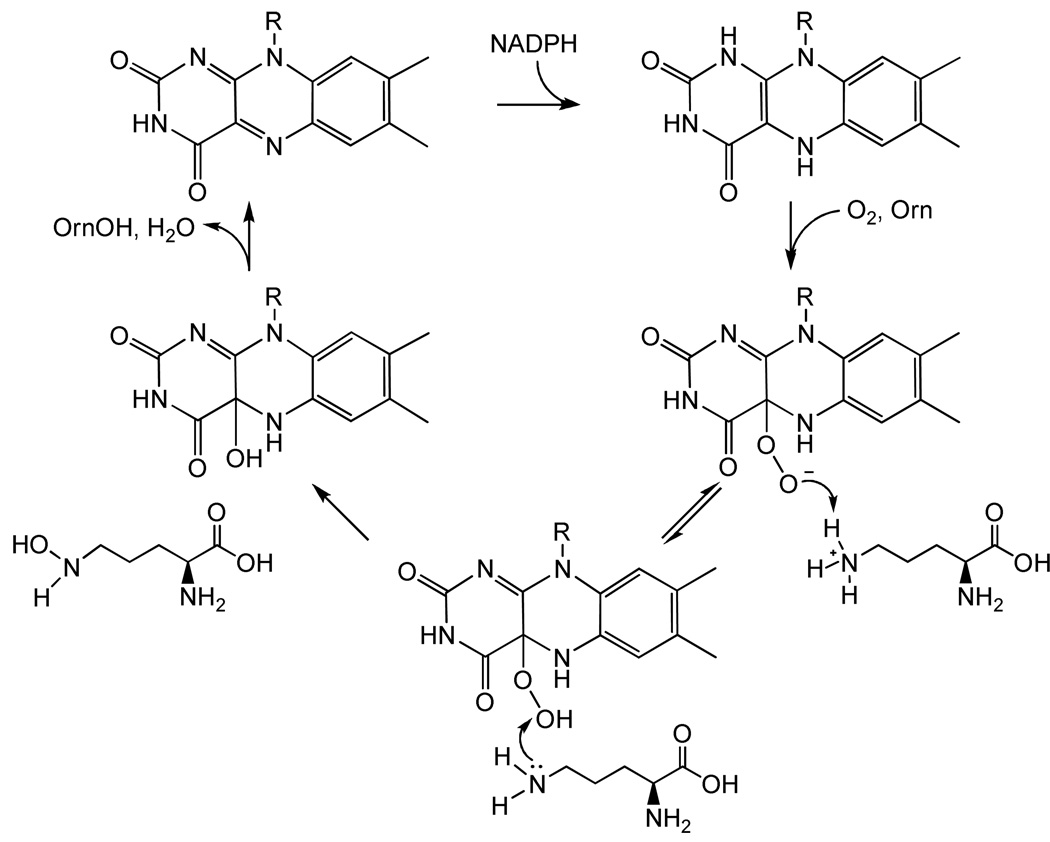
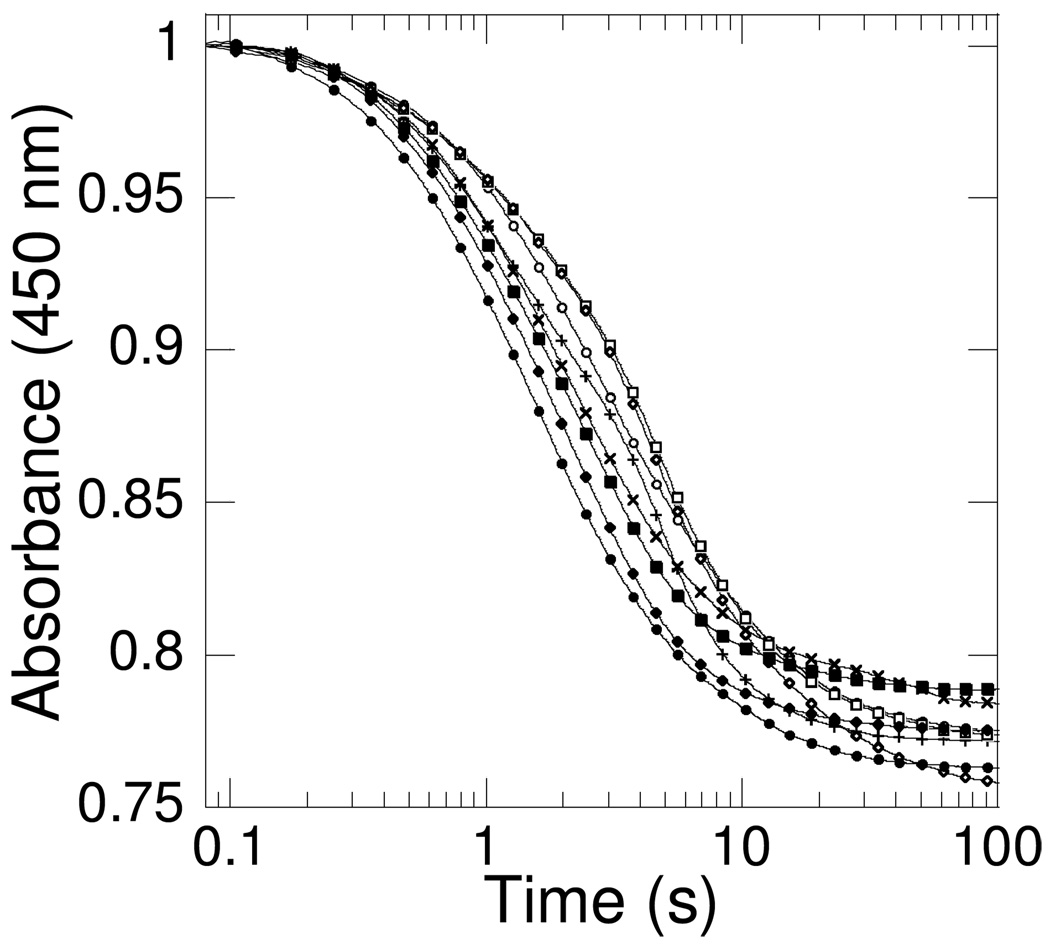
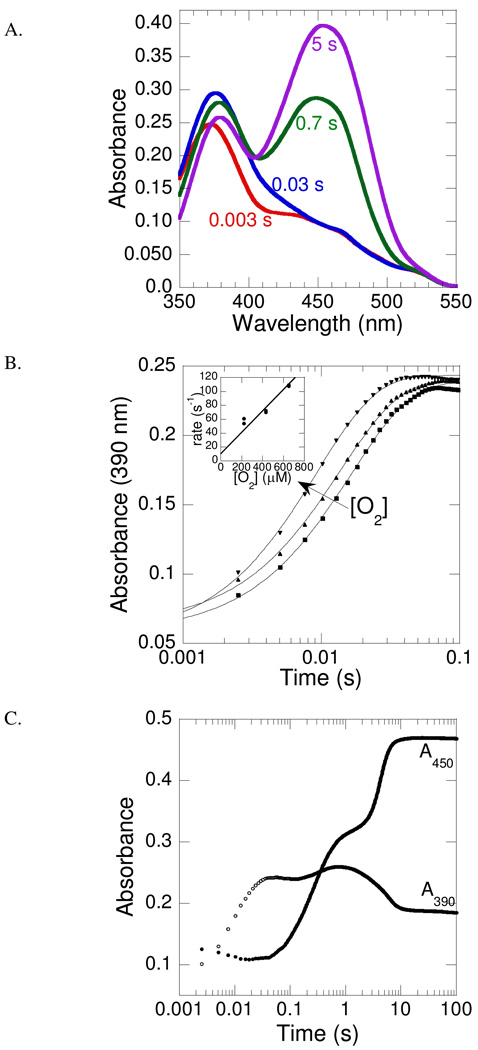
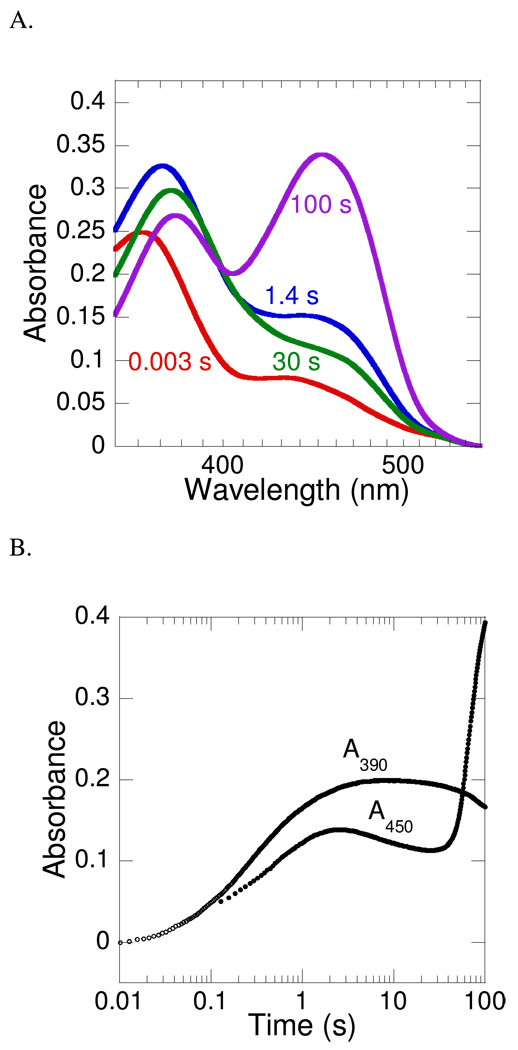
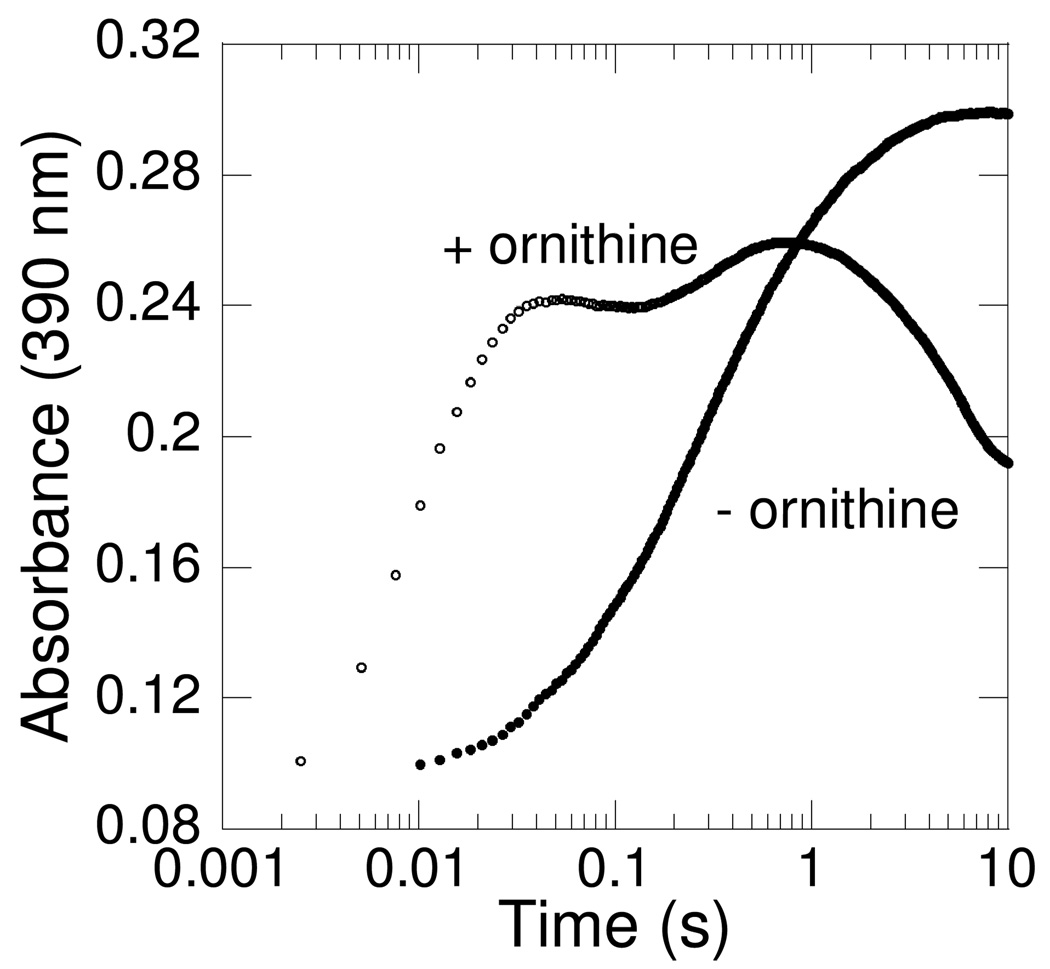
PvdA catalyzes the hydroxylation of the side chain primary amine of ornithine in the initial step of the biosynthesis of the Pseudomonas aeruginosa siderophore pyoverdin. The reaction requires FAD, NADPH, and O(2). PvdA uses the same cosubstrates as several flavin-dependent hydroxylases that differ one from another in the kinetic mechanisms of their oxidative and reductive half-reactions. Therefore, the mechanism of PvdA was determined by absorption stopped-flow experiments. By contrast to some flavin-dependent hydroxylases (notably, p-hydroxybenzoate hydroxylase), binding of the hydroxylation target is not required to trigger reduction of the flavin by NADPH: the reductive half-reaction is equally facile in the presence and absence of ornithine. Reaction of O(2) with FADH(2) in the oxidative half-reaction is accelerated by ornithine 80-fold, providing a mechanism by which PvdA can ensure coupling of NADPH and ornithine oxidation. In the presence of ornithine, the expected C(4a)-hydroperoxyflavin intermediate with 390 nm absorption accumulates and decays to the C(4a)-hydroxyflavin in a kinetically competent fashion. The slower oxidative half-reaction that occurs in the absence of ornithine involves accumulation of an oxygenated flavin species and two subsequent states that are tentatively assigned as C(4a)-peroxy- and C(4a)-hydroperoxyflavin intermediates and the oxidized flavin. The enzyme generates stoichiometric hydrogen peroxide in lieu of hydroxyornithine. The data suggest that PvdA employs a kinetic mechanism that is a hybrid of those previously documented for other flavin-dependent hydroxylases.
在铜绿假单胞菌铁载体绿脓菌素生物合成的初始步骤中,PvdA催化鸟氨酸侧链伯胺的羟基化反应。该反应需要黄素腺嘌呤二核苷酸(FAD)、烟酰胺腺嘌呤二核苷酸磷酸(NADPH)和氧气(O₂)。PvdA与几种黄素依赖性羟化酶使用相同的辅助底物,这些酶在氧化和还原半反应的动力学机制上彼此不同。因此,通过吸收停流实验确定了PvdA的机制。与一些黄素依赖性羟化酶(特别是对羟基苯甲酸羟化酶)不同,羟基化靶点的结合不是触发NADPH还原黄素所必需的:在有和没有鸟氨酸的情况下,还原半反应同样容易进行。鸟氨酸可使氧化半反应中O₂与FADH₂的反应加速80倍,这为PvdA确保NADPH和鸟氨酸氧化偶联提供了一种机制。在有鸟氨酸存在的情况下,预期的具有390nm吸收的C(4a)-氢过氧黄素中间体会积累,并以动力学上可行的方式衰变为C(4a)-羟基黄素。在没有鸟氨酸的情况下发生的较慢的氧化半反应涉及一种氧化黄素物种的积累以及随后的两种状态,暂定为C(4a)-过氧-和C(4a)-氢过氧黄素中间体以及氧化黄素。该酶产生化学计量的过氧化氢来替代羟基鸟氨酸。数据表明,PvdA采用的动力学机制是先前记录的其他黄素依赖性羟化酶机制的混合体。