Redwood Center for Theoretical Neuroscience, University of California Berkeley CA, USA.
Front Syst Neurosci. 2009 Apr 10;3:4. doi: 10.3389/neuro.06.004.2009. eCollection 2009.
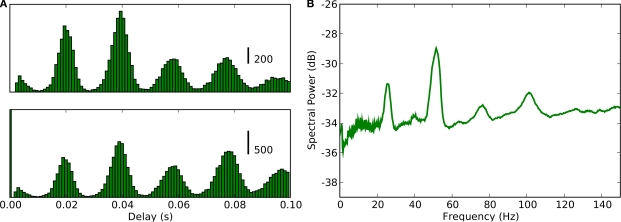
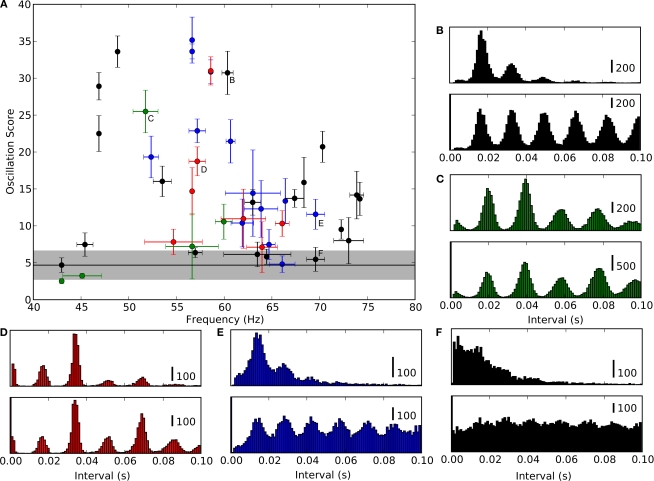
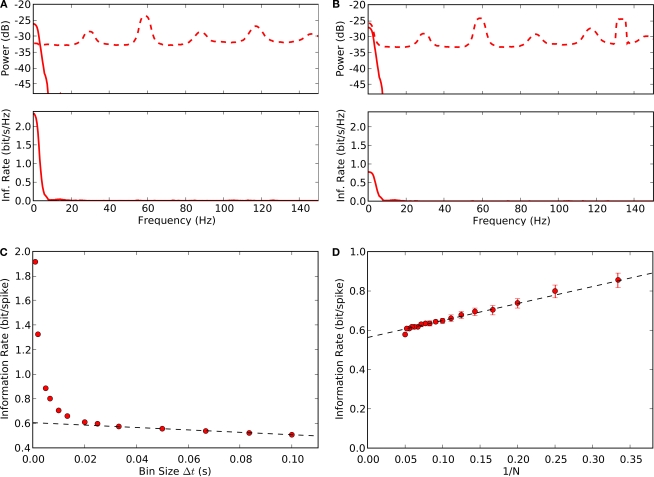
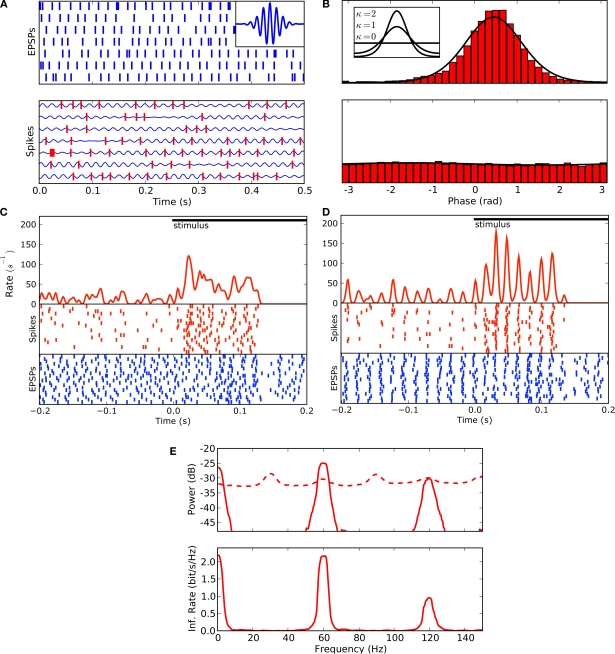
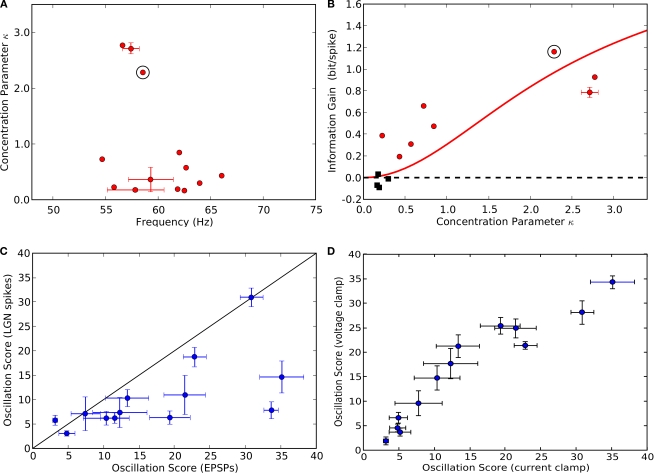
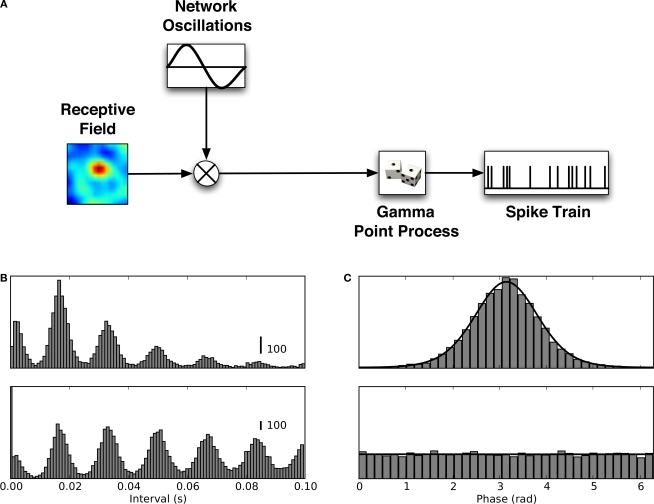
Thalamic relay cells fire action potentials that transmit information from retina to cortex. The amount of information that spike trains encode is usually estimated from the precision of spike timing with respect to the stimulus. Sensory input, however, is only one factor that influences neural activity. For example, intrinsic dynamics, such as oscillations of networks of neurons, also modulate firing pattern. Here, we asked if retinal oscillations might help to convey information to neurons downstream. Specifically, we made whole-cell recordings from relay cells to reveal retinal inputs (EPSPs) and thalamic outputs (spikes) and then analyzed these events with information theory. Our results show that thalamic spike trains operate as two multiplexed channels. One channel, which occupies a low frequency band (<30 Hz), is encoded by average firing rate with respect to the stimulus and carries information about local changes in the visual field over time. The other operates in the gamma frequency band (40-80 Hz) and is encoded by spike timing relative to retinal oscillations. At times, the second channel conveyed even more information than the first. Because retinal oscillations involve extensive networks of ganglion cells, it is likely that the second channel transmits information about global features of the visual scene.
丘脑中继细胞会发出动作电位,将信息从视网膜传递到大脑皮层。通常可以根据刺激相对于刺激的尖峰时间精度来估计尖峰序列编码的信息量。然而,感觉输入只是影响神经活动的一个因素。例如,内在动力学,如神经元网络的振荡,也会调节放电模式。在这里,我们想知道视网膜振荡是否有助于将信息传递给下游神经元。具体来说,我们从中继细胞进行全细胞记录,以揭示视网膜输入(EPSP)和丘脑输出(尖峰),然后使用信息论分析这些事件。我们的结果表明,丘脑尖峰序列作为两个复用通道工作。一个通道,占据低频带(<30 Hz),通过相对于刺激的平均放电率进行编码,携带关于随时间变化的视场内的局部变化的信息。另一个通道在伽马频带(40-80 Hz)中运行,通过相对于视网膜振荡的尖峰时间进行编码。有时,第二个通道传递的信息甚至比第一个通道多。由于视网膜振荡涉及广泛的神经节细胞网络,第二个通道很可能传递关于视觉场景全局特征的信息。