Mejia Juan, Ruzzeh Bilal, Mongrain Rosaire, Leask Richard, Bertrand Olivier F
Department of Mechanical Engineering, McGill University, Montreal, Quebec, Canada.
Biomed Eng Online. 2009 Apr 30;8:8. doi: 10.1186/1475-925X-8-8.
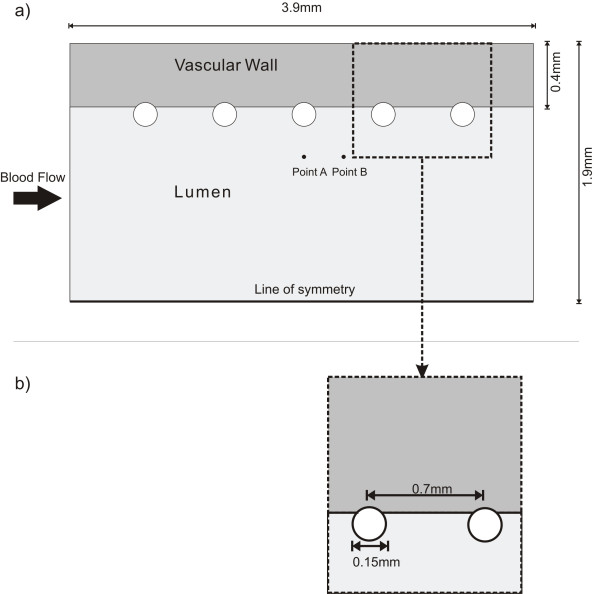
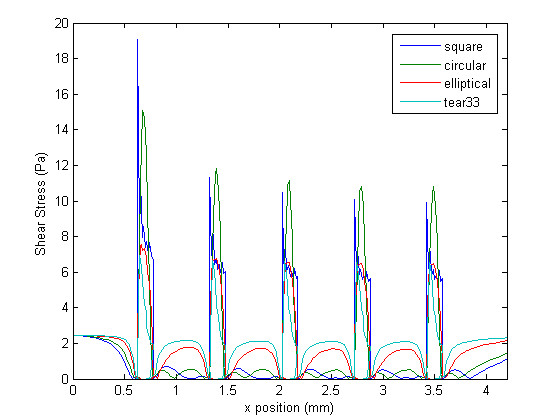
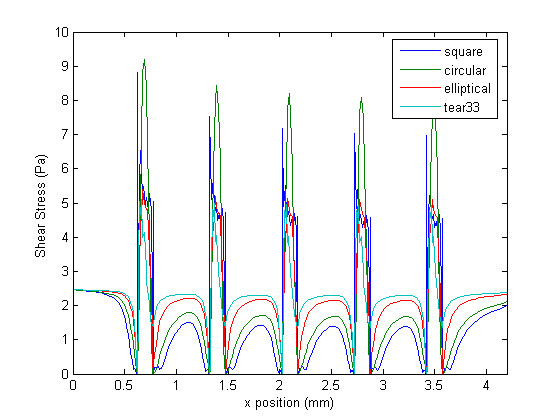
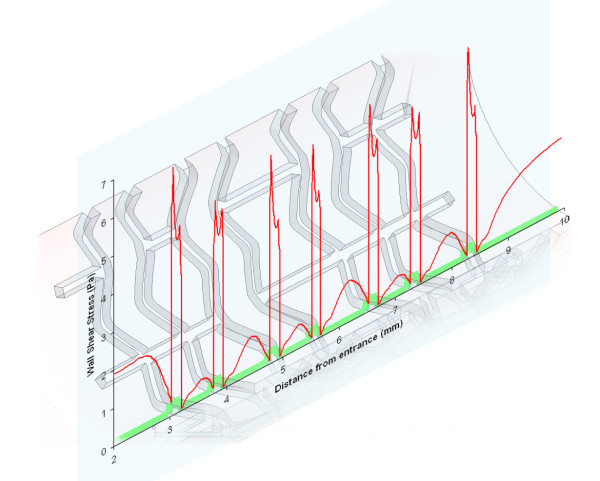
In-stent restenosis rates have been closely linked to the wall shear stress distribution within a stented arterial segment, which in turn is a function of stent design. Unfortunately, evaluation of hemodynamic performance can only be evaluated with long term clinical trials. In this work we introduce a set of metrics, based on statistical moments, that can be used to evaluate the hemodynamic performance of a stent in a standardized way. They are presented in the context of a 2D flow study, which analyzes the impact of different strut profiles on the wall shear stress distribution for stented coronary arteries.
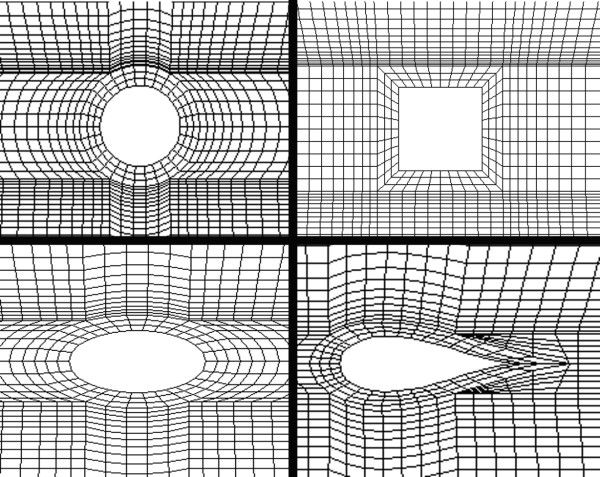
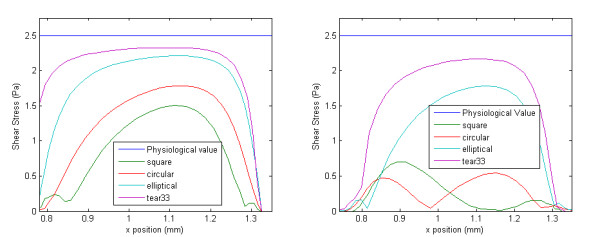
It was shown that the proposed metrics have the ability to evaluate hemodynamic performance quantitatively and compare it to a common standard. In the context of the simulations presented here, they show that stent's strut profile significantly affect the shear stress distribution along the arterial wall. They also demonstrates that more streamlined profiles exhibit better hemodynamic performance than the standard square and circular profiles. The proposed metrics can be used to compare results from different research groups, and provide an improved method of quantifying hemodynamic performance in comparison to traditional techniques.
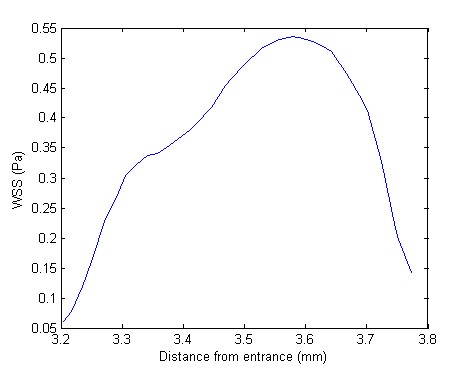
The strut shape found in the latest generations of stents are commonly dictated by manufacturing limitations. This research shows, however, that strut design can play a fundamental role in the improvement of the hemodynamic performance of stents. Present results show that up to 96% of the area between struts is exposed to wall shear stress levels above the critical value for the onset of restenosis when a tear-drop strut profile is used, while the analogous value for a square profile is 19.4%. The conclusions drawn from the non-dimensional metrics introduced in this work show good agreement with an ordinary analysis of the wall shear stress distribution based on the overall area exposed to critically low wall shear stress levels. The proposed metrics are able to predict, as expected, that more streamlined profiles perform better hemodynamically. These metrics integrate the entire morphology of the shear stress distribution and as a result are more robust than the traditional approach, which only compares the relative value of the local wall shear stress with a critical value of 0.5 Pa. In the future, these metrics could be employed to compare, in a standardized way, the hemodynamic performance of different stent designs.
支架内再狭窄率与置入支架的动脉节段内的壁面剪应力分布密切相关,而壁面剪应力分布又是支架设计的一个函数。不幸的是,血流动力学性能的评估只能通过长期临床试验来进行。在这项工作中,我们引入了一组基于统计矩的指标,可用于以标准化方式评估支架的血流动力学性能。这些指标是在二维血流研究的背景下提出的,该研究分析了不同支柱轮廓对冠状动脉支架置入后壁面剪应力分布的影响。
结果表明,所提出的指标有能力定量评估血流动力学性能,并将其与通用标准进行比较。在此处给出的模拟背景下,这些指标表明支架的支柱轮廓显著影响沿动脉壁的剪应力分布。它们还表明,与标准的方形和圆形轮廓相比,更流线型的轮廓表现出更好的血流动力学性能。所提出的指标可用于比较不同研究组的结果,并提供一种比传统技术更好的量化血流动力学性能的方法。
最新一代支架中发现的支柱形状通常由制造限制决定。然而,本研究表明,支柱设计在改善支架的血流动力学性能方面可发挥重要作用。目前的结果表明,当使用泪滴形支柱轮廓时,高达96%的支柱间区域暴露于高于再狭窄起始临界值的壁面剪应力水平,而方形轮廓的类似值为19.4%。从这项工作中引入的无量纲指标得出的结论与基于暴露于极低壁面剪应力水平的总面积对壁面剪应力分布进行的常规分析结果吻合良好。正如预期的那样,所提出的指标能够预测,更流线型的轮廓在血流动力学方面表现更好。这些指标整合了剪应力分布的整个形态,因此比传统方法更稳健,传统方法仅将局部壁面剪应力的相对值与0.5 Pa的临界值进行比较。未来,这些指标可用于以标准化方式比较不同支架设计的血流动力学性能。