Chen Chin-Nung, Chen Chii-Jaan, Liao Chen-Ting, Lee Chia-Yin
Department of Agricultural Chemistry, National Taiwan University, Taipei 10617, Taiwan, ROC.
BMC Microbiol. 2009 May 9;9:89. doi: 10.1186/1471-2180-9-89.
The infection and virulence functions of diverse plant and animal pathogens that possess quorum sensing systems are regulated by N-acylhomoserine lactones (AHLs) acting as signal molecules. AHL-acylase is a quorum quenching enzyme and degrades AHLs by removing the fatty acid side chain from the homoserine lactone ring of AHLs. This blocks AHL accumulation and pathogenic phenotypes in quorum sensing bacteria.
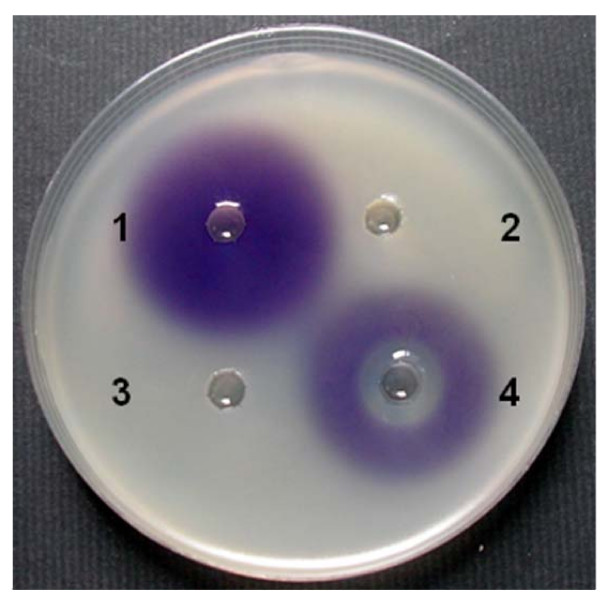
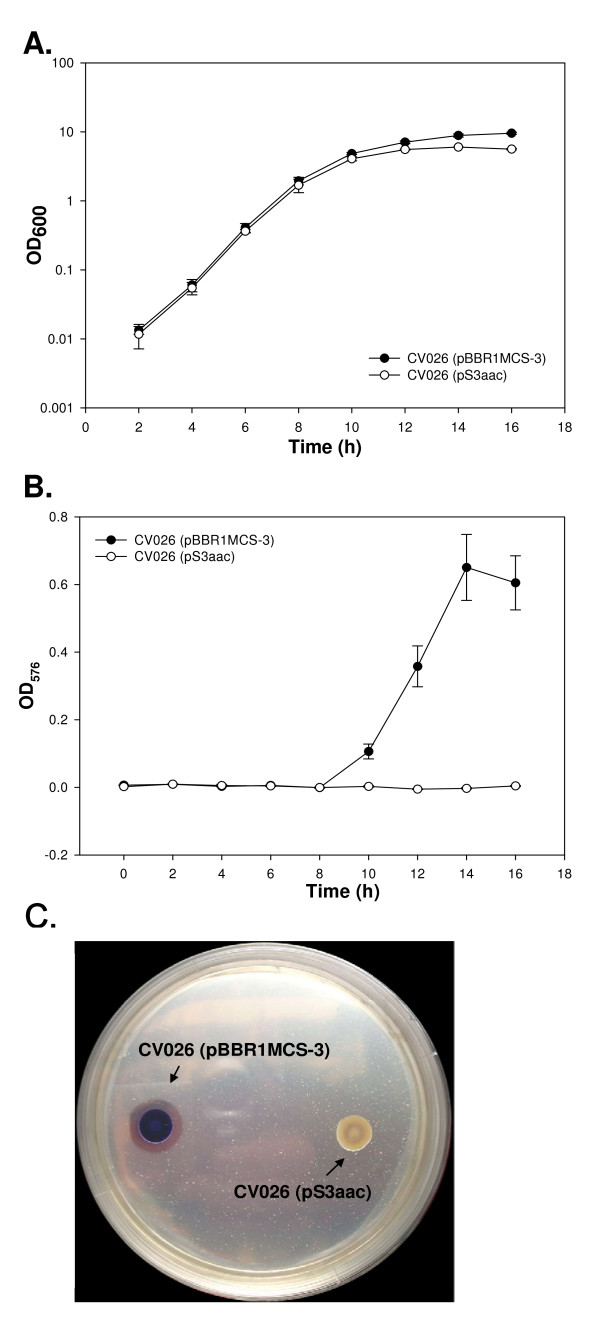
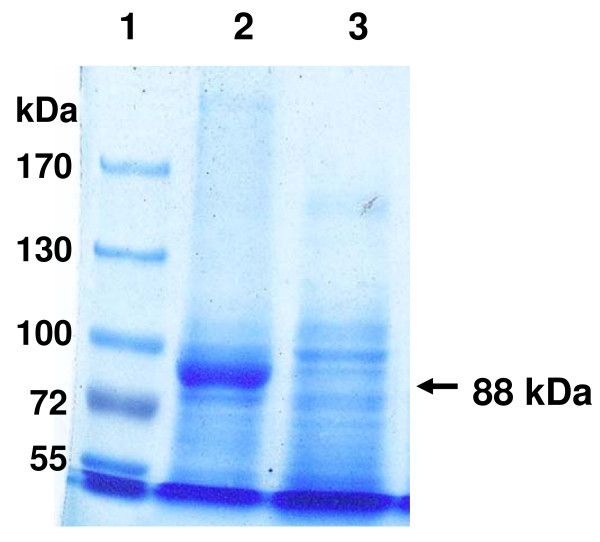
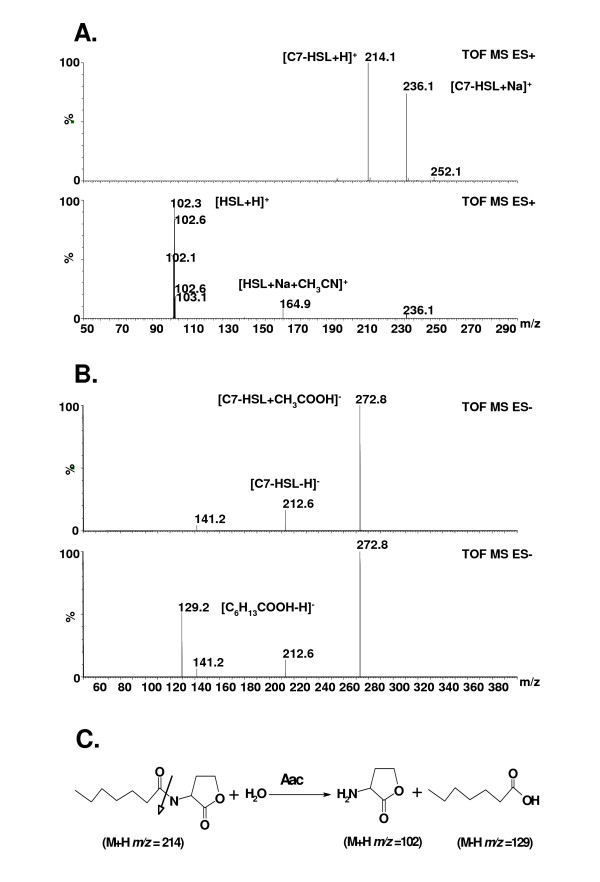
An aac gene of undemonstrated function from Ralstonia solanacearum GMI1000 was cloned, expressed in Escherichia coli; it inactivated four AHLs that were tested. The sequence of the 795 amino acid polypeptide was considerably similar to the AHL-acylase from Ralstonia sp. XJ12B with 83% identity match and shared 39% identity with an aculeacin A acylase precursor from the gram-positive actinomycete Actinoplanes utahensis. Aculeacin A is a neutral lipopeptide antibiotic and an antifungal drug. An electrospray ionisation mass spectrometry (ESI-MS) analysis verified that Aac hydrolysed the amide bond of AHL, releasing homoserine lactone and the corresponding fatty acids. However, ESI-MS analysis demonstrated that the Aac could not catalyze the hydrolysis of the palmitoyl moiety of the aculeacin A. Moreover, the results of MIC test of aculeacin A suggest that Aac could not deacylate aculeacin A. The specificity of Aac for AHLs showed a greater preference for long acyl chains than for short acyl chains. Heterologous expression of the aac gene in Chromobacterium violaceum CV026 effectively inhibited violacein and chitinase activity, both of which were regulated by the quorum-sensing mechanism. These results indicated that Aac could control AHL-dependent pathogenicity.
This is the first study to find an AHL-acylase in a phytopathogen. Our data provide direct evidence that the functioning of the aac gene (NP520668) of R. solanacearum GMI1000 is via AHL-acylase and not via aculeacin A acylase. Since Aac is a therapeutic potential quorum-quenching agent, its further biotechnological applications in agriculture, clinical and bio-industrial fields should be evaluated in the near future.
拥有群体感应系统的多种动植物病原体的感染和毒力功能受作为信号分子的N - 酰基高丝氨酸内酯(AHLs)调控。AHL - 酰基转移酶是一种群体猝灭酶,通过从AHLs的高丝氨酸内酯环上去除脂肪酸侧链来降解AHLs。这会阻止群体感应细菌中AHL的积累和致病表型。
从青枯雷尔氏菌GMI1000中克隆了一个功能未明的aac基因,并在大肠杆菌中表达;它使所测试的四种AHLs失活。这个795个氨基酸的多肽序列与来自Ralstonia sp. XJ12B的AHL - 酰基转移酶有相当高的相似性,同一性匹配为83%,与来自革兰氏阳性放线菌阿氏栖放线菌的阿库拉霉素A酰基转移酶前体有39%的同一性。阿库拉霉素A是一种中性脂肽抗生素和抗真菌药物。电喷雾电离质谱(ESI - MS)分析证实Aac水解了AHL的酰胺键,释放出高丝氨酸内酯和相应的脂肪酸。然而,ESI - MS分析表明Aac不能催化阿库拉霉素A的棕榈酰部分水解。此外,阿库拉霉素A的最低抑菌浓度(MIC)测试结果表明Aac不能使阿库拉霉素A脱酰基。Aac对AHLs的特异性显示出对长酰基链的偏好大于对短酰基链的偏好。aac基因在紫色杆菌CV026中的异源表达有效抑制了紫菌素和几丁质酶活性,这两种活性均受群体感应机制调控。这些结果表明Aac可以控制依赖AHL的致病性。
这是首次在植物病原体中发现AHL - 酰基转移酶的研究。我们的数据提供了直接证据,表明青枯雷尔氏菌GMI1000的aac基因(NP520668)的功能是通过AHL - 酰基转移酶,而不是通过阿库拉霉素A酰基转移酶。由于Aac是一种具有治疗潜力的群体猝灭剂,其在农业、临床和生物工业领域的进一步生物技术应用应在不久的将来进行评估。