Son Myung Jin, Woolard Kevin, Nam Do-Hyun, Lee Jeongwu, Fine Howard A
Neuro-Oncology Branch, National Cancer Institute, National Institute of Neurological Disorders and Stroke, NIH, Bethesda, MD 20892, USA.
Cell Stem Cell. 2009 May 8;4(5):440-52. doi: 10.1016/j.stem.2009.03.003.
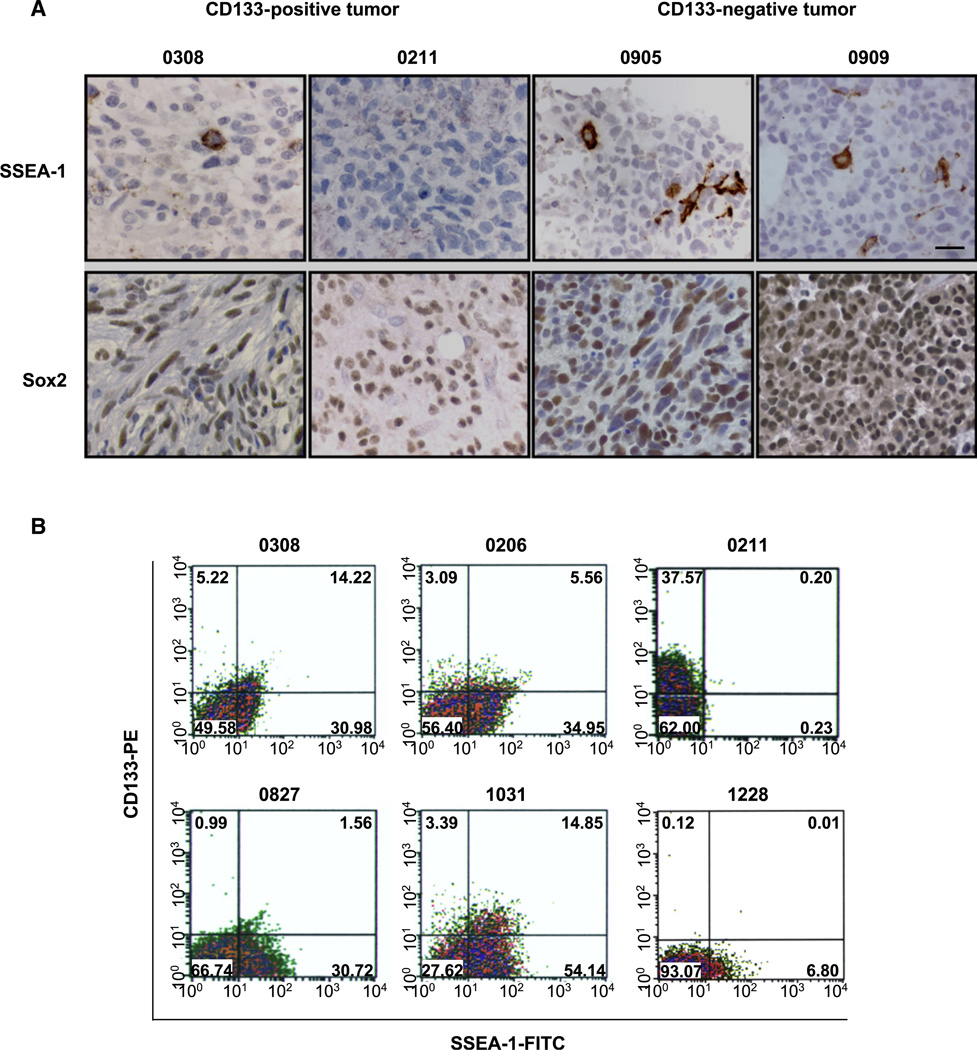
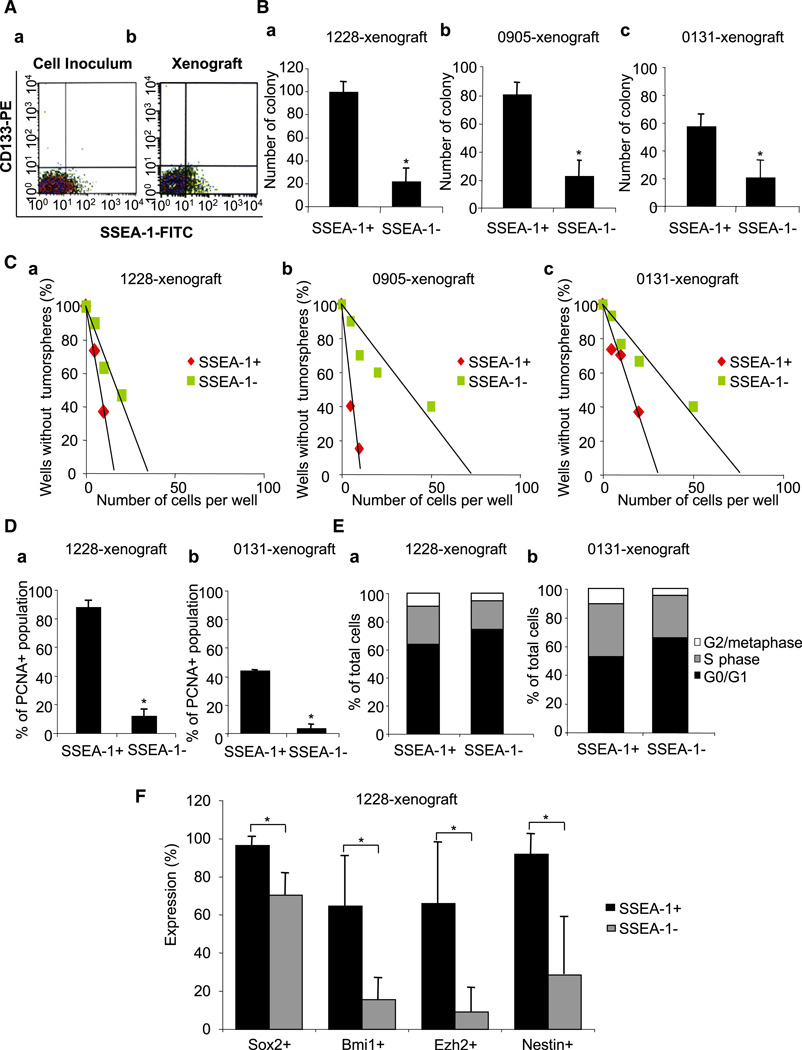
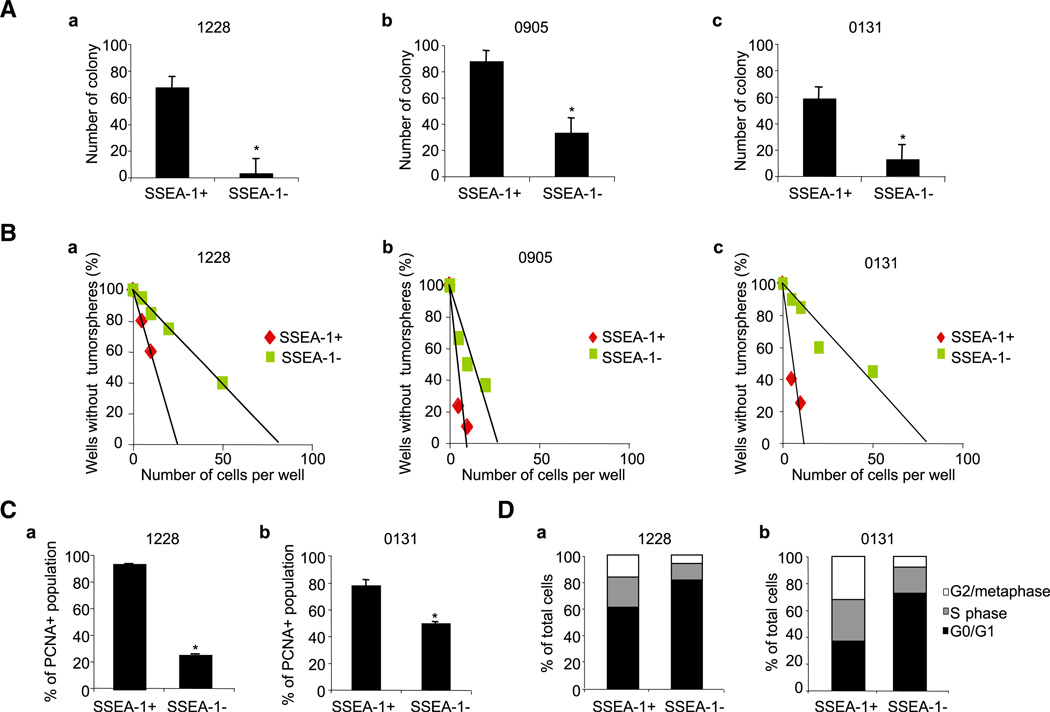
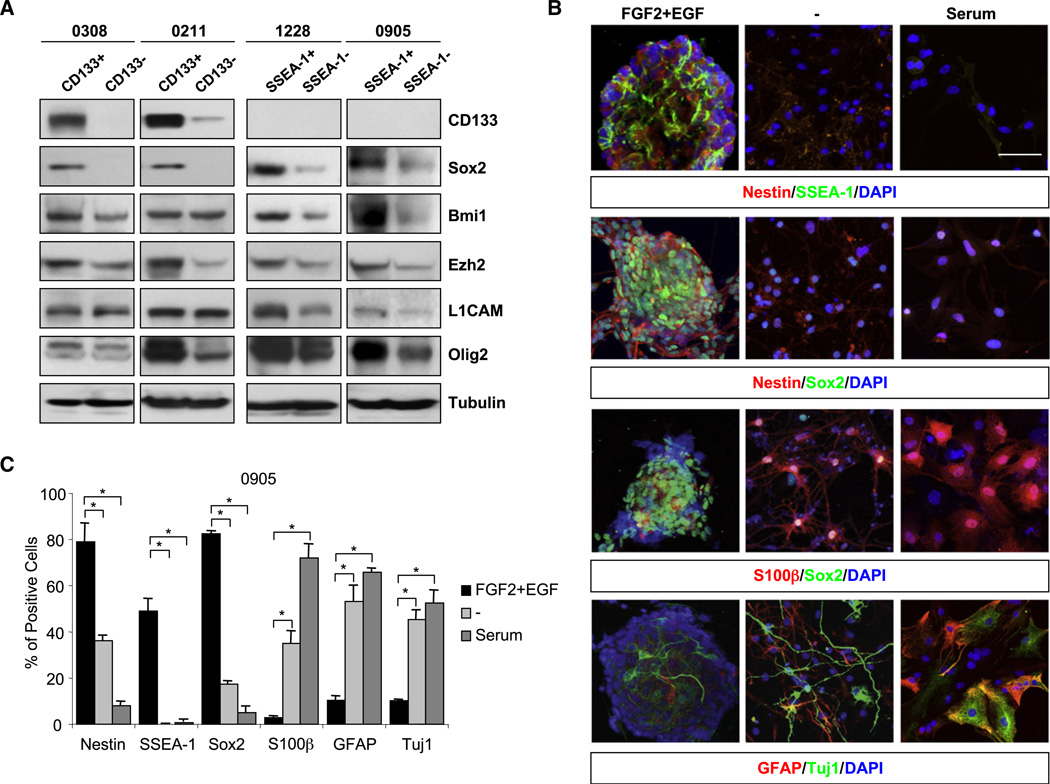
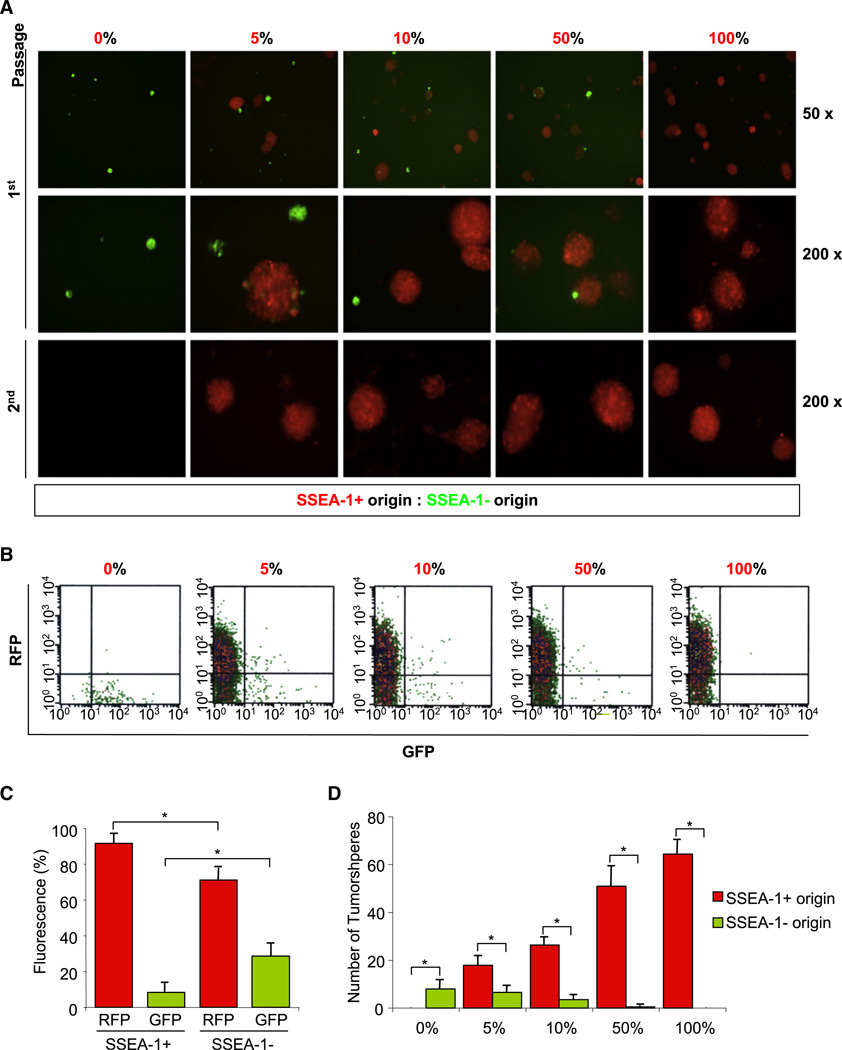
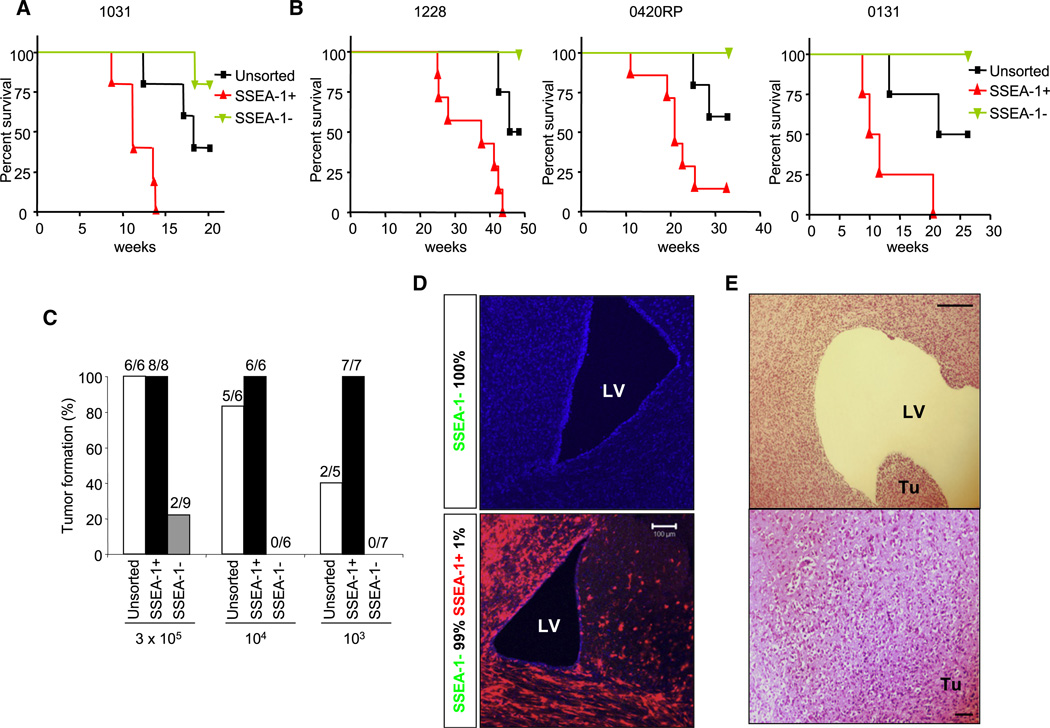
CD133+ populations of human glioblastoma multiforme (GBM) cells are reportedly enriched for tumor stem cells (TSCs) or tumor-initiating cells (TICs). Approximately 40% of freshly isolated GBM specimens, however, do not contain CD133+ tumor cells, raising the possibility that CD133 may not be a universal enrichment marker for GBM TSCs/TICs. Here we demonstrate that stage-specific embryonic antigen 1(SSEA-1/LeX)+ GBM cells fulfill the functional criteria for TSC/TIC, since (1) SSEA-1+ cells are highly tumorigenic in vivo, unlike SSEA-1- cells; (2) SSEA-1+ cells can give rise to both SSEA-1+ and SSEA-1- cells, thereby establishing a cellular hierarchy; and (3) SSEA-1+ cells have self-renewal and multilineage differentiation potentials. A distinct subpopulation of SSEA-1+ cells was present in all but one of the primary GBMs examined (n = 24), and most CD133+ tumor cells were also SSEA-1+, suggesting that SSEA-1 may be a general TSC/TIC enrichment marker in human GBMs.
据报道,多形性胶质母细胞瘤(GBM)细胞的CD133+群体富含肿瘤干细胞(TSC)或肿瘤起始细胞(TIC)。然而,约40%的新鲜分离GBM标本不含CD133+肿瘤细胞,这增加了CD133可能并非GBM TSC/TIC通用富集标志物的可能性。在此我们证明,阶段特异性胚胎抗原1(SSEA-1/LeX)+ GBM细胞符合TSC/TIC的功能标准,因为:(1)与SSEA-1-细胞不同,SSEA-1+细胞在体内具有高度致瘤性;(2)SSEA-1+细胞可产生SSEA-阳性和阴性细胞, 从而建立细胞层次结构;(3)SSEA-1+细胞具有自我更新和多谱系分化潜能。在所检测(n = 24)的原发性GBM中,除1例之外,其余均存在一个独特的SSEA-1+细胞亚群,并且大多数CD133+肿瘤细胞也是SSEA-1+,这表明SSEA-1可能是人类GBM中一种通用的TSC/TIC富集标志物。