Tian Changhai, Murrin L Charles, Zheng Jialin C
The Laboratory of Neurotoxicology at the Center for Neurovirology & Neurodegenerative Disorders, University of Nebraska Medical Center, Omaha, Nebraska, USA.
PLoS One. 2009;4(5):e5546. doi: 10.1371/journal.pone.0005546. Epub 2009 May 14.
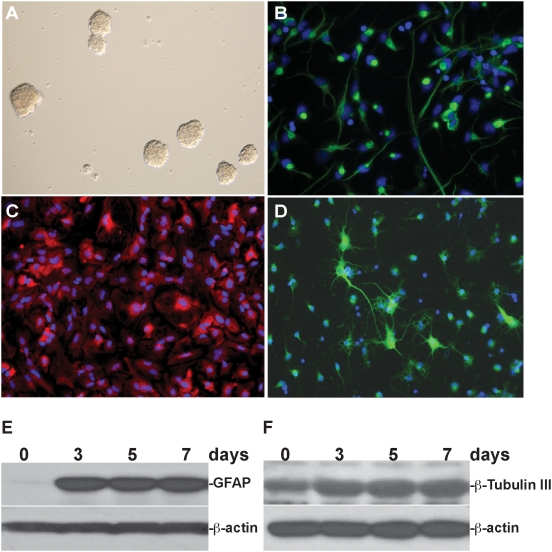
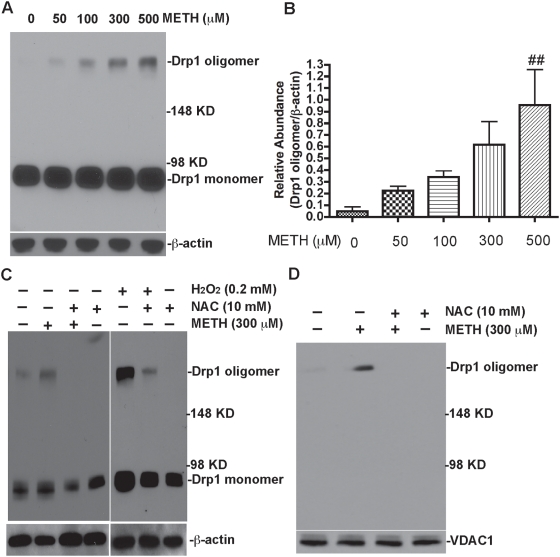
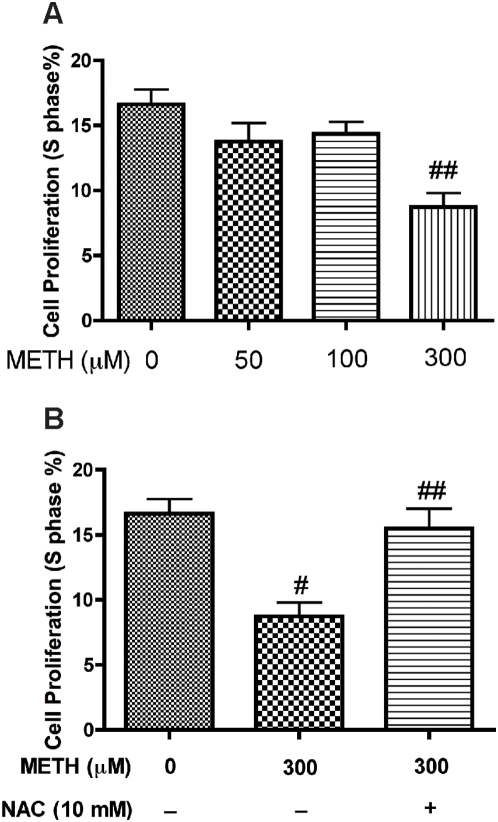
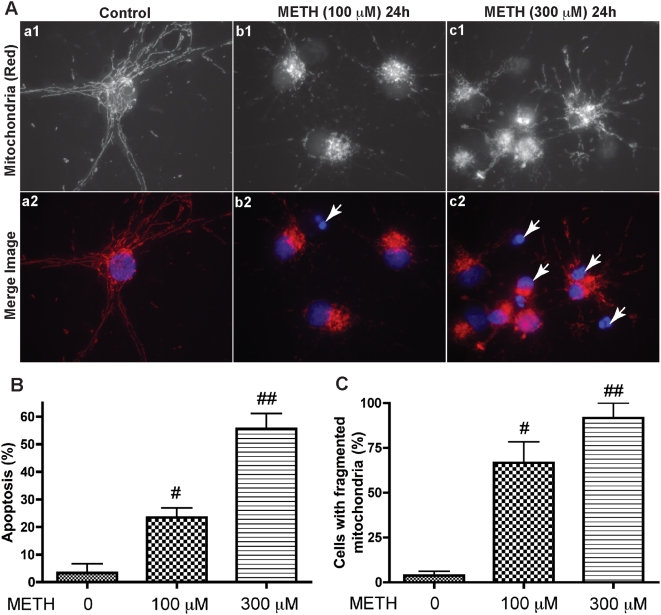
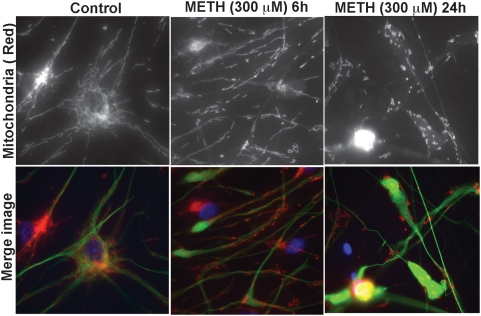
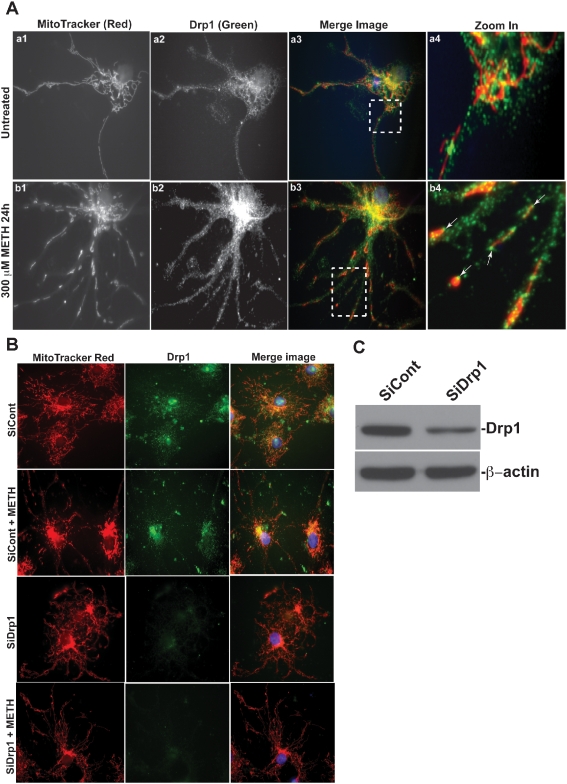
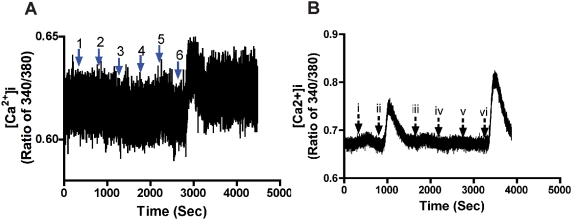
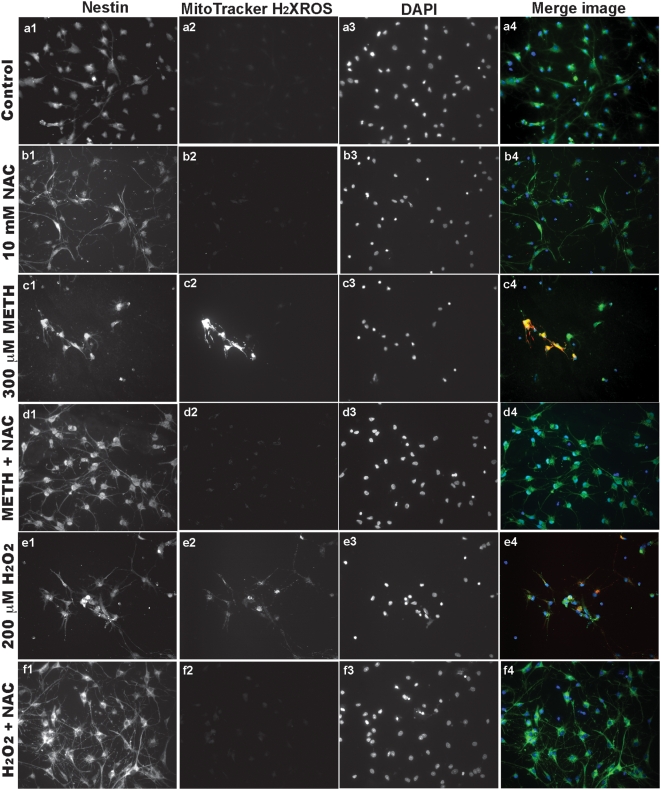
Methamphetamine (METH) induces neurodegeneration through damage and apoptosis of dopaminergic nerve terminals and striatal cells, presumably via cross-talk between the endoplasmic reticulum and mitochondria-dependent death cascades. However, the effects of METH on neural progenitor cells (NPC), an important reservoir for replacing neurons and glia during development and injury, remain elusive. Using a rat hippocampal NPC (rhNPC) culture, we characterized the METH-induced mitochondrial fragmentation, apoptosis, and its related signaling mechanism through immunocytochemistry, flow cytometry, and Western blotting. We observed that METH induced rhNPC mitochondrial fragmentation, apoptosis, and inhibited cell proliferation. The mitochondrial fission protein dynamin-related protein 1 (Drp1) and reactive oxygen species (ROS), but not calcium (Ca2+) influx, were involved in the regulation of METH-induced mitochondrial fragmentation. Furthermore, our results indicated that dysregulation of ROS contributed to the oligomerization and translocation of Drp1, resulting in mitochondrial fragmentation in rhNPC. Taken together, our data demonstrate that METH-mediated ROS generation results in the dysregulation of Drp1, which leads to mitochondrial fragmentation and subsequent apoptosis in rhNPC. This provides a potential mechanism for METH-related neurodegenerative disorders, and also provides insight into therapeutic strategies for the neurodegenerative effects of METH.
甲基苯丙胺(METH)通过多巴胺能神经末梢和纹状体细胞的损伤及凋亡诱导神经退行性变,推测是通过内质网与线粒体依赖性死亡级联之间的相互作用。然而,METH对神经祖细胞(NPC)的影响仍不清楚,神经祖细胞是发育和损伤期间替代神经元和神经胶质细胞的重要细胞库。我们使用大鼠海马神经祖细胞(rhNPC)培养物,通过免疫细胞化学、流式细胞术和蛋白质免疫印迹法,对METH诱导的线粒体碎片化、凋亡及其相关信号机制进行了表征。我们观察到,METH诱导rhNPC线粒体碎片化、凋亡,并抑制细胞增殖。线粒体裂变蛋白动力相关蛋白1(Drp1)和活性氧(ROS),而非钙(Ca2+)内流,参与了METH诱导的线粒体碎片化的调控。此外,我们的结果表明,ROS失调导致Drp1寡聚化和易位,从而导致rhNPC线粒体碎片化。综上所述,我们的数据表明,METH介导的ROS生成导致Drp1失调,进而导致rhNPC线粒体碎片化及随后的凋亡。这为METH相关神经退行性疾病提供了一种潜在机制,也为METH神经退行性作用的治疗策略提供了思路。