• 文献检索
  • 文档翻译
  • 深度研究
  • 学术资讯
  • Suppr Zotero 插件Zotero 插件
  • 邀请有礼
  • 套餐&价格
  • 历史记录
应用&插件
Suppr Zotero 插件Zotero 插件浏览器插件Mac 客户端Windows 客户端微信小程序
定价
高级版会员购买积分包购买API积分包
服务
文献检索文档翻译深度研究API 文档MCP 服务
关于我们
关于 Suppr公司介绍联系我们用户协议隐私条款
关注我们

Suppr 超能文献

核心技术专利:CN118964589B侵权必究
粤ICP备2023148730 号-1Suppr @ 2026

文献检索

告别复杂PubMed语法,用中文像聊天一样搜索,搜遍4000万医学文献。AI智能推荐,让科研检索更轻松。

立即免费搜索

文件翻译

保留排版,准确专业,支持PDF/Word/PPT等文件格式,支持 12+语言互译。

免费翻译文档

深度研究

AI帮你快速写综述,25分钟生成高质量综述,智能提取关键信息,辅助科研写作。

立即免费体验

逆转座子AluYh和AluYi谱系的源基因组成及基因转换

Source gene composition and gene conversion of the AluYh and AluYi lineages of retrotransposons.

作者信息

Styles Pamela, Brookfield John F Y

机构信息

Institute of Genetics, School of Biology, University of Nottingham, Nottingham, UK.

出版信息

BMC Evol Biol. 2009 May 14;9:102. doi: 10.1186/1471-2148-9-102.

DOI:10.1186/1471-2148-9-102
PMID:19442302
原文链接:https://pmc.ncbi.nlm.nih.gov/articles/PMC2686708/
Abstract

BACKGROUND

Alu elements are a family of SINE retrotransposons in primates. They are classified into subfamilies according to specific diagnostic mutations from the general Alu consensus. It is now believed that there may be several retrotranspositionally-competent source genes within an Alu subfamily. In this study, subfamilies falling on the AluYi and AluYh lineages, and the AluYg6 subfamily, are assessed for the presence of secondary source genes, and the influence of gene conversion on the AluYh and AluYi lineages is also described.

RESULTS

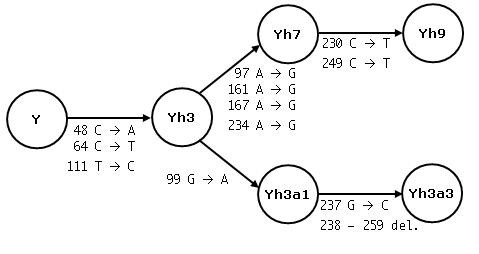
The AluYh7 and AluYi6 subfamilies appear to contain multiple source genes. The novel subfamilies AluYh3a1 and AluYh3a3 are described, for which there is no convincing evidence to suggest the presence of secondary sources. The mutational substructure of AluYh3a3 can be explained completely by inference of single master gene. A complete backwards gene conversion event appears to have inactivated the AluYh3a3 master gene in humans. Polymorphism data suggest a larger number of secondary source elements may be active in the AluYg6 family than previously thought.

CONCLUSION

It is clear that there is considerable variation in the number of source genes present in each of the young Alu subfamilies. This can range from a single master source gene, as for AluYh3a3, to as many as 14 source elements in AluYi6.

摘要

背景

Alu元件是灵长类动物中的一类短散在核元件(SINE)反转录转座子。它们根据与通用Alu共有序列的特定诊断性突变被分类为亚家族。现在人们认为,一个Alu亚家族中可能存在多个具有反转录转座活性的源基因。在本研究中,对属于AluYi和AluYh谱系的亚家族以及AluYg6亚家族进行了评估,以确定是否存在二级源基因,并描述了基因转换对AluYh和AluYi谱系的影响。

结果

AluYh7和AluYi6亚家族似乎包含多个源基因。描述了新的亚家族AluYh3a1和AluYh3a3,没有令人信服的证据表明它们存在二级源。AluYh3a3的突变亚结构可以通过单个主基因的推断完全解释。一个完整的反向基因转换事件似乎使人类中的AluYh3a3主基因失活。多态性数据表明,AluYg6家族中可能有比以前认为的更多的二级源元件具有活性。

结论

显然,每个年轻的Alu亚家族中存在的源基因数量存在相当大 的差异。这一差异范围从像AluYh3a3那样的单个主源基因,到AluYi6中的多达14个源元件。

https://cdn.ncbi.nlm.nih.gov/pmc/blobs/dddc/2686708/13735e448a65/1471-2148-9-102-7.jpg
https://cdn.ncbi.nlm.nih.gov/pmc/blobs/dddc/2686708/9628662a55db/1471-2148-9-102-1.jpg
https://cdn.ncbi.nlm.nih.gov/pmc/blobs/dddc/2686708/9a2305cf007f/1471-2148-9-102-2.jpg
https://cdn.ncbi.nlm.nih.gov/pmc/blobs/dddc/2686708/240529b5229f/1471-2148-9-102-3.jpg
https://cdn.ncbi.nlm.nih.gov/pmc/blobs/dddc/2686708/ef1f400efef0/1471-2148-9-102-4.jpg
https://cdn.ncbi.nlm.nih.gov/pmc/blobs/dddc/2686708/8477070cd10c/1471-2148-9-102-5.jpg
https://cdn.ncbi.nlm.nih.gov/pmc/blobs/dddc/2686708/a821cf93f408/1471-2148-9-102-6.jpg
https://cdn.ncbi.nlm.nih.gov/pmc/blobs/dddc/2686708/13735e448a65/1471-2148-9-102-7.jpg
https://cdn.ncbi.nlm.nih.gov/pmc/blobs/dddc/2686708/9628662a55db/1471-2148-9-102-1.jpg
https://cdn.ncbi.nlm.nih.gov/pmc/blobs/dddc/2686708/9a2305cf007f/1471-2148-9-102-2.jpg
https://cdn.ncbi.nlm.nih.gov/pmc/blobs/dddc/2686708/240529b5229f/1471-2148-9-102-3.jpg
https://cdn.ncbi.nlm.nih.gov/pmc/blobs/dddc/2686708/ef1f400efef0/1471-2148-9-102-4.jpg
https://cdn.ncbi.nlm.nih.gov/pmc/blobs/dddc/2686708/8477070cd10c/1471-2148-9-102-5.jpg
https://cdn.ncbi.nlm.nih.gov/pmc/blobs/dddc/2686708/a821cf93f408/1471-2148-9-102-6.jpg
https://cdn.ncbi.nlm.nih.gov/pmc/blobs/dddc/2686708/13735e448a65/1471-2148-9-102-7.jpg

相似文献

1
Source gene composition and gene conversion of the AluYh and AluYi lineages of retrotransposons.逆转座子AluYh和AluYi谱系的源基因组成及基因转换
BMC Evol Biol. 2009 May 14;9:102. doi: 10.1186/1471-2148-9-102.
2
Analysis of the features and source gene composition of the AluYg6 subfamily of human retrotransposons.人类逆转座子AluYg6亚家族的特征及源基因组成分析
BMC Evol Biol. 2007 Jul 1;7:102. doi: 10.1186/1471-2148-7-102.
3
Comprehensive analysis of two Alu Yd subfamilies.对两个Alu Yd亚家族的综合分析。
J Mol Evol. 2003;57 Suppl 1:S76-89. doi: 10.1007/s00239-003-0009-0.
4
Lineage specific evolution of the VNTR composite retrotransposon central domain and its role in retrotransposition of gibbon LAVA elements.VNTR复合逆转座子中央结构域的谱系特异性进化及其在长臂猿LAVA元件逆转座中的作用。
BMC Genomics. 2015 May 16;16(1):389. doi: 10.1186/s12864-015-1543-z.
5
Potential gene conversion and source genes for recently integrated Alu elements.近期整合的Alu元件的潜在基因转换和源基因。
Genome Res. 2000 Oct;10(10):1485-95. doi: 10.1101/gr.152300.
6
Recently integrated Alu elements and human genomic diversity.近期整合的Alu元件与人类基因组多样性。
Mol Biol Evol. 2003 Aug;20(8):1349-61. doi: 10.1093/molbev/msg150. Epub 2003 May 30.
7
Alu repeats and human genomic diversity.Alu重复序列与人类基因组多样性。
Nat Rev Genet. 2002 May;3(5):370-9. doi: 10.1038/nrg798.
8
Gene conversion as a secondary mechanism of short interspersed element (SINE) evolution.基因转换作为短散在元件(SINE)进化的次要机制。
Mol Cell Biol. 1995 Jan;15(1):19-25. doi: 10.1128/MCB.15.1.19.
9
Sequence correlation between neighboring Alu instances suggests post-retrotransposition sequence exchange due to Alu gene conversion.相邻Alu序列之间的序列相关性表明,由于Alu基因转换,反转录转座后发生了序列交换。
Gene. 2007 Apr 1;390(1-2):117-21. doi: 10.1016/j.gene.2006.09.030. Epub 2006 Oct 14.
10
Differential alu mobilization and polymorphism among the human and chimpanzee lineages.人类和黑猩猩谱系之间不同的Alu元件移动性和多态性
Genome Res. 2004 Jun;14(6):1068-75. doi: 10.1101/gr.2530404.

引用本文的文献

1
The domesticated transposon protein L1TD1 associates with its ancestor L1 ORF1p to promote LINE-1 retrotransposition.驯化的转座子蛋白L1TD1与其祖先L1 ORF1p结合,以促进LINE-1逆转录转座。
Elife. 2025 Mar 20;13:RP96850. doi: 10.7554/eLife.96850.
2
Gene Conversion amongst SINE Elements.SINE 元件间的基因转换。
Genes (Basel). 2021 Jun 11;12(6):905. doi: 10.3390/genes12060905.
3
The Role of Gene Conversion between Transposable Elements in Rewiring Regulatory Networks.转座元件间基因转换在重编调控网络中的作用。

本文引用的文献

1
Sequence correlation between neighboring Alu instances suggests post-retrotransposition sequence exchange due to Alu gene conversion.相邻Alu序列之间的序列相关性表明,由于Alu基因转换,反转录转座后发生了序列交换。
Gene. 2007 Apr 1;390(1-2):117-21. doi: 10.1016/j.gene.2006.09.030. Epub 2006 Oct 14.
2
Recently mobilized transposons in the human and chimpanzee genomes.人类和黑猩猩基因组中最近激活的转座子。
Am J Hum Genet. 2006 Apr;78(4):671-9. doi: 10.1086/501028. Epub 2006 Feb 2.
3
Modeling the amplification dynamics of human Alu retrotransposons.
Genome Biol Evol. 2019 Jul 1;11(7):1723-1729. doi: 10.1093/gbe/evz124.
4
The impact of retrotransposons on human genome evolution.逆转录转座子对人类基因组进化的影响。
Nat Rev Genet. 2009 Oct;10(10):691-703. doi: 10.1038/nrg2640.
模拟人类Alu逆转录转座子的扩增动态
PLoS Comput Biol. 2005 Sep;1(4):e44. doi: 10.1371/journal.pcbi.0010044. Epub 2005 Sep 30.
4
Repbase Update, a database of eukaryotic repetitive elements.Repbase Update,一个真核生物重复元件数据库。
Cytogenet Genome Res. 2005;110(1-4):462-7. doi: 10.1159/000084979.
5
Under the genomic radar: the stealth model of Alu amplification.基因组雷达之下:Alu 元件扩增的隐匿模式
Genome Res. 2005 May;15(5):655-64. doi: 10.1101/gr.3492605.
6
Analysis of the human Alu Ye lineage.人类Alu Ye谱系分析。
BMC Evol Biol. 2005 Feb 22;5:18. doi: 10.1186/1471-2148-5-18.
7
Alu element mutation spectra: molecular clocks and the effect of DNA methylation.Alu元件突变谱:分子钟与DNA甲基化的影响
J Mol Biol. 2004 Nov 26;344(3):675-82. doi: 10.1016/j.jmb.2004.09.058.
8
Whole-genome analysis of Alu repeat elements reveals complex evolutionary history.Alu重复元件的全基因组分析揭示了复杂的进化历史。
Genome Res. 2004 Nov;14(11):2245-52. doi: 10.1101/gr.2693004.
9
Retrotransposition of Alu elements: how many sources?Alu元件的逆转座:有多少来源?
Trends Genet. 2004 Oct;20(10):464-7. doi: 10.1016/j.tig.2004.07.012.
10
B1 and related SINEs in mammalian genomes.哺乳动物基因组中的B1及相关短散在重复序列
Gene. 2003 Nov 13;319:149-60. doi: 10.1016/s0378-1119(03)00805-9.