RIKEN iTHEMS, Wako, Saitama, Japan.
SOKENDAI, Hayama, Kanagawa, Japan.
Genome Biol Evol. 2019 Jul 1;11(7):1723-1729. doi: 10.1093/gbe/evz124.
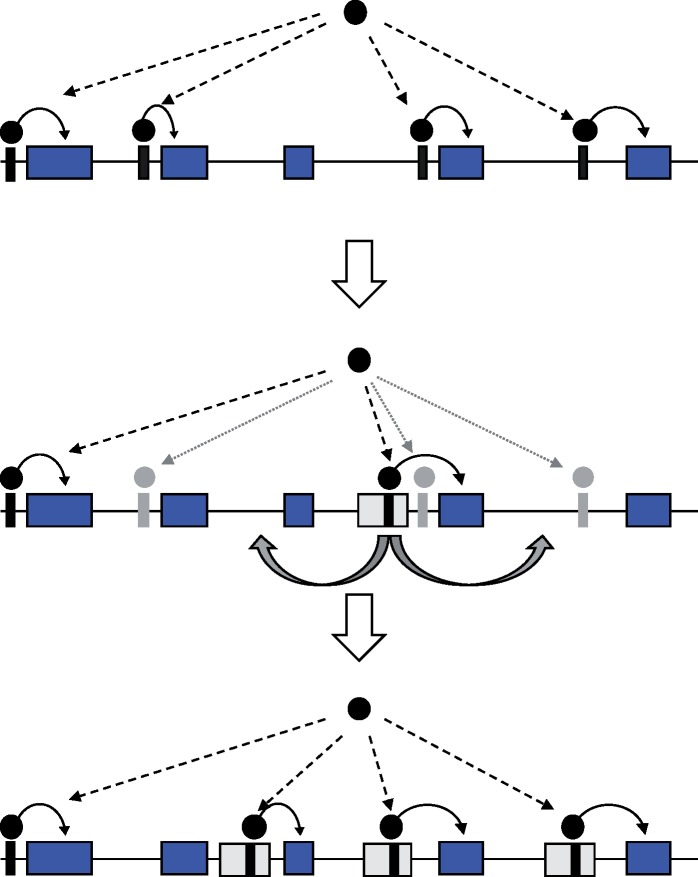
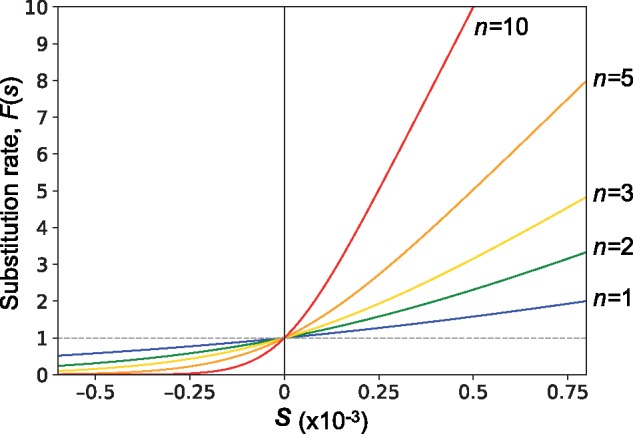
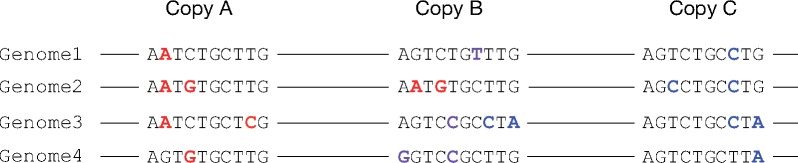
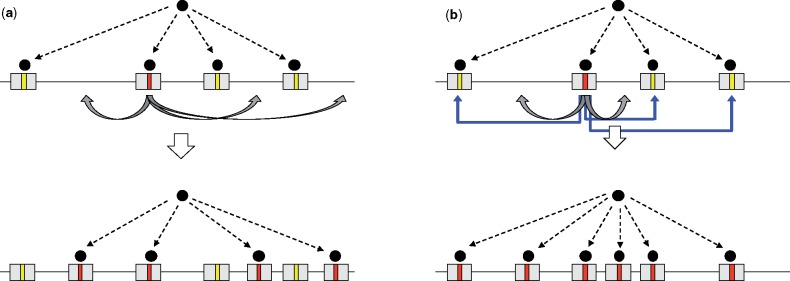
Nature has found many ways to utilize transposable elements (TEs) throughout evolution. Many molecular and cellular processes depend on DNA-binding proteins recognizing hundreds or thousands of similar DNA motifs dispersed throughout the genome that are often provided by TEs. It has been suggested that TEs play an important role in the evolution of such systems, in particular, the rewiring of gene regulatory networks. One mechanism that can further enhance the rewiring of regulatory networks is nonallelic gene conversion between copies of TEs. Here, we will first review evidence for nonallelic gene conversion in TEs. Then, we will illustrate the benefits nonallelic gene conversion provides in rewiring regulatory networks. For instance, nonallelic gene conversion between TE copies offers an alternative mechanism to spread beneficial mutations that improve the network, it allows multiple mutations to be combined and transferred together, and it allows natural selection to work efficiently in spreading beneficial mutations and removing disadvantageous mutations. Future studies examining the role of nonallelic gene conversion in the evolution of TEs should help us to better understand how TEs have contributed to evolution.
自然界在进化过程中发现了许多利用转座元件 (TEs) 的方法。许多分子和细胞过程依赖于 DNA 结合蛋白识别散布在基因组中的数百或数千个相似的 DNA 基序,这些基序通常由 TEs 提供。有人认为,TEs 在这些系统的进化中发挥了重要作用,特别是基因调控网络的重新布线。一种可以进一步增强调控网络重布线的机制是 TEs 之间的非等位基因转换。在这里,我们将首先回顾 TEs 中非等位基因转换的证据。然后,我们将说明非等位基因转换在重新布线调控网络方面提供的好处。例如,TE 拷贝之间的非等位基因转换提供了一种传播改善网络的有益突变的替代机制,它允许多个突变组合在一起并一起转移,并且它允许自然选择在传播有益突变和去除不利突变方面高效工作。未来研究检查非等位基因转换在 TEs 进化中的作用应该有助于我们更好地理解 TEs 如何为进化做出贡献。