Hewitt Susannah L, Yin Bu, Ji Yanhong, Chaumeil Julie, Marszalek Katarzyna, Tenthorey Jeannette, Salvagiotto Giorgia, Steinel Natalie, Ramsey Laura B, Ghysdael Jacques, Farrar Michael A, Sleckman Barry P, Schatz David G, Busslinger Meinrad, Bassing Craig H, Skok Jane A
Department of Pathology, New York University School of Medicine, New York, New York, USA.
Nat Immunol. 2009 Jun;10(6):655-64. doi: 10.1038/ni.1735.
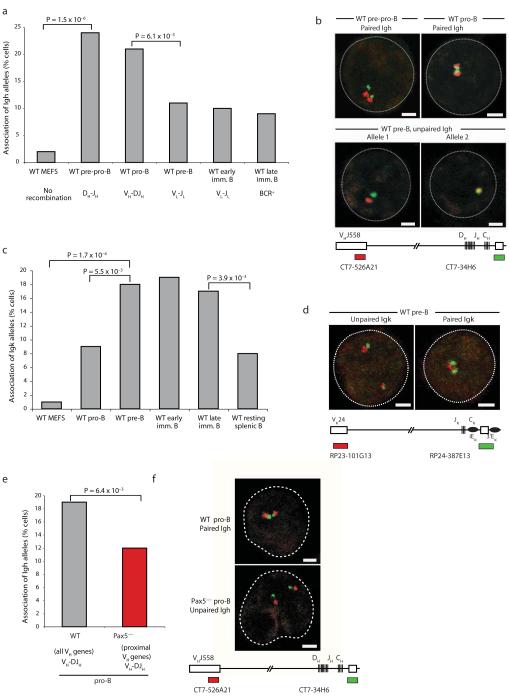
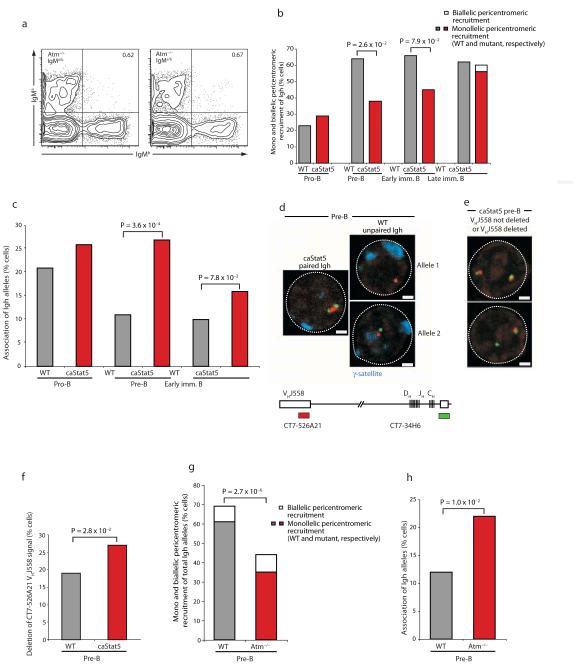
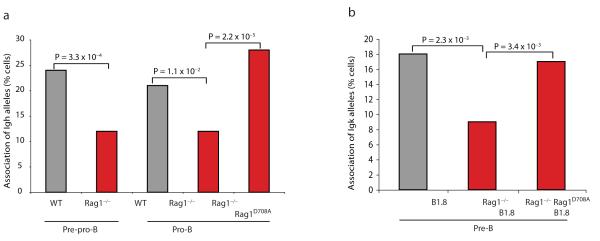
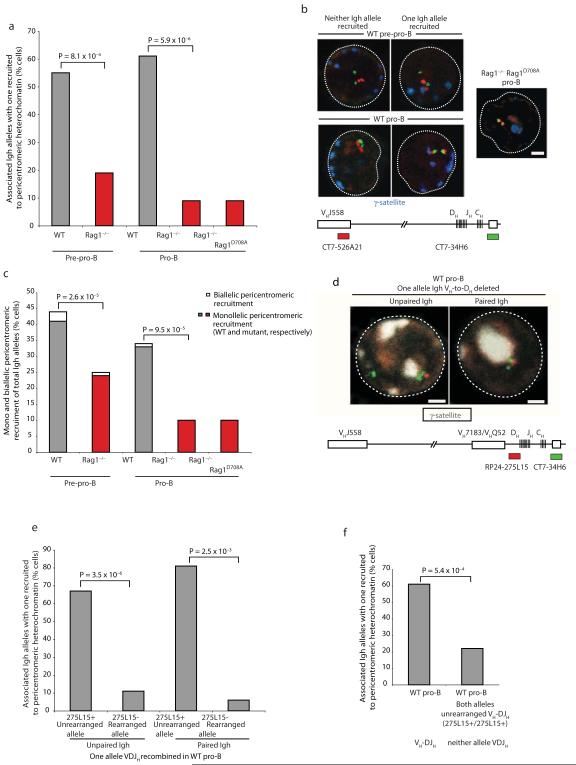
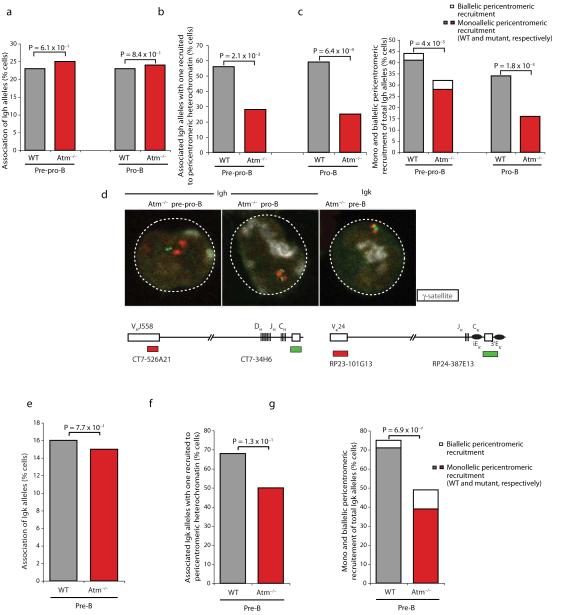
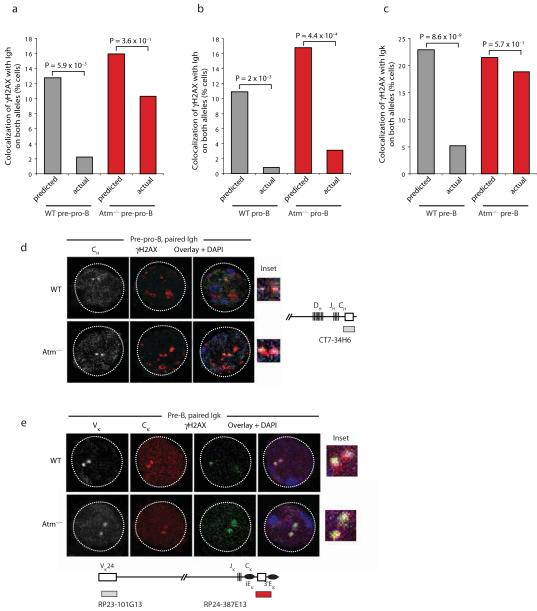
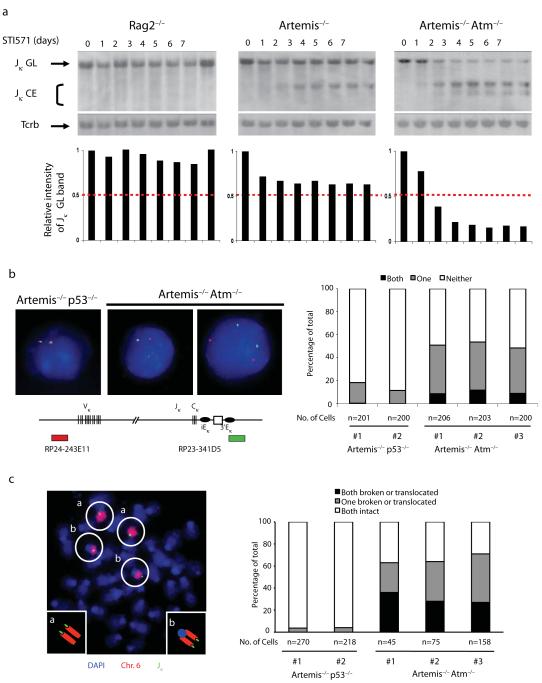
Coordinated recombination of homologous antigen receptor loci is thought to be important for allelic exclusion. Here we show that homologous immunoglobulin alleles pair in a stage-specific way that mirrors the recombination patterns of these loci. The frequency of homologous immunoglobulin pairing was much lower in the absence of the RAG-1-RAG-2 recombinase and was restored in Rag1-/- developing B cells with a transgene expressing a RAG-1 active-site mutant that supported DNA binding but not cleavage. The introduction of DNA breaks on one immunoglobulin allele induced ATM-dependent repositioning of the other allele to pericentromeric heterochromatin. ATM activated by the cleaved allele acts in trans on the uncleaved allele to prevent biallelic recombination and chromosome breaks or translocations.
同源抗原受体基因座的协同重组被认为对等位基因排斥很重要。我们在此表明,同源免疫球蛋白等位基因以阶段特异性方式配对,这反映了这些基因座的重组模式。在缺乏RAG-1-RAG-2重组酶的情况下,同源免疫球蛋白配对的频率要低得多,并且在Rag1-/-发育中的B细胞中,通过表达支持DNA结合但不支持切割的RAG-1活性位点突变体的转基因得以恢复。在一个免疫球蛋白等位基因上引入DNA断裂会诱导另一个等位基因向着丝粒周围异染色质的ATM依赖性重新定位。由切割的等位基因激活的ATM对未切割的等位基因起反式作用,以防止双等位基因重组以及染色体断裂或易位。