Lee M S, Garrard W T
Department of Biochemistry, University of Texas Southwestern Medical Center, Dallas 75235.
Proc Natl Acad Sci U S A. 1991 Nov 1;88(21):9675-9. doi: 10.1073/pnas.88.21.9675.
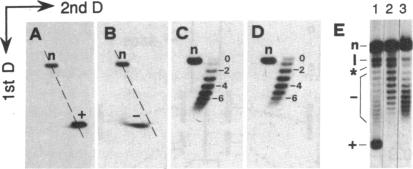
During transcription, positive DNA supercoils generated ahead of RNA polymerase could theoretically uncoil the negative DNA supercoils associated with nucleosomes and thereby decondense the chromatin fiber in preparation for RNA polymerase passage. Here we examine the effect of positive DNA supercoiling on the structure of yeast 2-microns minichromosomes. We utilized a conditional topoisomerase mutant expressing Escherichia coli topoisomerase I to convert the DNA supercoiling state from negative to positive in vivo. Minichromosomes containing positively supercoiled DNA exhibited a striking increase in DNase I sensitivity. They also displayed additional micrococcal nuclease cleavage sites but yielded nearly typical nucleosomal ladders after extensive digestion. Upon in vitro relaxation with eukaryotic topoisomerase I, the minichromosomes remained DNase I sensitive but were converted to negative DNA supercoiling with a slightly increased linking number compared to typical minichromosomes, thus indicating the presence of bound histones. Therefore, positive DNA supercoiling provides a mechanism for generating, but is not required for maintaining, a conformation in chromatin characteristic of highly transcribed genes.
在转录过程中,理论上RNA聚合酶前方产生的正性DNA超螺旋能够解开与核小体相关的负性DNA超螺旋,从而使染色质纤维解聚,为RNA聚合酶通过做好准备。在此,我们研究了正性DNA超螺旋对酵母2-微米微型染色体结构的影响。我们利用一个表达大肠杆菌拓扑异构酶I的条件性拓扑异构酶突变体,在体内将DNA超螺旋状态从负性转变为正性。含有正性超螺旋DNA的微型染色体对DNase I的敏感性显著增加。它们还显示出额外的微球菌核酸酶切割位点,但在充分消化后产生了近乎典型的核小体条带。在用真核拓扑异构酶I进行体外松弛后,微型染色体对DNase I仍敏感,但转变为负性DNA超螺旋,其连环数相比典型微型染色体略有增加,这表明存在结合的组蛋白。因此,正性DNA超螺旋提供了一种产生高度转录基因染色质特征构象的机制,但维持这种构象并非必需。