Giehl K A, Potter C S, Wu B, Silva K A, Rowe L B, Awgulewitsch A, Sundberg J P
Department of Dermatology, Ludwig Maximilian University, Munich, Germany.
Clin Exp Dermatol. 2009 Jun;34(4):509-17. doi: 10.1111/j.1365-2230.2008.03135.x. Epub 2009 Apr 14.
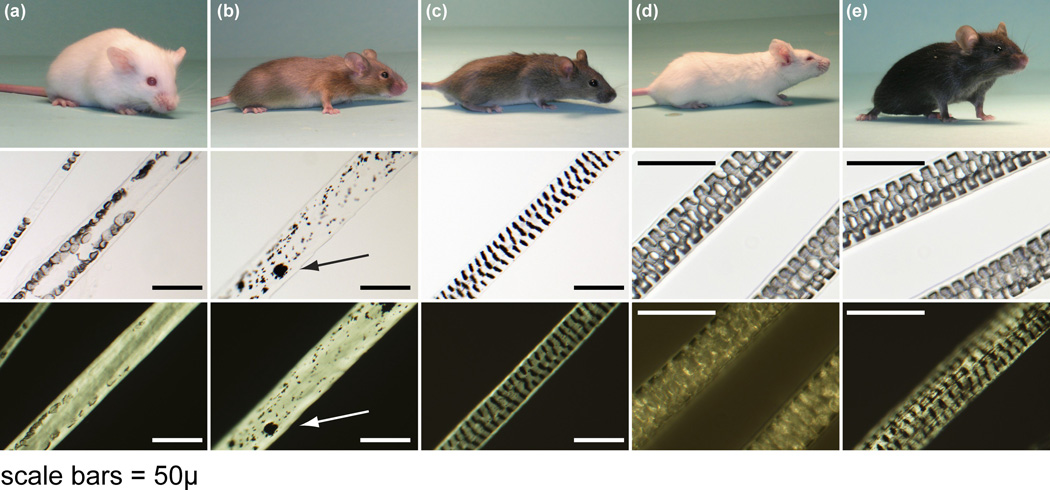
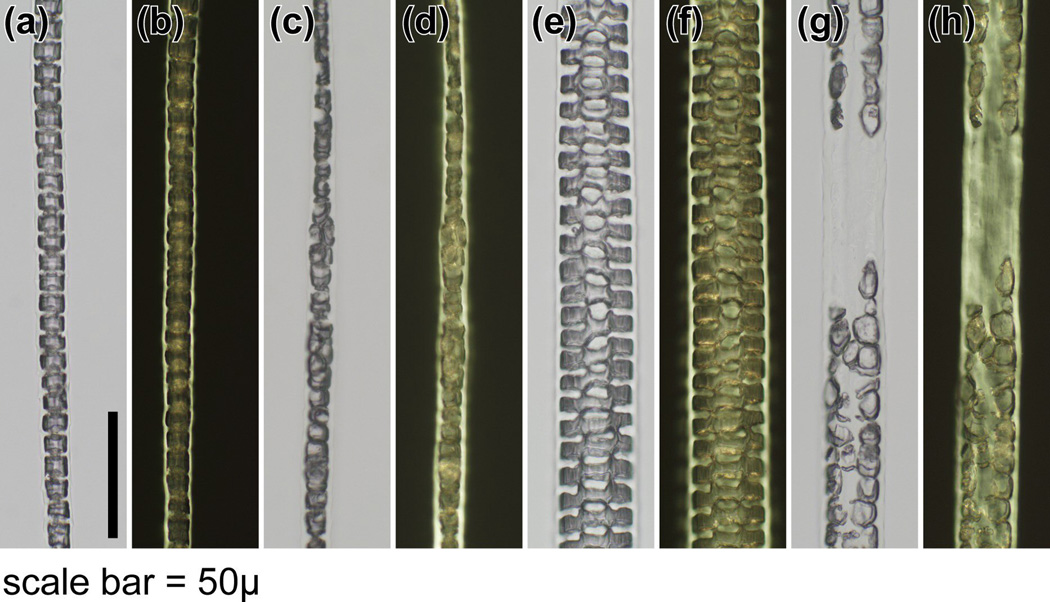
All AKR/J mice have a subtle defect that involves malformation of the central portion of hair fibres that is best visualized under white and polarized light microscopy.
This study sought to characterize the clinical and ultrastructural features of the hair interior defect (HID) phenotype and to determine the chromosomal localization of the hid mutant gene locus.
White and polarized light microscopy combined with scanning electron microscopy (SEM) and transmission electron microscopy (TEM) were used to characterize the HID phenotype. Complementation testing and gene-linkage studies were performed to map the locus.
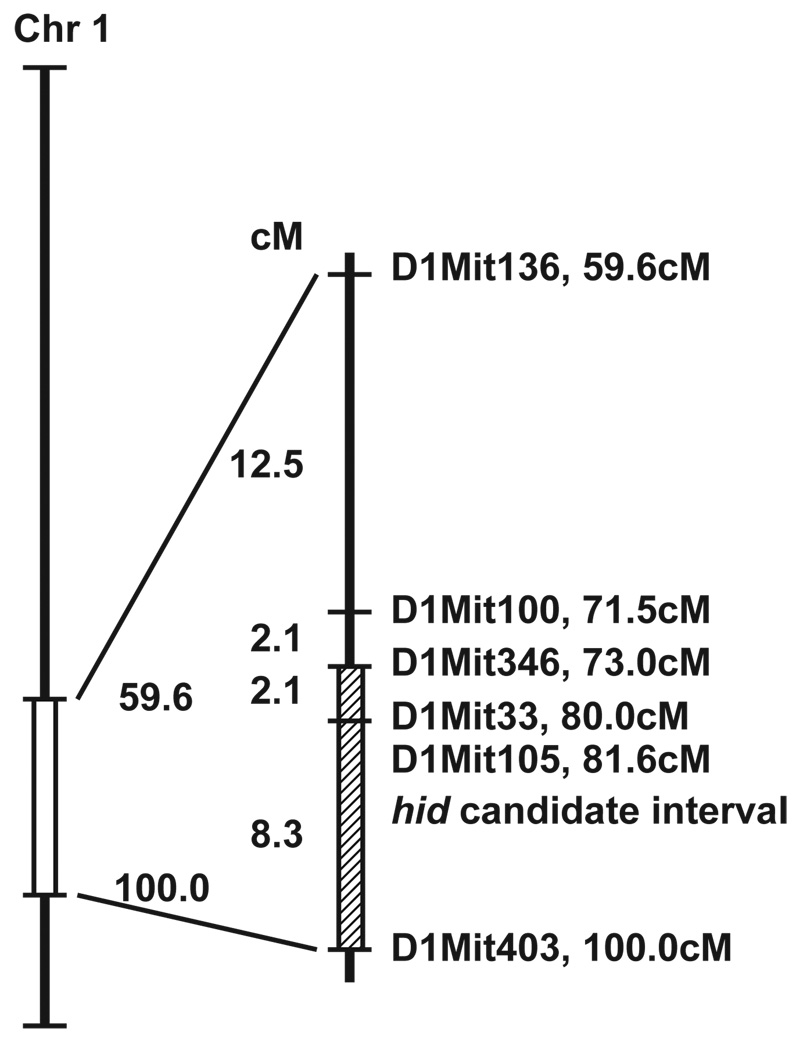
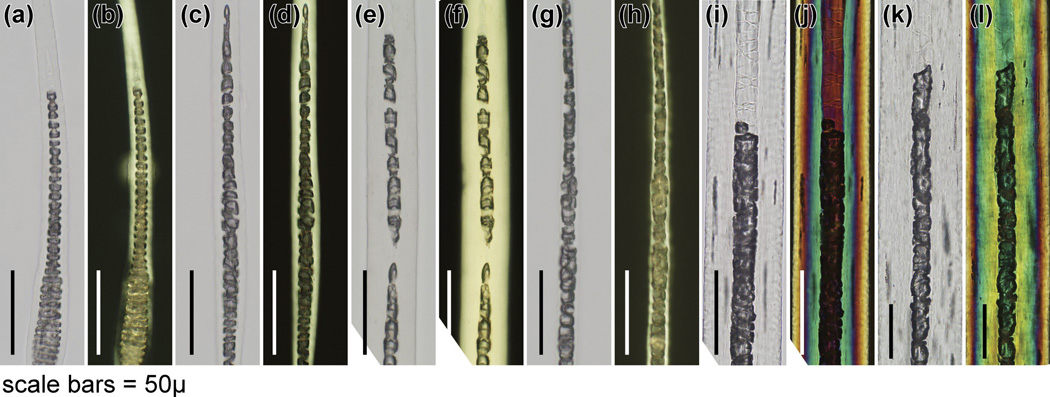
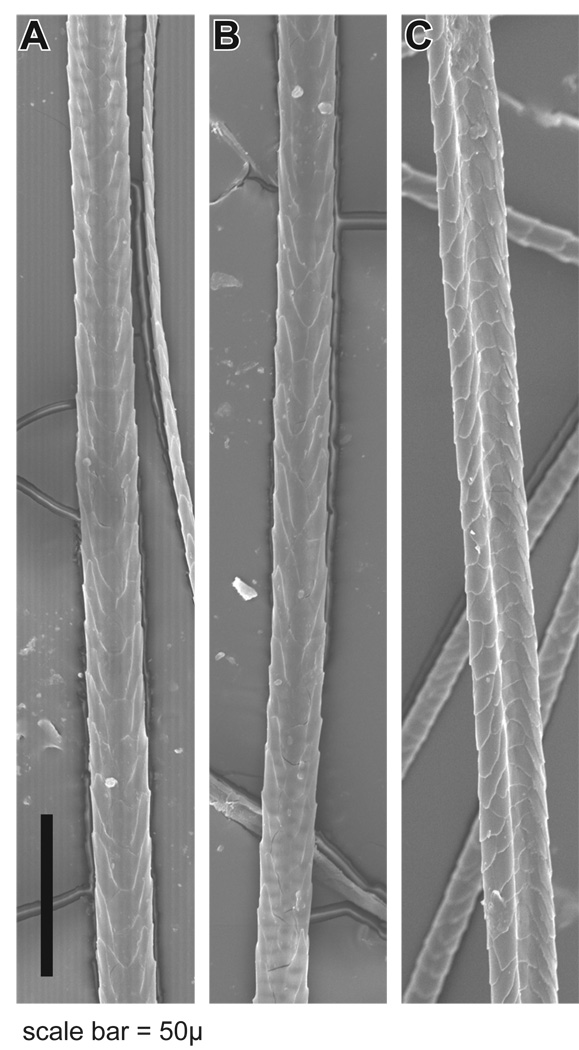
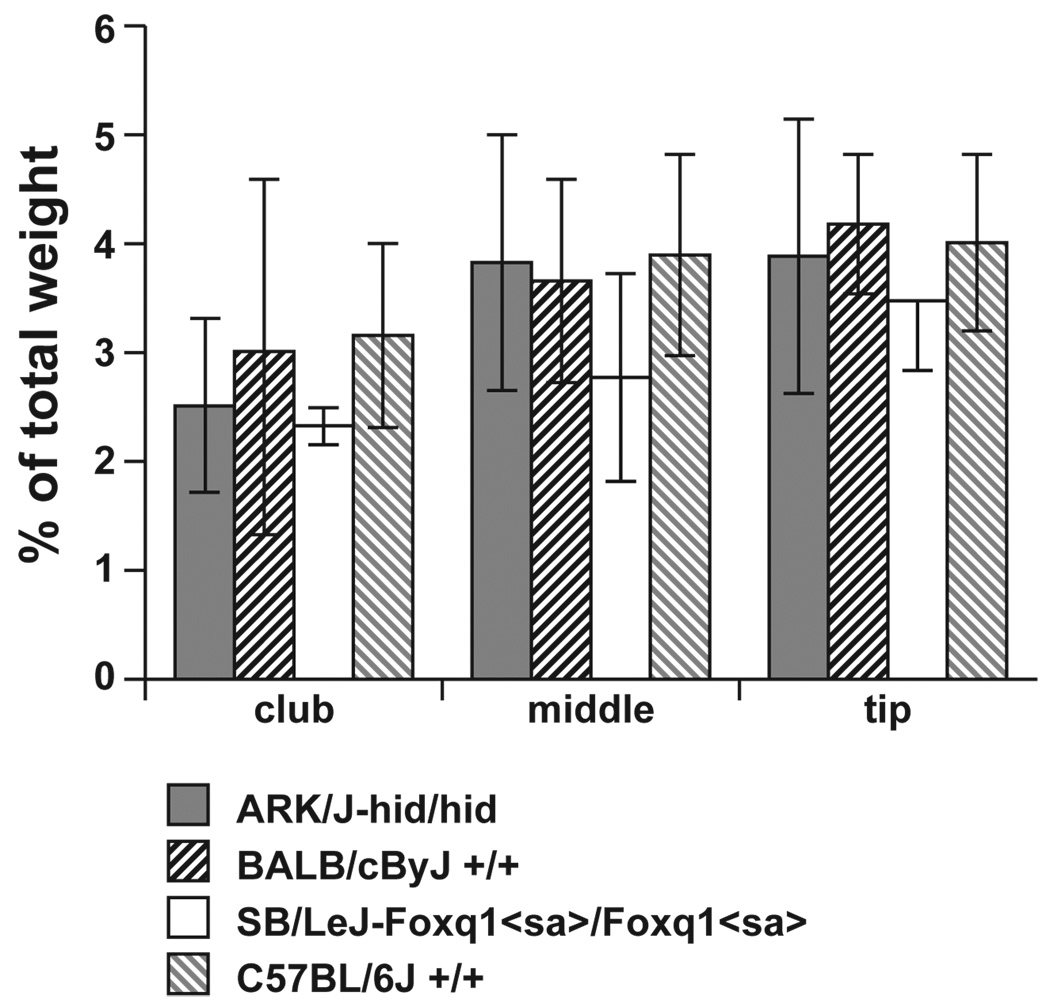
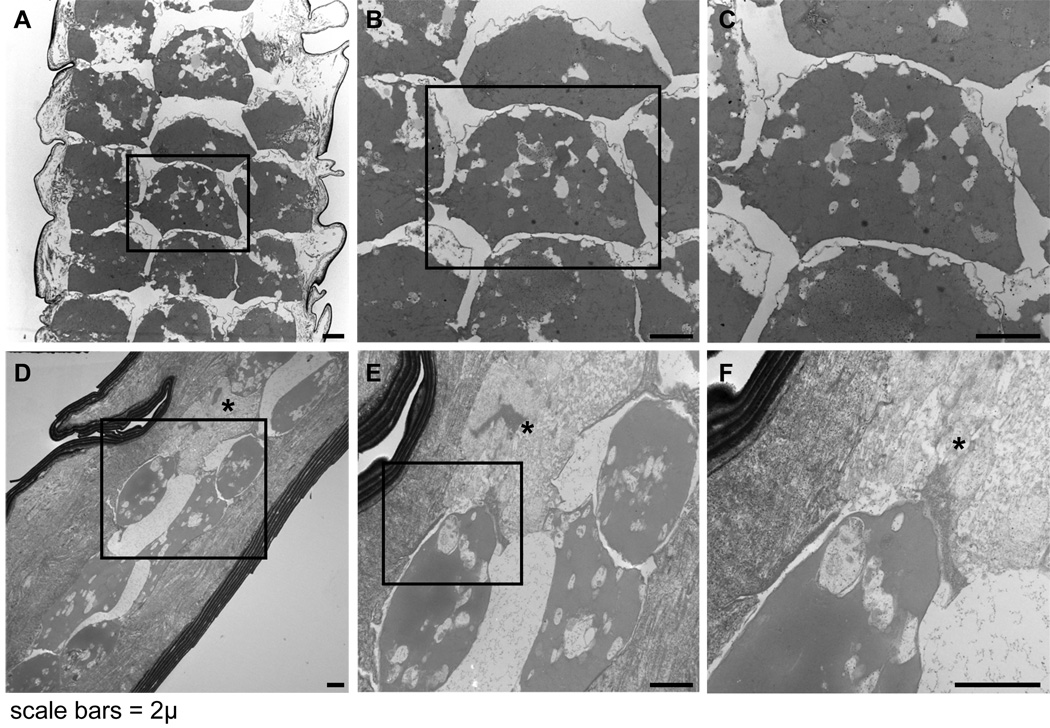
Using SEM, the hair-fibre structure on the surface was found to be similar to hairs obtained from normal BALB/cByJ+/+and C57BL/6 J+/+mice. There were also no differences in sulphur content. TEM revealed degenerative changes in the medulla similar to that seen by light microscopy. This autosomal recessive mutation is called HID (locus symbol: hid). We mapped the hid locus to the distal end of mouse chromosome 1. No genes reported to cause skin or hair abnormalities are known to be within this interval except for the lamin B receptor (Lbr), which had been excluded previously as the cause of the hid phenotype in AKR/J mice.
A potentially novel gene or known gene with a novel phenotype resides within this interval, which may shed light on human diseases with defects in the inner structure of the hair fibre.
所有AKR/J小鼠都有一个细微缺陷,即毛纤维中央部分畸形,在白光和偏光显微镜下最易观察到。
本研究旨在描述毛发内部缺陷(HID)表型的临床和超微结构特征,并确定hid突变基因位点的染色体定位。
使用白光和偏光显微镜结合扫描电子显微镜(SEM)和透射电子显微镜(TEM)来描述HID表型。进行互补试验和基因连锁研究以定位该位点。
使用SEM发现,表面的毛纤维结构与从正常BALB/cByJ+/+和C57BL/6 J+/+小鼠获得的毛发相似。硫含量也没有差异。TEM显示髓质有退行性变化,与光镜下所见相似。这种常染色体隐性突变被称为HID(位点符号:hid)。我们将hid位点定位到小鼠1号染色体的远端。除了层粘连蛋白B受体(Lbr)外,已知该区间内没有其他报告可导致皮肤或毛发异常的基因,而Lbr先前已被排除是AKR/J小鼠hid表型的病因。
一个潜在的新基因或具有新表型的已知基因存在于该区间内,这可能为人类毛发纤维内部结构有缺陷的疾病提供线索。