Pulaski Heather L, Spahlinger Gregory, Silva Ines A, McLean Karen, Kueck Angela S, Reynolds R Kevin, Coukos George, Conejo-Garcia Jose R, Buckanovich Ronald J
Department of Obstetrics and Gynecology, University of Michigan, Ann Arbor, USA.
J Transl Med. 2009 Jun 19;7:49. doi: 10.1186/1479-5876-7-49.
Murine studies suggest that myeloid cells such as vascular leukocytes (VLC) and Tie2+ monocytes play a critical role in tumor angiogenesis and vasculogenesis. Myeloid cells are a primary cause of resistance to anti-VEGF therapy. The elimination of these cells from the tumor microenvironment significantly restricts tumor growth in both spontaneous and xenograft murine tumor models. Thus animal studies indicate that myeloid cells are potential therapeutic targets for solid tumor therapy. Abundant VLC and Tie2+ monocytes have been reported in human cancer. Unfortunately, the importance of VLC in human cancer growth remains untested as there are no confirmed therapeutics to target human VLC.
We used FACS to analyze VLC in ovarian and non-ovarian tumors, and characterize the relationship of VLC and Tie2-monocytes. We performed qRT-PCR and FACS on human VLC to assess the expression of the CD52 antigen, the target of the immunotherapeutic Alemtuzumab. We assessed Alemtuzumab's ability to induce complement-mediated VLC killing in vitro and in human tumor ascites. Finally we assessed the impact of anti-CD52 immuno-toxin therapy on murine ovarian tumor growth.
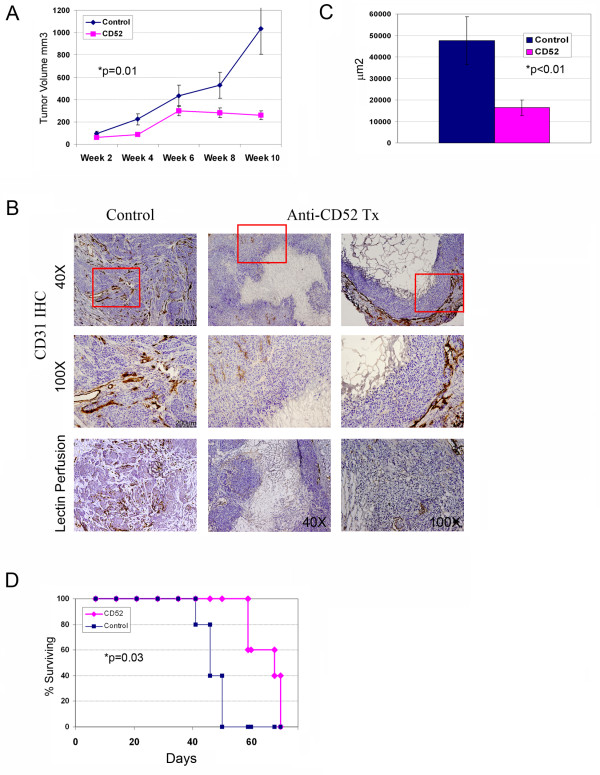
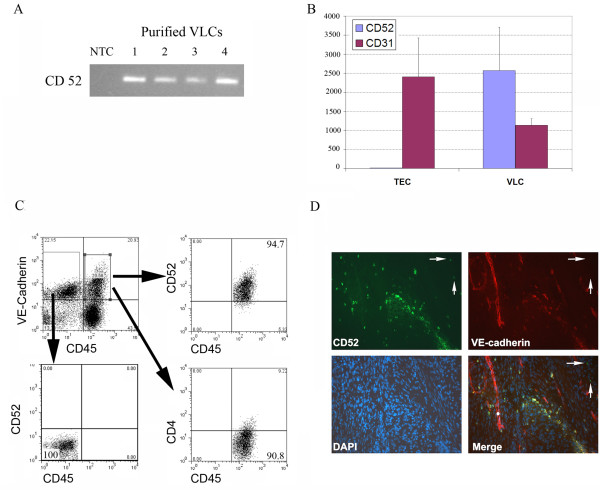
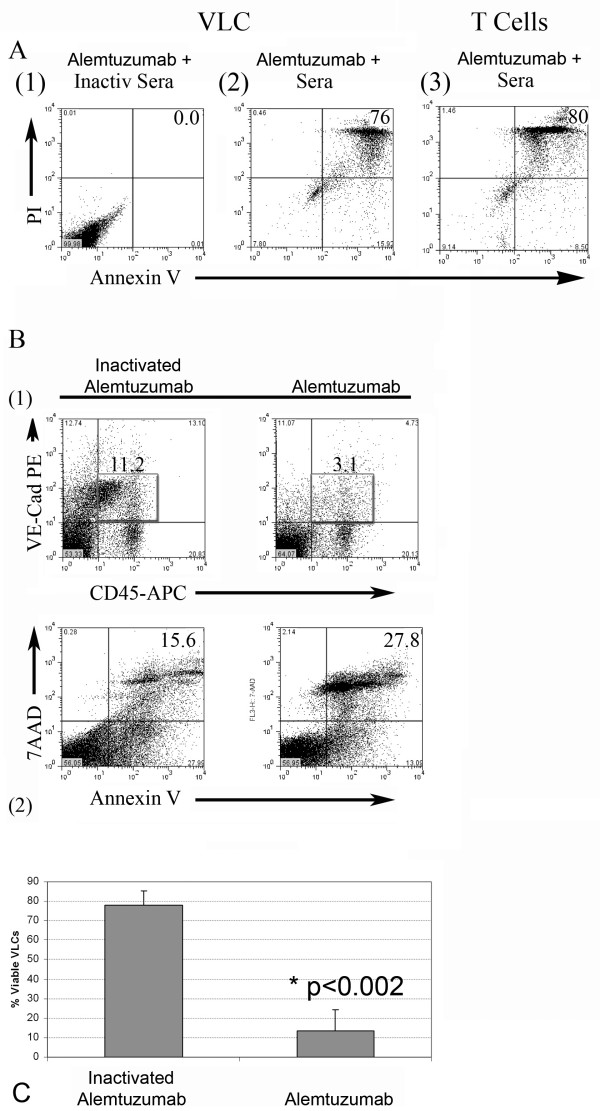
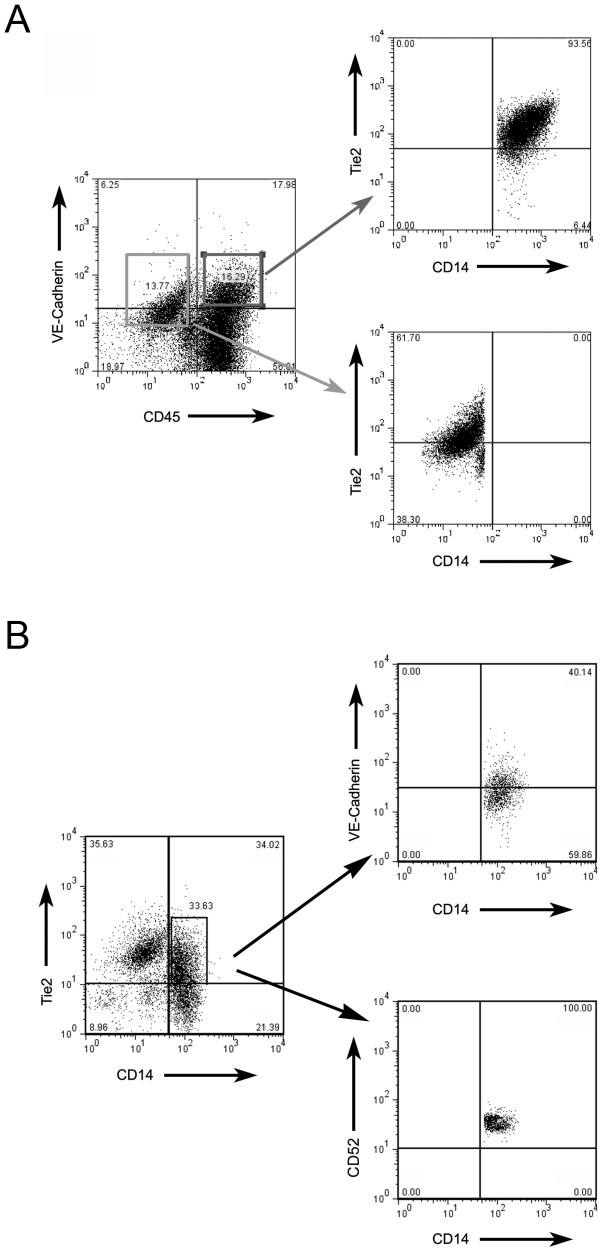
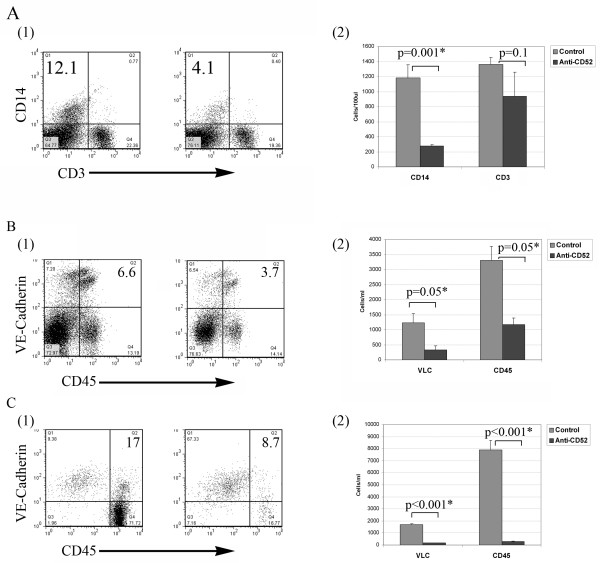
Human VLC are present in ovarian and non-ovarian tumors. The majority of VLC appear to be Tie2+ monocytes. VLC and Tie2+ monocytes express high levels of CD52, the target of the immunotherapeutic Alemtuzumab. Alemtuzumab potently induces complement-mediated lysis of VLC in vitro and ex-vivo in ovarian tumor ascites. Anti-CD52 immunotherapy targeting VLC restricts tumor angiogenesis and growth in murine ovarian cancer.
These studies confirm VLC/myeloid cells as therapeutic targets in ovarian cancer. Our data provide critical pre-clinical evidence supporting the use of Alemtuzumab in clinical trials to test its efficacy as an anti-myeloid cell antiangiogenic therapeutic in ovarian cancer. The identification of an FDA approved anti-VLC agent with a history of clinical use will allow immediate proof-of-principle clinical trials in patients with ovarian cancer.
小鼠研究表明,诸如血管白细胞(VLC)和 Tie2+单核细胞等髓样细胞在肿瘤血管生成和血管发生中起关键作用。髓样细胞是抗 VEGF 治疗耐药的主要原因。在自发性和异种移植小鼠肿瘤模型中,从肿瘤微环境中清除这些细胞可显著限制肿瘤生长。因此,动物研究表明髓样细胞是实体瘤治疗的潜在治疗靶点。据报道,人类癌症中存在大量 VLC 和 Tie2+单核细胞。不幸的是,由于尚无针对人类 VLC 的已证实治疗方法,VLC 在人类癌症生长中的重要性仍未得到验证。
我们使用流式细胞术分析卵巢肿瘤和非卵巢肿瘤中的 VLC,并表征 VLC 与 Tie2 - 单核细胞的关系。我们对人类 VLC 进行定量逆转录聚合酶链反应(qRT-PCR)和流式细胞术,以评估免疫治疗药物阿仑单抗的靶点 CD52 抗原的表达。我们评估了阿仑单抗在体外和人类肿瘤腹水中诱导补体介导的 VLC 杀伤的能力。最后,我们评估了抗 CD52 免疫毒素疗法对小鼠卵巢肿瘤生长的影响。
人类 VLC 存在于卵巢肿瘤和非卵巢肿瘤中。大多数 VLC 似乎是 Tie2+单核细胞。VLC 和 Tie2+单核细胞表达高水平的 CD52,即免疫治疗药物阿仑单抗的靶点。阿仑单抗在体外和卵巢肿瘤腹水中均能有效诱导补体介导的 VLC 裂解。针对 VLC 的抗 CD52 免疫疗法可限制小鼠卵巢癌中的肿瘤血管生成和生长。
这些研究证实 VLC/髓样细胞是卵巢癌的治疗靶点。我们的数据提供了关键的临床前证据,支持在临床试验中使用阿仑单抗来测试其作为卵巢癌抗髓样细胞抗血管生成治疗药物的疗效。鉴定一种具有临床使用历史且已获美国食品药品监督管理局(FDA)批准的抗 VLC 药物,将能够立即在卵巢癌患者中开展原理验证临床试验。