Zivanovic Yvan, Armengaud Jean, Lagorce Arnaud, Leplat Christophe, Guérin Philippe, Dutertre Murielle, Anthouard Véronique, Forterre Patrick, Wincker Patrick, Confalonieri Fabrice
Laboratoire de Génomique des Archae, Université Paris-Sud 11, CNRS, UMR8621, Bât400 F-91405 Orsay, France.
Genome Biol. 2009;10(6):R70. doi: 10.1186/gb-2009-10-6-r70. Epub 2009 Jun 26.
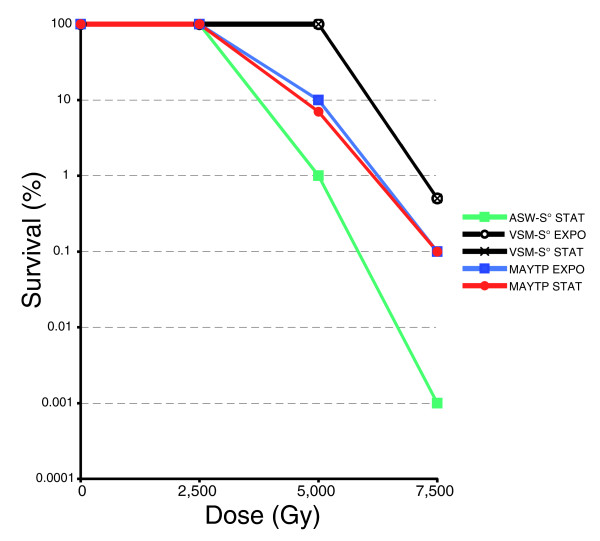
Thermococcus gammatolerans was isolated from samples collected from hydrothermal chimneys. It is one of the most radioresistant organisms known amongst the Archaea. We report the determination and annotation of its complete genome sequence, its comparison with other Thermococcales genomes, and a proteomic analysis.
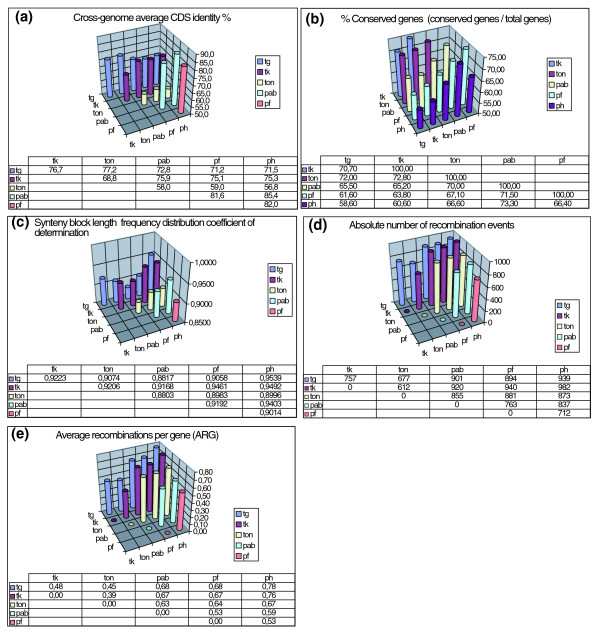
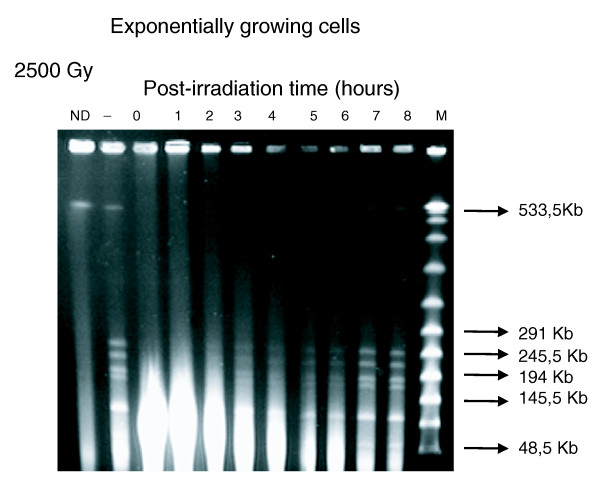
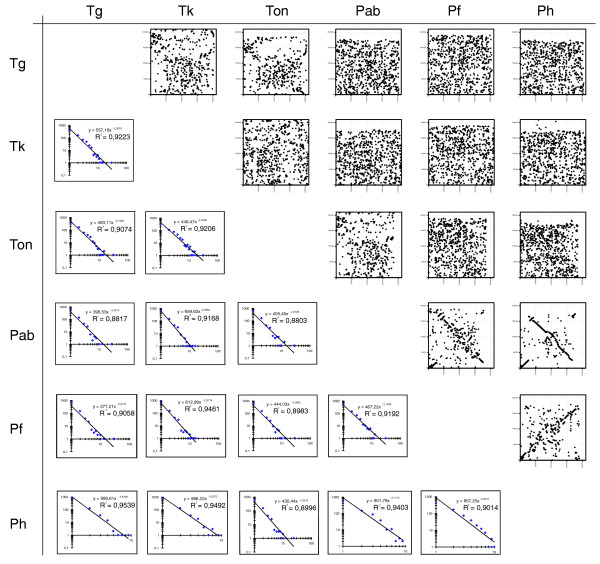
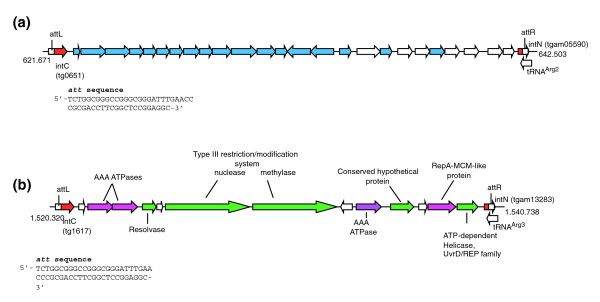
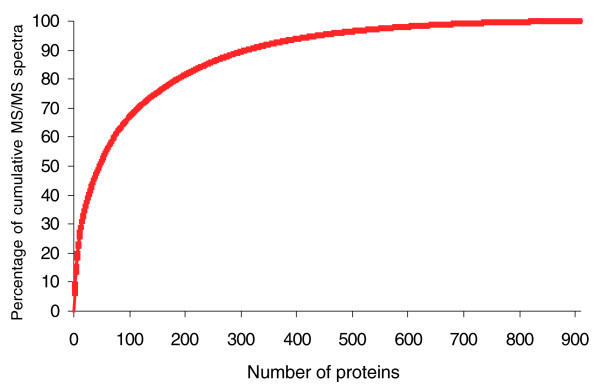
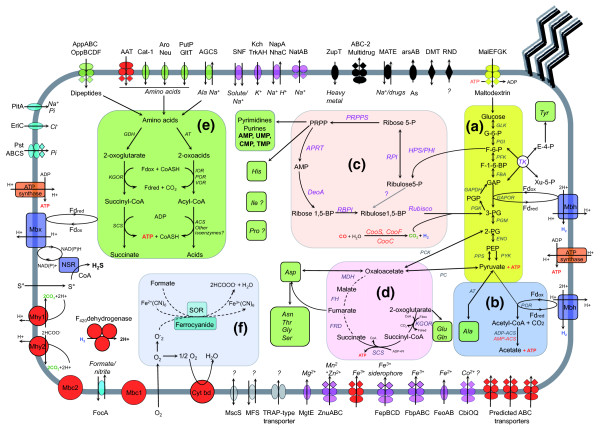
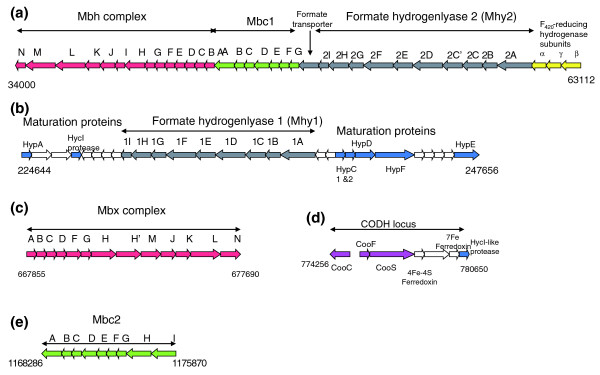
T. gammatolerans has a circular chromosome of 2.045 Mbp without any extra-chromosomal elements, coding for 2,157 proteins. A thorough comparative genomics analysis revealed important but unsuspected genome plasticity differences between sequenced Thermococcus and Pyrococcus species that could not be attributed to the presence of specific mobile elements. Two virus-related regions, tgv1 and tgv2, are the only mobile elements identified in this genome. A proteogenome analysis was performed by a shotgun liquid chromatography-tandem mass spectrometry approach, allowing the identification of 10,931 unique peptides corresponding to 951 proteins. This information concurrently validates the accuracy of the genome annotation. Semi-quantification of proteins by spectral count was done on exponential- and stationary-phase cells. Insights into general catabolism, hydrogenase complexes, detoxification systems, and the DNA repair toolbox of this archaeon are revealed through this genome and proteome analysis.
This work is the first archaeal proteome investigation done at the stage of primary genome annotation. This archaeon is shown to use a large variety of metabolic pathways even under a rich medium growth condition. This proteogenomic study also indicates that the high radiotolerance of T. gammatolerans is probably due to proteins that remain to be characterized rather than a larger arsenal of known DNA repair enzymes.
嗜γ耐热栖热菌是从热液烟囱采集的样本中分离出来的。它是古菌中已知的最耐辐射的生物之一。我们报告了其完整基因组序列的测定和注释、与其他嗜热栖热菌属基因组的比较以及蛋白质组分析。
嗜γ耐热栖热菌有一条2.045 Mbp的环状染色体,没有任何染色体外元件,编码2157种蛋白质。全面的比较基因组学分析揭示了已测序的嗜热栖热菌属和嗜火栖热菌属物种之间重要但未被怀疑的基因组可塑性差异,这些差异不能归因于特定移动元件的存在。两个与病毒相关的区域,tgv1和tgv2,是在该基因组中鉴定出的仅有的移动元件。通过鸟枪法液相色谱 - 串联质谱法进行了蛋白质基因组分析,能够鉴定出对应于951种蛋白质的10931个独特肽段。这些信息同时验证了基因组注释的准确性。通过光谱计数对指数期和稳定期细胞中的蛋白质进行了半定量。通过该基因组和蛋白质组分析揭示了对这种古菌的一般分解代谢、氢化酶复合物、解毒系统和DNA修复工具箱的深入了解。
这项工作是在初级基因组注释阶段进行的首次古菌蛋白质组研究。即使在丰富培养基生长条件下,这种古菌也显示出使用多种代谢途径。这项蛋白质基因组学研究还表明,嗜γ耐热栖热菌的高辐射耐受性可能归因于有待表征的蛋白质,而不是更多已知的DNA修复酶。