Roberti M, Mustich A, Gadaleta M N, Cantatore P
Dipartimento di Biochimica e Biologia Molecolare, Universita' di Bari, Italy.
Nucleic Acids Res. 1991 Nov 25;19(22):6249-54. doi: 10.1093/nar/19.22.6249.
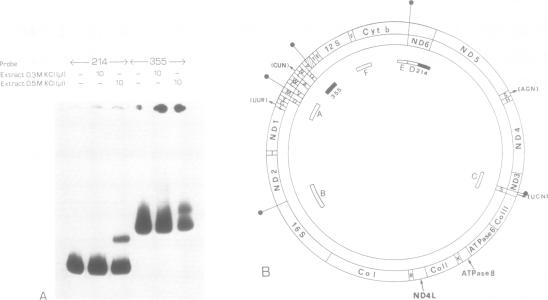
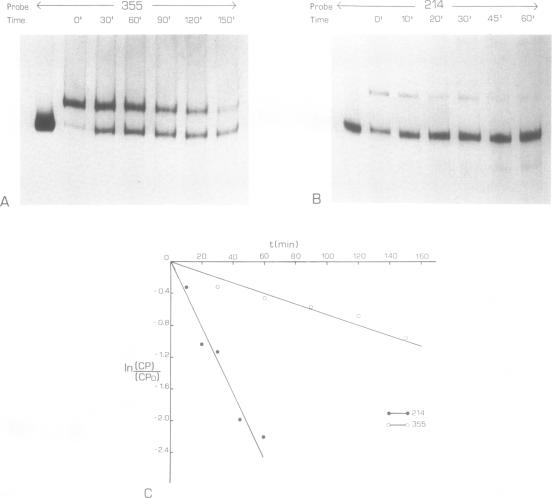
Using a combination of band shift and DNasel protection experiments, two Paracentrotus lividus mitochondrial sequences, able to bind tightly and selectively to a mitochondrial protein from sea urchin embryos, have been found. The two sequences, which compete with each other for binding to the protein, are located in two genome regions which are thought to contain regulatory signals for mitochondrial replication and transcription. A computer analysis suggests that the sequence TTTTRTANNTCYYATCAYA, common to the two binding regions, is the minimal recognition signal for the binding to the protein. We discuss the hypothesis that the protein binding capacity of these two sequences is involved in the control of sea urchin mtDNA replication during developmental stages.
通过结合使用凝胶迁移实验和DNA酶I保护实验,发现了两个紫球海胆线粒体序列,它们能够紧密且选择性地结合海胆胚胎中的一种线粒体蛋白。这两个序列在与该蛋白的结合上相互竞争,位于两个基因组区域,这两个区域被认为包含线粒体复制和转录的调控信号。计算机分析表明,这两个结合区域共有的序列TTTTRTANNTCYYATCAYA是与该蛋白结合的最小识别信号。我们讨论了这样一种假说,即这两个序列的蛋白结合能力参与了发育阶段海胆线粒体DNA复制的控制。