Department of Environmental Medicine, New York University School of Medicine, 650 FirstAvenue, New York, NY 10016, USA.
Atherosclerosis. 2010 Jan;208(1):19-25. doi: 10.1016/j.atherosclerosis.2009.06.002. Epub 2009 Jun 11.
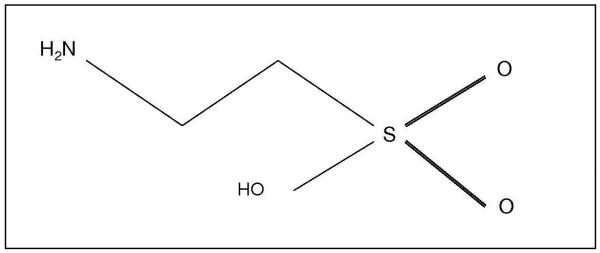
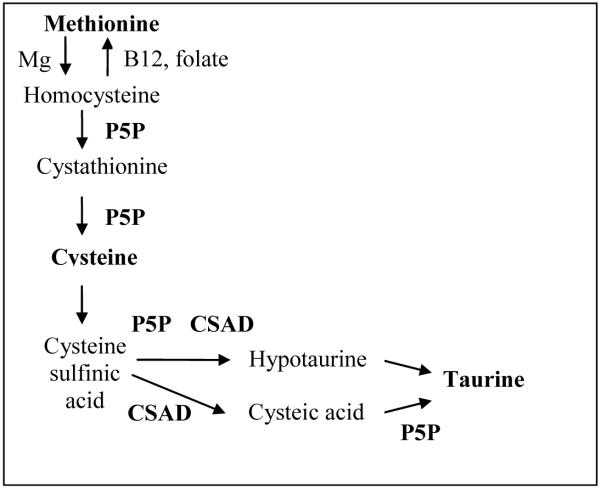
In humans, taurine (2-aminoethanesulfonic acid) is mainly obtained from diet. Despite the fact that the health effects of taurine are largely unknown, taurine has become a popular supplement and ingredient in energy drinks in recent years. Evidence from mechanistic and animal studies has shown that the main biological actions of taurine include its ability to conjugate bile acids, regulate blood pressure (BP), and act as a potent antioxidant and anti-inflammatory agent. These actions suggest that high levels of taurine may be protective against coronary heart disease (CHD). However, data from epidemiologic and intervention studies in humans are limited. We review what is known about taurine's metabolism, its transportation in the body, its food sources, and evidence of its effect on cardiovascular health from in vitro, animal, and epidemiologic studies. We also discuss shortcomings of the human studies that need to be addressed in the future. The identification of taurine as a preventive factor for CHD may be of great public health importance.
在人体中,牛磺酸(2-氨基乙磺酸)主要从饮食中获得。尽管牛磺酸的健康影响在很大程度上尚不清楚,但近年来,牛磺酸已成为能量饮料中一种流行的补充剂和成分。来自机制和动物研究的证据表明,牛磺酸的主要生物学作用包括其结合胆汁酸的能力、调节血压(BP)以及作为一种有效的抗氧化剂和抗炎剂的能力。这些作用表明,牛磺酸水平高可能对冠心病(CHD)有保护作用。然而,来自人类的流行病学和干预研究的数据是有限的。我们回顾了牛磺酸代谢、在体内的运输、其食物来源以及体外、动物和流行病学研究中牛磺酸对心血管健康影响的证据。我们还讨论了未来需要解决的人类研究的局限性。将牛磺酸确定为 CHD 的预防因素可能具有重要的公共卫生意义。