Chen Jake Yue, Mamidipalli SudhaRani, Huan Tianxiao
School of Informatics, Indiana University - Purdue University, Indianapolis, IN, USA.
BMC Genomics. 2009 Jul 7;10 Suppl 1(Suppl 1):S16. doi: 10.1186/1471-2164-10-S1-S16.
Human protein-protein interaction (PPIs) data are the foundation for understanding molecular signalling networks and the functional roles of biomolecules. Several human PPI databases have become available; however, comparisons of these datasets have suggested limited data coverage and poor data quality. Ongoing collection and integration of human PPIs from different sources, both experimentally and computationally, can enable disease-specific network biology modelling in translational bioinformatics studies.
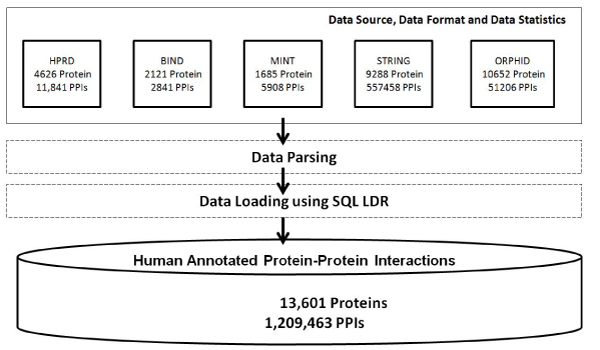
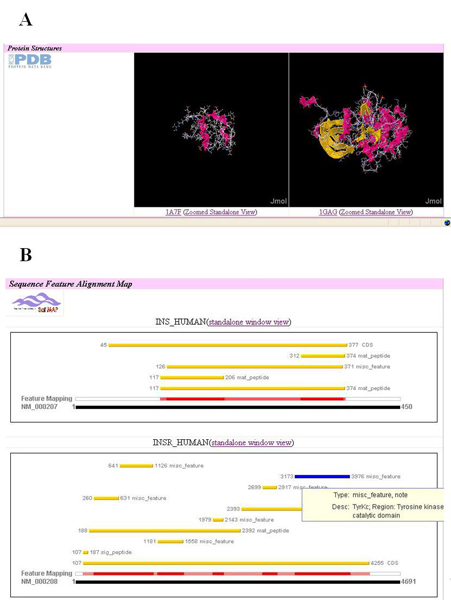
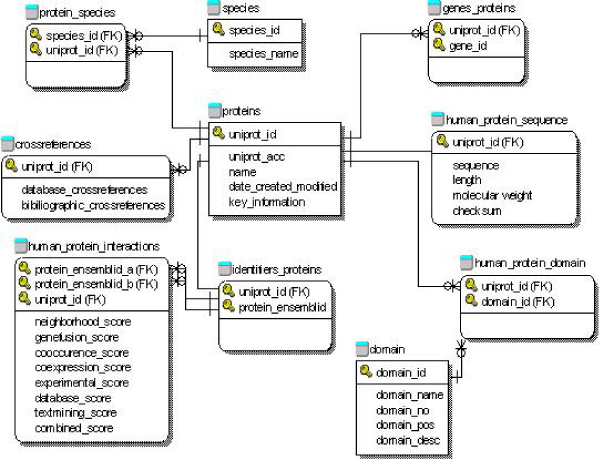
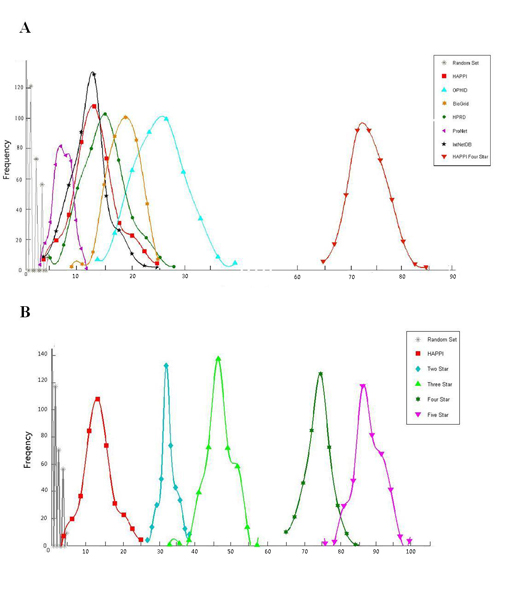
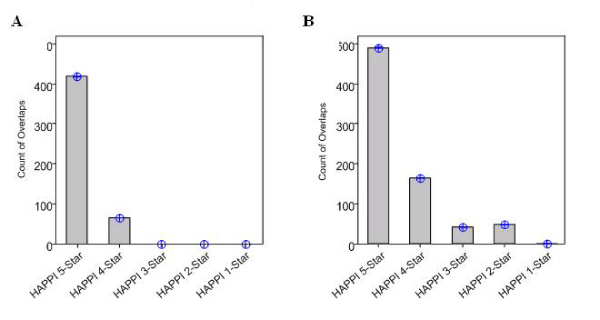
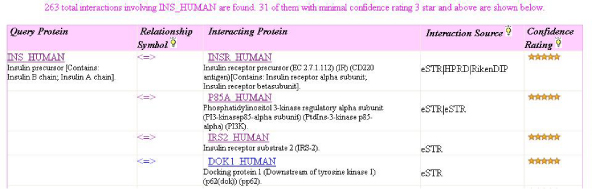
We developed a new web-based resource, the Human Annotated and Predicted Protein Interaction (HAPPI) database, located at http://bio.informatics.iupui.edu/HAPPI/. The HAPPI database was created by extracting and integrating publicly available protein interaction databases, including HPRD, BIND, MINT, STRING, and OPHID, using database integration techniques. We designed a unified entity-relationship data model to resolve semantic level differences of diverse concepts involved in PPI data integration. We applied a unified scoring model to give each PPI a measure of its reliability that can place each PPI at one of the five star rank levels from 1 to 5. We assessed the quality of PPIs contained in the new HAPPI database, using evolutionary conserved co-expression pairs called "MetaGene" pairs to measure the extent of MetaGene pair and PPI pair overlaps. While the overall quality of the HAPPI database across all star ranks is comparable to the overall qualities of HPRD or IntNetDB, the subset of the HAPPI database with star ranks between 3 and 5 has a much higher average quality than all other human PPI databases. As of summer 2008, the database contains 142,956 non-redundant, medium to high-confidence level human protein interaction pairs among 10,592 human proteins. The HAPPI database web application also provides ..." should be "The HAPPI database web application also provides hyperlinked information of genes, pathways, protein domains, protein structure displays, and sequence feature maps for interactive exploration of PPI data in the database.
HAPPI is by far the most comprehensive public compilation of human protein interaction information. It enables its users to fully explore PPI data with quality measures and annotated information necessary for emerging network biology studies.
人类蛋白质-蛋白质相互作用(PPI)数据是理解分子信号网络和生物分子功能作用的基础。已有多个关于人类PPI的数据库;然而,对这些数据集的比较表明数据覆盖范围有限且数据质量较差。持续从实验和计算等不同来源收集与整合人类PPI,能够在转化生物信息学研究中实现针对特定疾病的网络生物学建模。
HAPPI是目前最全面的人类蛋白质相互作用信息的公共汇编。它使用户能够利用新兴网络生物学研究所必需的质量度量和注释信息充分探索PPI数据。