Department of Neuroscience, University of Connecticut Medical School, Farmington, Connecticut, USA.
J Neurosci Res. 2009 Nov 15;87(15):3428-37. doi: 10.1002/jnr.22164.
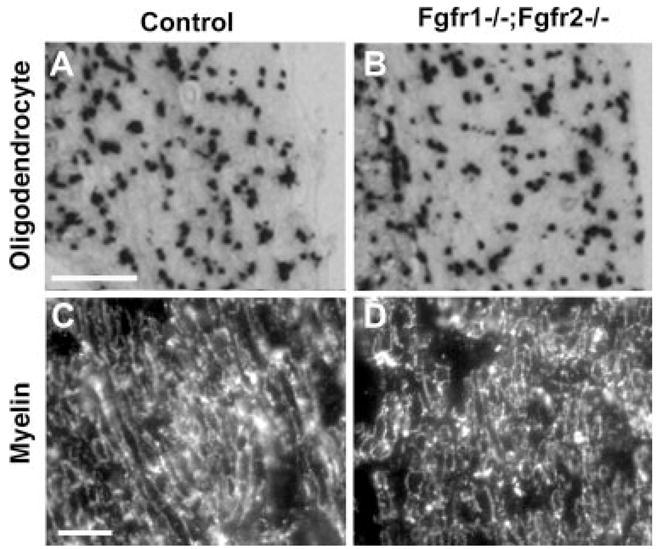
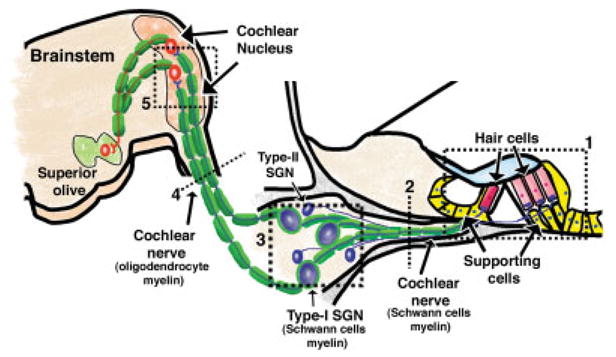
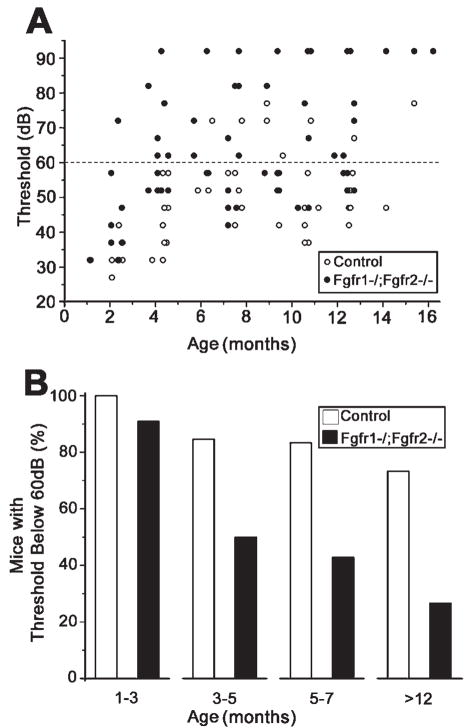
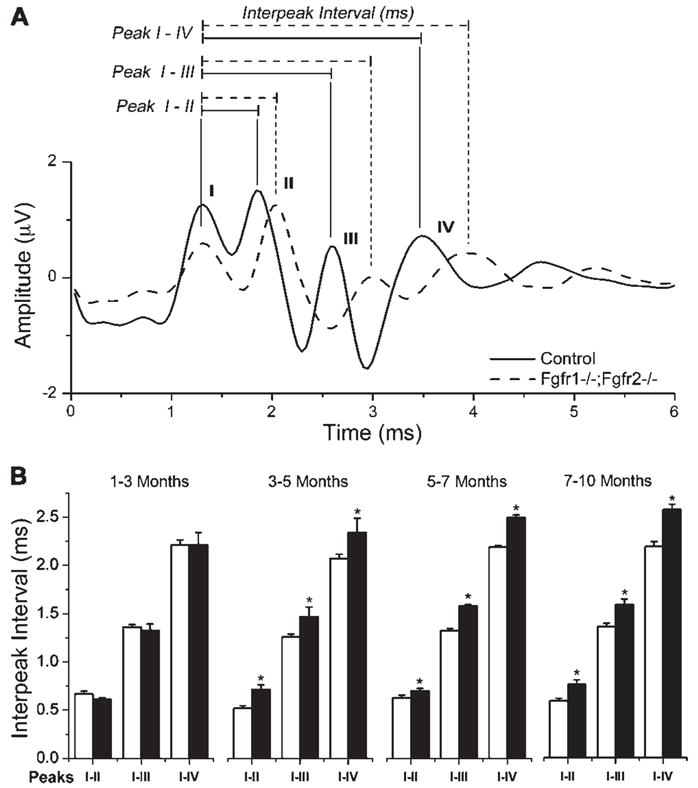
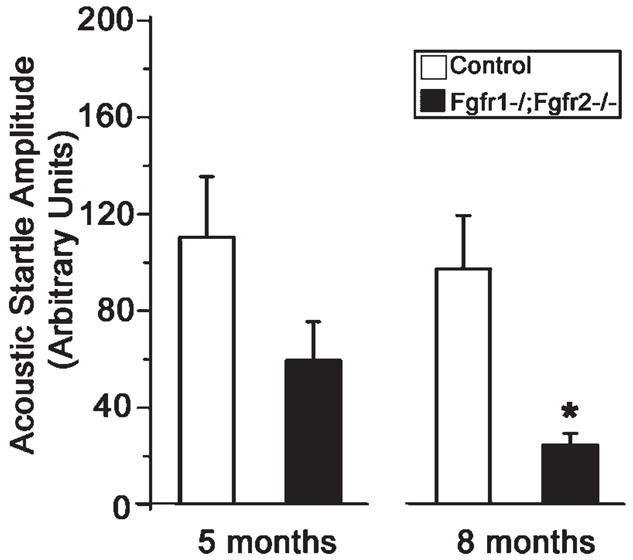
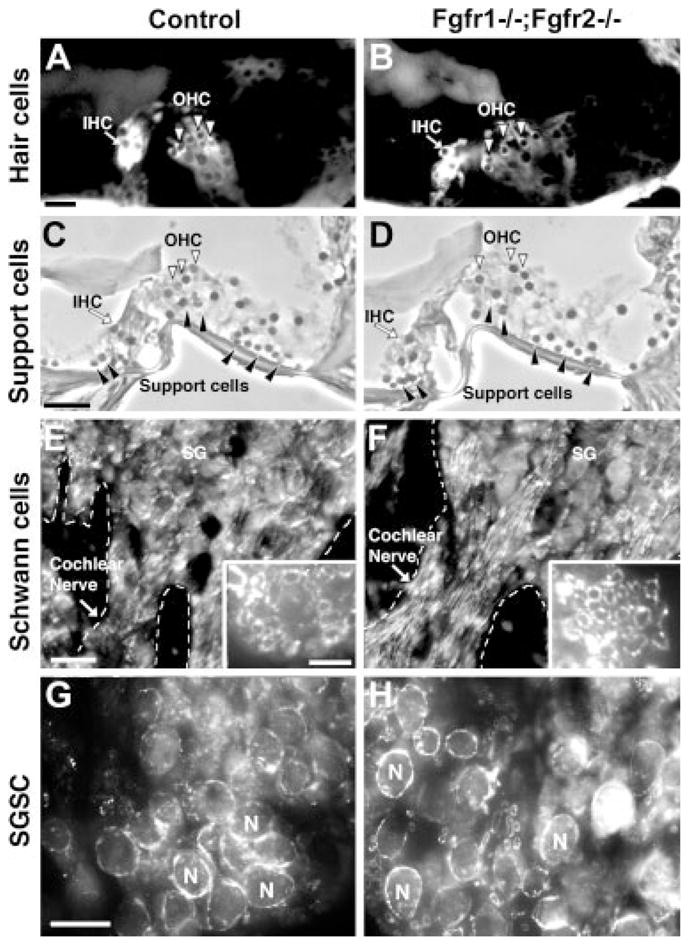
Hearing loss has been attributed to many factors, including degeneration of sensory neurons in the auditory pathway and demyelination along the cochlear nerve. Fibroblast growth factors (FGFs), which signal through four receptors (Fgfrs), are produced by auditory neurons and play a key role in embryonic development of the cochlea and in neuroprotection against sound-induced injury. However, the role of FGF signaling in the maintenance of normal auditory function in adult and aging mice remains to be elucidated. Furthermore, the contribution of glial cells, which myelinate the cochlear nerves, is poorly understood. To address these questions, we generated transgenic mice in which Fgfr1 and Fgfr2 were specifically inactivated in Schwann cells and oligodendrocytes but not in neurons. Adult mutant mice exhibited late onset of hearing impairment, which progressed markedly with age. The hearing impairment was accompanied by significant loss of myelinated spiral ganglion neurons. The pathology extended into the cochlear nucleus, without apparent loss of myelin or of the deletion-bearing glial cells themselves. This suggests that perturbation of FGF receptor-mediated glial function leads to the attenuation of glial support of neurons, leading to their loss and impairment of auditory functions. Thus, FGF/FGF receptor signaling provides a potentially novel mechanism of maintaining reciprocal interactions between neurons and glia in adult and aging animals. Dysfunction of glial cells and FGF receptor signaling may therefore be implicated in neurodegenerative hearing loss associated with normal aging.
听力损失可归因于多种因素,包括听觉通路中的感觉神经元退化和耳蜗神经脱髓鞘。成纤维细胞生长因子 (FGFs) 通过四个受体 (Fgfrs) 发出信号,由听觉神经元产生,在耳蜗胚胎发育和对抗声音诱导损伤的神经保护中发挥关键作用。然而,FGF 信号在维持成年和老年小鼠正常听觉功能中的作用仍有待阐明。此外,少突胶质细胞(髓鞘化耳蜗神经的细胞)的作用了解甚少。为了解决这些问题,我们生成了 Fgfr1 和 Fgfr2 特异性在施万细胞和少突胶质细胞中而非神经元中失活的转基因小鼠。成年突变小鼠表现出听力障碍的迟发性发作,随着年龄的增长而显著进展。听力障碍伴有大量有髓螺旋神经节神经元丧失。病理学延伸到耳蜗核,没有明显的髓鞘丢失或缺失载体胶质细胞本身的丢失。这表明 FGF 受体介导的胶质细胞功能的扰动导致胶质细胞对神经元的支持减弱,导致神经元丧失和听觉功能障碍。因此,FGF/FGF 受体信号提供了一种维持成年和老年动物神经元和胶质细胞之间相互作用的潜在新机制。胶质细胞功能障碍和 FGF 受体信号传导可能与与正常衰老相关的神经退行性听力损失有关。