Tiemann-Boege Irene, Curtis Christina, Shinde Deepali N, Goodman Daniel B, Tavaré Simon, Arnheim Norman
Institute of Biophysics, Johannes Kepler University, Linz, 4040 Austria.
Anal Chem. 2009 Jul 15;81(14):5770-6. doi: 10.1021/ac900633y.
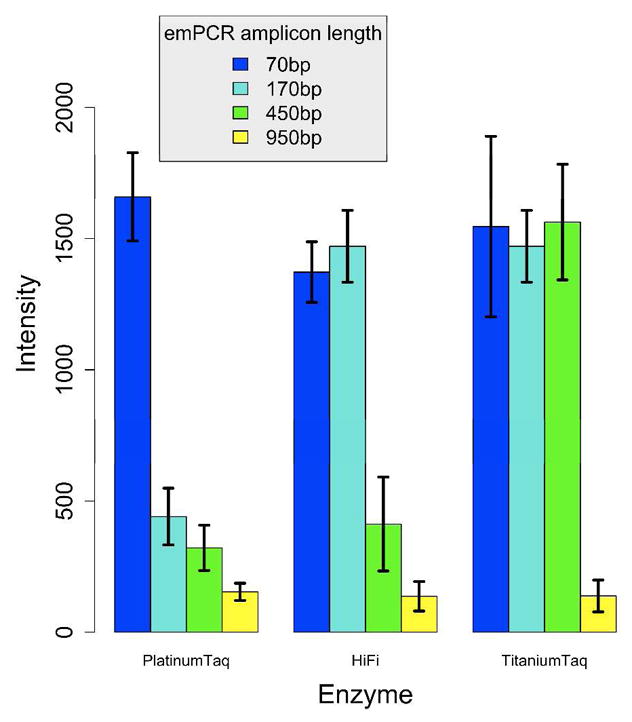
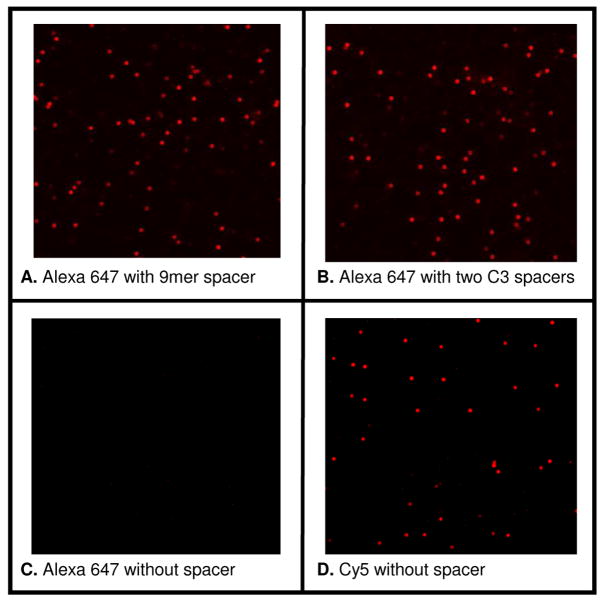
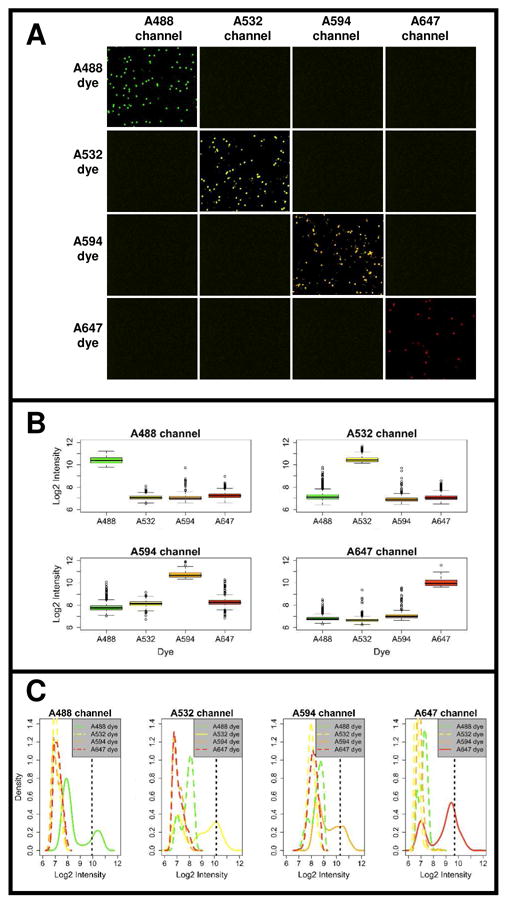
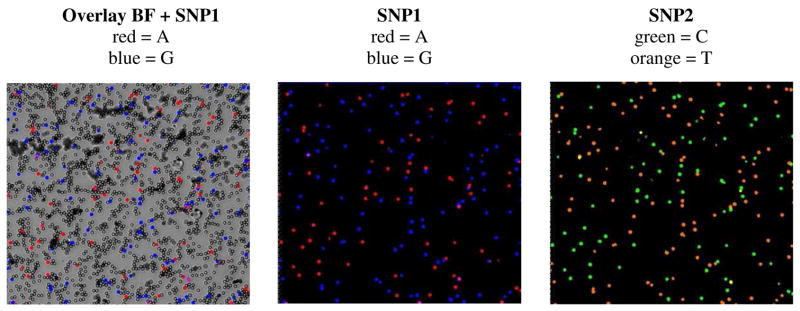
The amplification of millions of single molecules in parallel can be performed on microscopic magnetic beads that are contained in aqueous compartments of an oil-buffer emulsion. These bead-emulsion amplification (BEA) reactions result in beads that are covered by almost-identical copies derived from a single template. The post-amplification analysis is performed using different fluorophore-labeled probes. We have identified BEA reaction conditions that efficiently produce longer amplicons of up to 450 base pairs. These conditions include the use of a Titanium Taq amplification system. Second, we explored alternate fluorophores coupled to probes for post-PCR DNA analysis. We demonstrate that four different Alexa fluorophores can be used simultaneously with extremely low crosstalk. Finally, we developed an allele-specific extension chemistry that is based on Alexa dyes to query individual nucleotides of the amplified material that is both highly efficient and specific.
数百万个单分子的平行扩增可以在包含于油-缓冲液乳液水相隔室中的微观磁珠上进行。这些磁珠-乳液扩增(BEA)反应产生的磁珠被源自单个模板的几乎相同的拷贝所覆盖。扩增后分析使用不同的荧光团标记探针进行。我们已经确定了能有效产生长达450个碱基对的更长扩增子的BEA反应条件。这些条件包括使用钛Taq扩增系统。其次,我们探索了与用于PCR后DNA分析的探针偶联的替代荧光团。我们证明四种不同的Alexa荧光团可以同时使用,且串扰极低。最后,我们开发了一种基于Alexa染料的等位基因特异性延伸化学方法,用于查询扩增材料中的单个核苷酸,该方法高效且特异。