Ishikawa Larissa Lumi Watanabe, França Thaís Graziela Donegá, Chiuso-Minicucci Fernanda, Zorzella-Pezavento Sofia Fernanda Gonçalves, Marra Nelson Mendes, Pereira Paulo Câmara Marques, Silva Célio Lopes, Sartori Alexandrina
Department of Microbiology and Immunology, Biosciences Institute, São Paulo State University (UNESP), Botucatu, São Paulo, 18618-000, Brazil.
Genet Vaccines Ther. 2009 Jul 16;7:11. doi: 10.1186/1479-0556-7-11.
Protein-calorie malnutrition (PCM) is the most common type of malnutrition. PCM leads to immunodeficiency and consequent increased susceptibility to infectious agents. In addition, responses to prophylactic vaccines depend on nutritional status. This study aims to evaluate the ability of undernourished mice to mount an immune response to a genetic vaccine (pVAXhsp65) against tuberculosis, containing the gene coding for the heat shock protein 65 from mycobacteria.
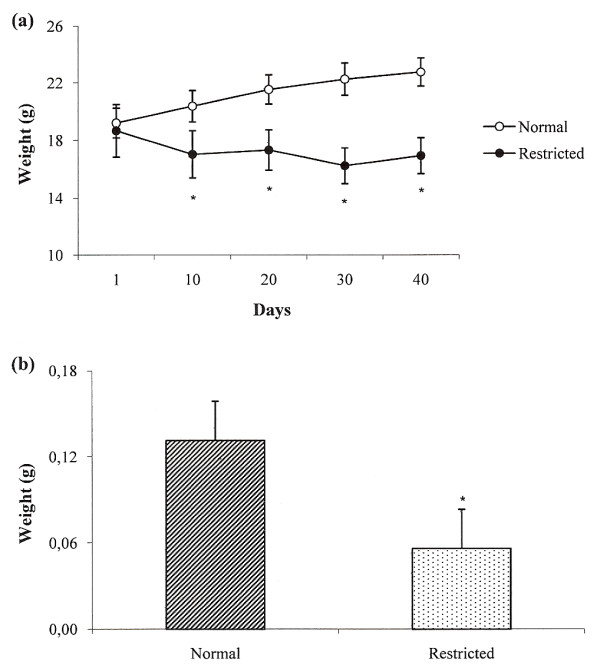
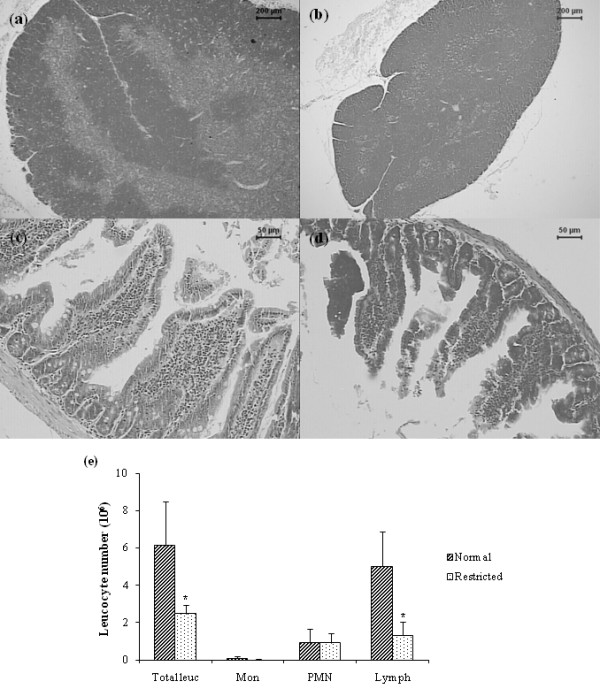
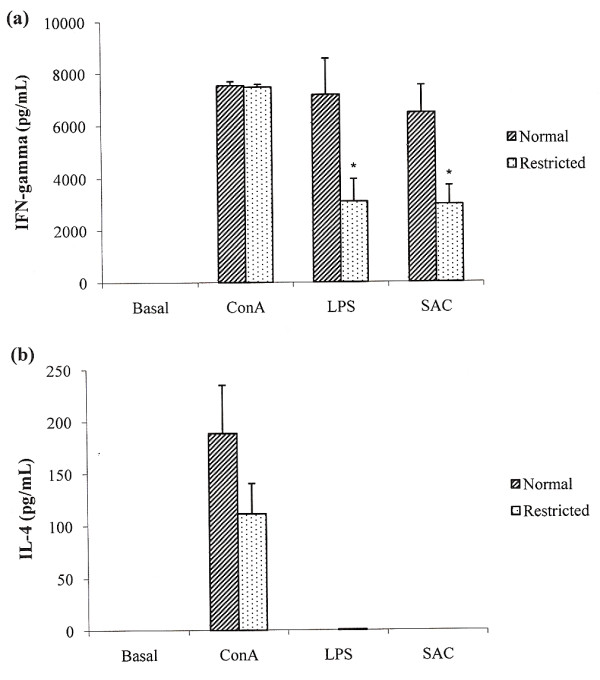
Young adult female BALB/c mice were fed ad libitum or with 80% of the amount of food consumed by a normal diet group. We initially characterized a mice model of dietary restriction by determining body and spleen weights, hematological parameters and histopathological changes in lymphoid organs. The ability of splenic cells to produce IFN-gamma and IL-4 upon in vitro stimulation with LPS or S. aureus and the serum titer of specific IgG1 and IgG2a anti-hsp65 antibodies after intramuscular immunization with pVAXhsp65 was then tested.
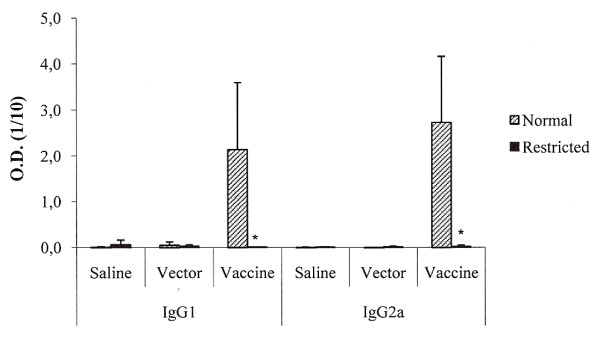
Dietary restriction significantly decreased body and spleen weights and also the total lymphocyte count in blood. This restriction also determined a striking atrophy in lymphoid organs as spleen, thymus and lymphoid tissue associated with the small intestine. Specific antibodies were not detected in mice submitted to dietary restriction whereas the well nourished animals produced significant levels of both, IgG1 and IgG2a anti-hsp65.
20% restriction in food intake deeply compromised humoral immunity induced by a genetic vaccine, alerting, therefore, for the relevance of the nutritional condition in vaccination programs based on these kinds of constructs.
蛋白质 - 热量营养不良(PCM)是最常见的营养不良类型。PCM会导致免疫缺陷,进而增加对感染因子的易感性。此外,对预防性疫苗的反应取决于营养状况。本研究旨在评估营养不良小鼠对一种针对结核病的基因疫苗(pVAXhsp65)产生免疫反应的能力,该疫苗含有编码分枝杆菌热休克蛋白65的基因。
对年轻成年雌性BALB/c小鼠随意喂食或给予正常饮食组所消耗食物量的80%。我们首先通过测定体重、脾脏重量、血液学参数以及淋巴器官的组织病理学变化来表征饮食限制的小鼠模型。然后测试脾细胞在体外用脂多糖(LPS)或金黄色葡萄球菌刺激后产生γ干扰素(IFN - γ)和白细胞介素 - 4(IL - 4)的能力,以及用pVAXhsp65进行肌肉内免疫后血清中抗hsp65特异性IgG1和IgG2a抗体的滴度。
饮食限制显著降低了体重、脾脏重量以及血液中的总淋巴细胞计数。这种限制还导致脾脏、胸腺和与小肠相关的淋巴组织等淋巴器官出现明显萎缩。在饮食受限的小鼠中未检测到特异性抗体,而营养良好的动物产生了显著水平的抗hsp65 IgG1和IgG2a。
食物摄入量减少20%会严重损害基因疫苗诱导的体液免疫,因此提醒人们注意营养状况在基于这类构建体的疫苗接种计划中的相关性。