Reference Centre for Lactobacilli, CERELA-CONICET, Tucuman, Argentina.
PLoS One. 2012;7(2):e31171. doi: 10.1371/journal.pone.0031171. Epub 2012 Feb 8.
Lactobacillus rhamnosus CRL1505 (Lr) administered during the repletion of immunocompromised-malnourished mice improves the resistance against intestinal and respiratory infections. This effect is associated with an increase in the number and functionality of immune cells, indicating that Lr could have some influence on myeloid and lymphoid cell production and maturation.
This study analyzed the extent of the damage caused by malnutrition on myeloid and lymphoid cell development in the spleen and bone marrow (BM). We also evaluated the impact of immunobiotics on the recovery of hematopoiesis affected in malnourished mice.
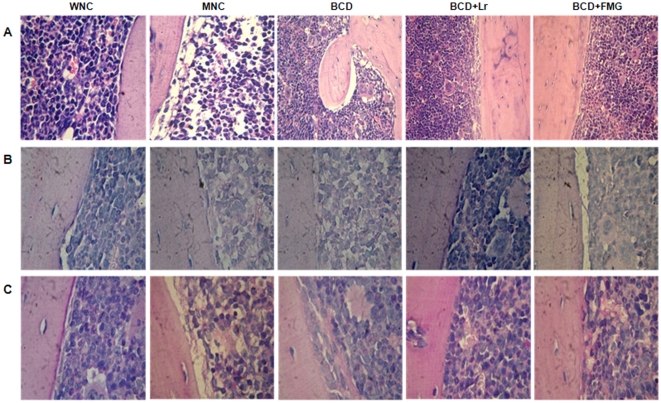
Protein malnourished mice were fed on a balanced conventional diet for 7 or 14 consecutive d with or without supplemental Lr or fermented goat's milk (FGM). Malnourished mice and well-nourished mice were used as controls. Histological and flow cytometry studies were carried out in BM and spleen to study myeloid and lymphoid cells.
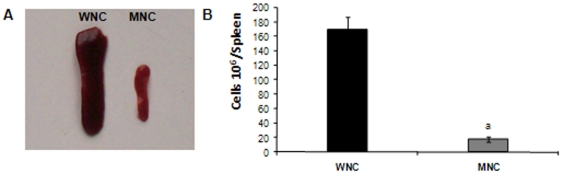
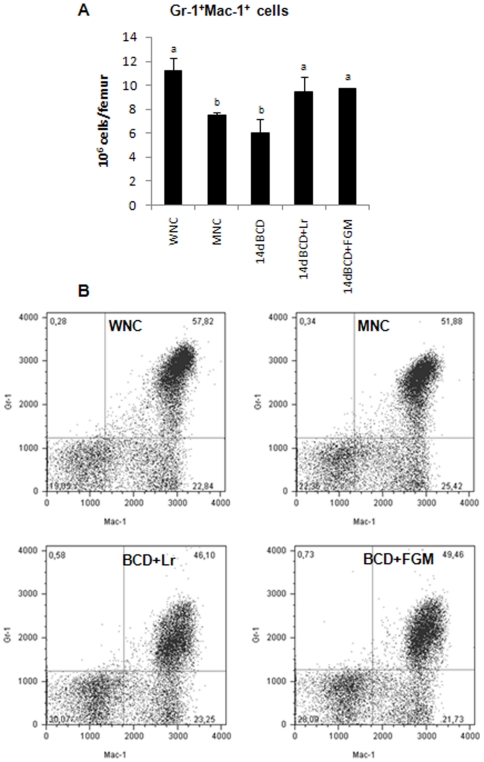
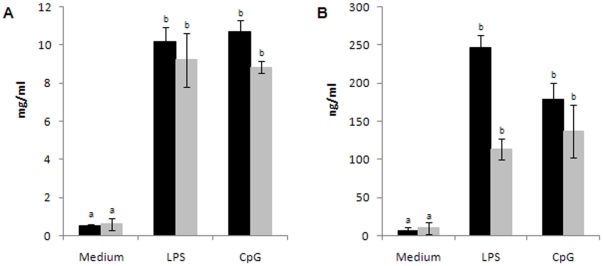
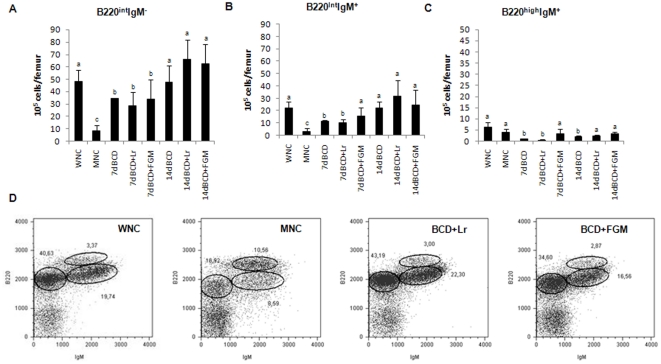
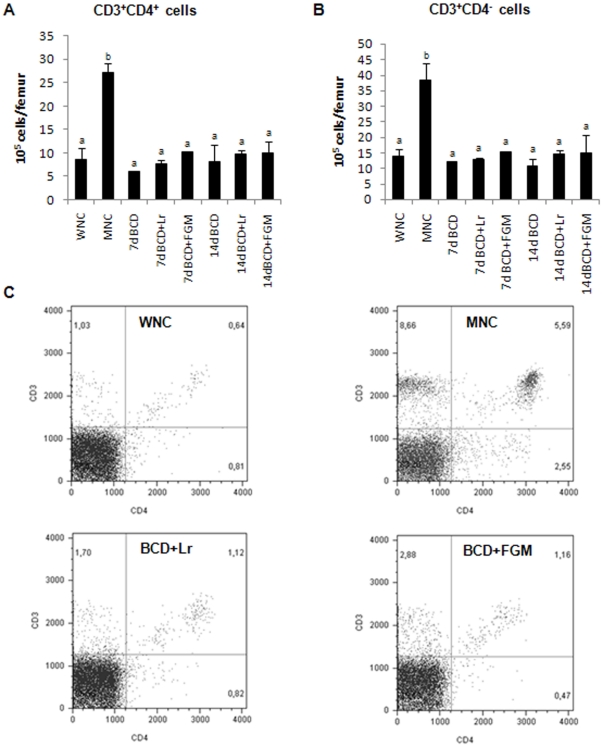
Malnutrition induced quantitative alterations in spleen B and T cells; however, no alteration was observed in the ability of splenic B cells to produce immunoglobulins after challenge with LPS or CpG. The analysis of BM B cell subsets based on B220, CD24, IgM and IgD expression showed that malnutrition affected B cell development. In addition, BM myeloid cells decreased in malnourished mice. On the contrary, protein deprivation increased BM T cell number. These alterations were reverted with Lr or FGM repletion treatments since normal numbers of BM myeloid, T and B cells were observed in these groups.
Protein malnutrition significantly alters B cell development in BM. The treatment of malnourished mice with L. rhamnosus CRL1505 was able to induce a recovery of B cells that would explain its ability to increase immunity against infections. This work highlights the possibility of using immunobiotics to accelerate the recovery of lymphopoyesis in immunocompromised-malnourished hosts.
在免疫功能低下和营养不良的小鼠补充期给予鼠李糖乳杆菌 CRL1505(Lr)可提高其对肠道和呼吸道感染的抵抗力。这种作用与免疫细胞数量和功能的增加有关,表明 Lr 可能对骨髓和淋巴样细胞的产生和成熟有一定的影响。
本研究分析了营养不良对脾和骨髓(BM)中髓样和淋巴样细胞发育的损害程度。我们还评估了免疫生物制剂对营养不良小鼠造血功能恢复的影响。
用平衡的常规饮食连续喂养蛋白质营养不良的小鼠 7 或 14 天,同时或不补充 Lr 或发酵羊奶(FGM)。将营养不良和营养良好的小鼠作为对照。在 BM 和脾脏中进行组织学和流式细胞术研究,以研究髓样和淋巴样细胞。
营养不良导致脾脏 B 和 T 细胞数量发生变化;然而,在用 LPS 或 CpG 刺激后,脾 B 细胞产生免疫球蛋白的能力没有改变。基于 B220、CD24、IgM 和 IgD 表达对 BM B 细胞亚群的分析表明,营养不良影响 B 细胞的发育。此外,营养不良小鼠的 BM 髓样细胞减少。相反,蛋白质剥夺增加了 BM T 细胞的数量。这些改变在用 Lr 或 FGM 补充治疗时得到逆转,因为在这些组中观察到 BM 髓样、T 和 B 细胞的正常数量。
蛋白质营养不良显著改变 BM 中的 B 细胞发育。用鼠李糖乳杆菌 CRL1505 治疗营养不良的小鼠能够诱导 B 细胞的恢复,这可以解释其增加抗感染能力的能力。这项工作强调了使用免疫生物制剂加速免疫功能低下和营养不良宿主中淋巴样细胞生成恢复的可能性。